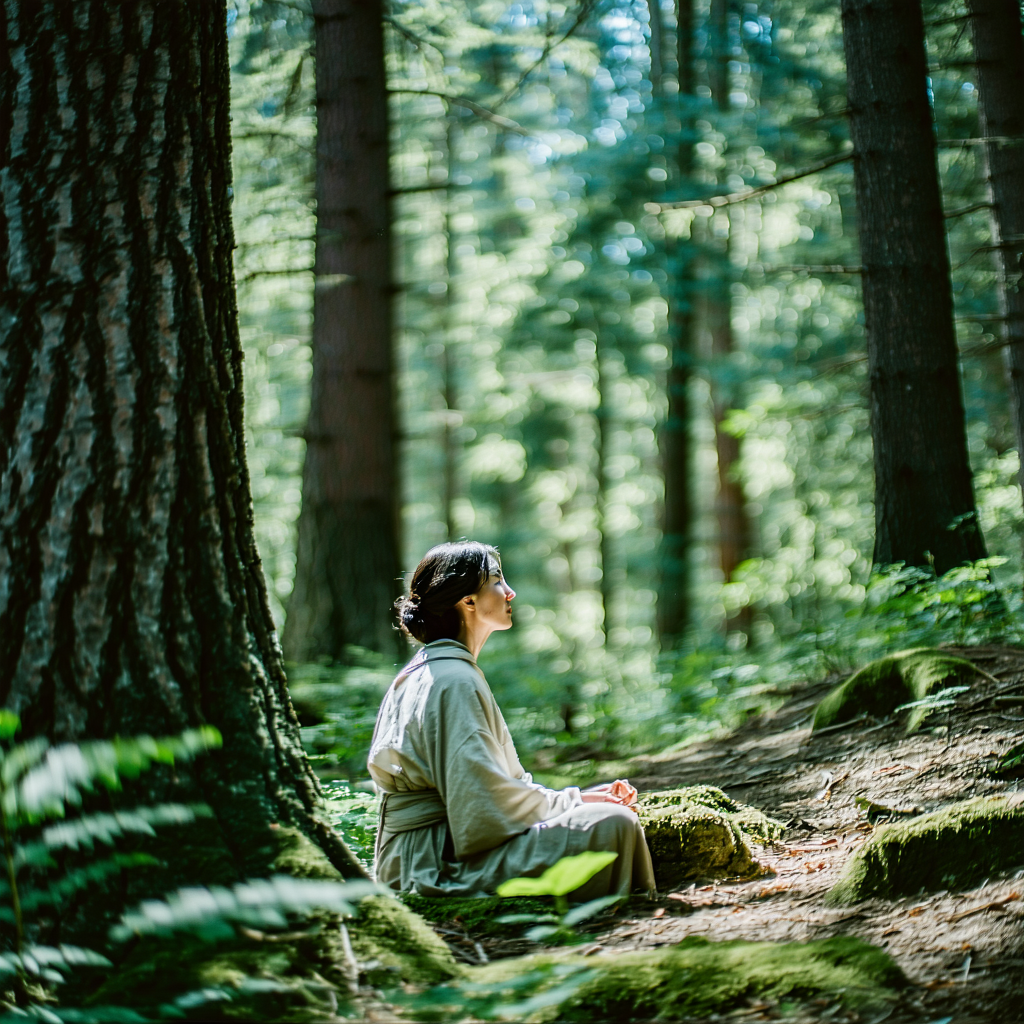
What is forest bathing shinrin yoku and does it actually work?
Forest bathing shinrin yoku is the Japanese practice of spending slow, mindful time among trees – absorbing the forest atmosphere through all five senses rather than hiking for fitness or reaching a destination. Research from Japanese and South Korean institutions suggests it may support lower cortisol levels, reduced blood pressure, and improved mood, often after sessions as short as 20 minutes. I have found it to be one of the most accessible wellness habits I have ever added to my routine, because the barrier to entry is simply finding a patch of trees and slowing down.
Table of contents
- What forest bathing shinrin yoku actually means
- History and origins of shinrin yoku
- What the science says about forest bathing shinrin yoku
- Phytoncides and other forest compounds
- Mental health and mood benefits
- Physical health benefits of shinrin yoku
- How to practice forest bathing shinrin yoku step by step
- Guided forest bathing vs solo practice
- Finding the right location near you
- Practical tips for beginners
- Building a consistent forest bathing routine
- Urban and suburban alternatives when forests are scarce
- Frequently asked questions
What forest bathing shinrin yoku actually means
The term shinrin yoku translates literally as “forest bath” – shinrin meaning forest and yoku meaning bath or shower. The practice is not about exercise. It is about immersion: standing still, breathing slowly, listening to leaves, touching bark, and letting the sensory environment of a woodland wash over you.
Forest bathing shinrin yoku is distinct from a nature walk in one important way. A walk typically has pace and purpose. Shinrin yoku asks you to move slowly, pause often, and engage your senses deliberately. Some practitioners spend two hours covering less than a mile of trail.
I remember the first time I tried it properly. I had been to that same local woodland dozens of times for exercise, but the day I sat on a log for fifteen minutes and just listened, I noticed sounds – a woodpecker, the creak of a branch, wind moving through different layers of canopy – that I had never registered before. That shift in attention is the heart of the practice.
History and origins of shinrin yoku
The Japanese Ministry of Agriculture, Forestry and Fisheries coined the term shinrin yoku in 1982. The concept emerged partly as a public health response to rising rates of urban stress and what was then being called “technostress” – a term that feels remarkably current today.
Japan subsequently invested in a national network of certified forest therapy trails and bases. By the mid-2000s, researchers such as Dr. Qing Li at Nippon Medical School in Tokyo were publishing peer-reviewed studies on the physiological effects of time spent in forests, and the practice began attracting international attention.
South Korea developed its own parallel tradition, building forest healing centers and training forest therapy guides as part of a government-supported public health infrastructure. Today, forest bathing shinrin yoku is practiced and studied across Europe, North America, and beyond.
What the science says about forest bathing shinrin yoku
The evidence base for forest bathing shinrin yoku is growing steadily, though researchers are careful to note that many studies involve small sample sizes and that more large-scale trials are needed. With that caveat clearly stated, the existing findings are genuinely interesting.
A frequently cited area of research involves salivary cortisol – a common biomarker for stress. Multiple studies have found that participants who spent time in forest environments showed lower cortisol levels compared with those who spent equivalent time in urban settings. The reductions are not dramatic, but they are consistent across different populations and geographies.
Blood pressure is another marker that researchers have examined. Some studies report modest reductions in both systolic and diastolic blood pressure following forest bathing sessions. The National Institutes of Health library has published systematic reviews examining these cardiovascular effects, and while effect sizes vary, the direction of the findings is generally positive.
Heart rate variability – a measure of the nervous system’s flexibility – has also been studied. Higher heart rate variability is generally associated with better stress resilience, and some forest bathing research suggests time among trees may support improvement in this marker.
Phytoncides and other forest compounds
One of the more fascinating threads in forest bathing shinrin yoku research involves phytoncides. These are volatile organic compounds that trees and other plants emit – essentially the chemical language of the forest. The distinctive smell of a pine forest or a cedar grove comes largely from phytoncides.
Dr. Qing Li’s research suggested that inhaling phytoncides may increase the activity of natural killer (NK) cells, which are part of the immune system’s response to abnormal cells. In one well-known study, participants who spent nights in a forest hotel showed elevated NK cell activity that persisted for more than a week after the trip.
It is worth being measured here. NK cell activity is one marker among many, and the clinical significance of short-term changes is still being debated. But the phytoncide hypothesis offers a plausible biological mechanism for why forest bathing shinrin yoku might produce effects that go beyond simple relaxation.
Other factors in the forest environment – reduced noise pollution, softer diffuse light filtered through canopy, cooler and more humid air, and the visual complexity of natural patterns – likely all contribute to the overall effect. It is probably not one single mechanism but a combination of sensory inputs that makes the forest environment distinctive.
Mental health and mood benefits
The mental health dimension of forest bathing shinrin yoku is where many people notice the most immediate and personal impact. Research has examined effects on anxiety, depression scores, and general mood, with results that are encouraging even if not yet definitive.
Attention restoration theory, developed by Rachel and Stephen Kaplan, proposes that natural environments allow the directed attention system – the part of the brain that powers focused work and decision-making – to rest and recover. Forests are rich in what the Kaplans called “soft fascination”: gentle, effortless interest that does not demand cognitive effort. This may be one reason people consistently report feeling mentally clearer after time in woodland.
Rumination – the habit of replaying negative thoughts – has been specifically studied in relation to nature exposure. A Stanford University study found that participants who walked in a natural setting showed reduced neural activity in the subgenual prefrontal cortex, a brain region associated with rumination, compared with those who walked along a busy road.
In my own routine, I have found that even a 25-minute forest bathing session on a difficult week seems to interrupt the cycle of overthinking in a way that indoor relaxation techniques sometimes do not. I do not think it replaces other mental health support, but it genuinely functions as a useful tool in the broader toolkit.
Physical health benefits of shinrin yoku
Beyond stress and mood, forest bathing shinrin yoku may support several physical health markers. The evidence is mixed in places, but the overall picture is worth understanding.
- Blood pressure: Multiple studies report small reductions following forest immersion, particularly in people who already have elevated readings.
- Heart rate: Resting heart rate tends to be lower in forest environments compared with urban ones, even when physical activity levels are matched.
- Immune function: The NK cell research mentioned above is the most cited line of evidence, though more replication is needed.
- Sleep quality: Some people find that regular time in natural environments supports better sleep, possibly through effects on circadian rhythm and reduced evening cortisol.
- Inflammatory markers: A smaller number of studies have looked at markers like interleukin-6 and found modest reductions following forest exposure, though this research is still early stage.
It is important to say clearly that forest bathing shinrin yoku is not a medical treatment. It is a complementary wellness practice that may support overall health when combined with other sensible habits. Anyone managing a health condition should work with their healthcare provider rather than relying on nature exposure alone.
How to practice forest bathing shinrin yoku step by step
The practical instructions for forest bathing shinrin yoku are refreshingly simple. The challenge is not the technique – it is giving yourself permission to move slowly and do less than you are used to.
Step 1 – Choose your location
Find a wooded area where you feel safe and will not be rushed. It does not need to be a vast wilderness. A municipal park with mature trees, a nature reserve, or a community woodland all work well. The key qualities are some density of trees, reduced traffic noise if possible, and enough space that you can find a quiet spot.
Step 2 – Leave your agenda behind
Set your phone to silent or leave it in your bag. Tell yourself in advance that you have no destination and no pace target. This mental shift is harder than it sounds if you are used to productive exercise, but it is central to forest bathing shinrin yoku as a practice.
Step 3 – Arrive and pause
When you enter the woodland, stop. Stand still for two or three minutes. Take a few slow breaths and simply notice where you are. What can you hear? What is the quality of the light? What does the air smell like? This pause signals to your nervous system that this time is different from your usual pace.
Step 4 – Move slowly and engage each sense
Begin walking, but slowly – much more slowly than feels natural at first. Every few minutes, stop and focus on one sense at a time. Touch the texture of a piece of bark. Watch the way light moves through leaves. Listen for the layered sounds of the forest. Smell the ground after rain. This deliberate sensory engagement is what distinguishes forest bathing from a regular stroll.
Step 5 – Find a sit spot
At some point during your session, find a place to sit or stand still for ten to fifteen minutes. This is often where the deepest benefit happens. When you stop moving, the forest sounds come forward, small animals grow less cautious, and your own thoughts tend to quiet.
Step 6 – Close intentionally
Before you leave, take a moment to notice how you feel compared with when you arrived. Some practitioners like to bow or offer a simple word of thanks – not as a religious act, but as a way of marking the transition back to ordinary life. Then re-enter your day.
Guided forest bathing vs solo practice
Both approaches have real value, and the best one depends on where you are in your practice.
- Guided sessions – led by a certified forest therapy guide – are excellent for beginners. A good guide offers structured invitations (prompts to engage specific senses or try a brief exercise) and can help you settle into the slower pace more quickly. The Association of Nature and Forest Therapy trains and certifies guides internationally.
- Solo practice is more flexible and sustainable as a regular habit. Once you understand the basic principles of forest bathing shinrin yoku, you can practice anywhere, anytime, without cost or scheduling.
I started with a single guided session and found it enormously useful for understanding what “slow enough” actually felt like. After that, I moved to a solo practice two or three times a month, which has been easy to maintain.
Finding the right location near you
You do not need a national forest. Here are practical ways to find a suitable location for forest bathing shinrin yoku wherever you live.
- Search your local council or parks department website for woodland or nature reserves within a reasonable distance.
- Use apps like AllTrails or iNaturalist to find wooded trail areas – filter for low-traffic options.
- Look for community woodlands, arboretums, or botanical gardens with mature tree sections.
- If you are near a university, many campuses have wooded grounds that are open to the public.
- Ask a local hiking or nature group – they often know quiet spots that do not appear in mainstream searches.
The ideal location has some canopy cover, is reasonably quiet, and feels safe. Beyond that, do not over-optimise. The best forest for shinrin yoku is the one you will actually visit regularly.
Practical tips for beginners
Starting a forest bathing shinrin yoku practice is straightforward, but a few small adjustments make a significant difference in the early sessions.
Dress for comfort, not performance
Wear comfortable, weather-appropriate clothing. You are not hiking, so technical gear is unnecessary, but layers are useful because you will be moving slowly and may get cooler than expected. Comfortable footwear that lets you feel the ground is a nice touch.
Start shorter than you think you need to
A 20-minute session done with genuine attention is more valuable than 90 minutes of distracted wandering. As you get more comfortable with the pace, you can extend naturally.
Resist the urge to photograph everything
A phone camera is the enemy of presence. If you want to photograph something beautiful, do it quickly and then put the phone away. Some practitioners choose to leave the camera function entirely unused for at least part of each session.
Go in different weather
Rain, mist, and overcast days produce a completely different forest experience from bright sunshine. Some people find that a forest after rain – with heightened smell and sound – is their favourite condition for shinrin yoku. Do not wait for perfect weather.
Keep a short journal
After each session, spend two or three minutes noting what you noticed, how you felt before and after, and anything that surprised you. Over time this creates a useful record of your experience and helps you notice patterns in what conditions or locations work best for you.
Building a consistent forest bathing routine
The benefits of forest bathing shinrin yoku appear to be cumulative. Regular short sessions over months seem to produce more sustained effects than occasional long ones. Here is how to build a routine that sticks.
Anchor it to an existing habit
Link your forest bathing session to something you already do – a weekend morning walk, a monthly day off, or a regular lunch break if you live near green space. Habit anchoring is one of the most reliable ways to make a new practice consistent.
Set a minimum viable dose
Decide that 20 minutes counts. On busy weeks, knowing that a short session is valid removes the all-or-nothing thinking that derails many wellness habits. Twenty minutes of genuine shinrin yoku is far better than zero minutes of a perfect two-hour session that never happens.
Vary your location occasionally
Having a primary spot you return to regularly is valuable – you start to notice seasonal changes and develop a relationship with a particular place. But visiting a different woodland occasionally refreshes your attention and keeps the practice interesting.
Involve others selectively
Forest bathing shinrin yoku can be done with a partner or a small group, as long as everyone is committed to the slow, quiet approach. Social sessions work well for some people. Others find solo practice more restorative. Both are valid – experiment and see what works for you.
Urban and suburban alternatives when forests are scarce
Not everyone has easy access to woodland, and that is a real constraint worth acknowledging honestly. Forest bathing shinrin yoku in its full form does require trees, but the underlying principles can be adapted.
Urban parks with mature trees offer a genuine, if reduced, version of the experience. Even a single large tree in a quiet corner of a city park can anchor a brief sensory practice. Research on urban green space suggests that any exposure to nature – even a view of trees from a window – has measurable mood effects, though the magnitude is smaller than full forest immersion.
Botanical gardens and arboretums are underused resources in many cities. They often have quiet sections with dense planting where you can practice something close to forest bathing shinrin yoku without leaving the urban environment.
If you are genuinely tree-scarce, consider planning periodic day trips to a forest as a way of getting a deeper dose less frequently, supplemented by whatever green space you can access locally in between.
Frequently asked questions
How long should a forest bathing shinrin yoku session be?
Most research has used sessions between 20 minutes and two hours. For beginners, 20 to 30 minutes of genuine, slow, sensory engagement is a practical starting point. As you become more comfortable with the pace, extending to an hour or more is natural. The quality of attention matters more than the duration.
Do I need to be in a large forest for forest bathing shinrin yoku to work?
No. A small urban woodland, a park with mature trees, or even a well-treed garden can support the practice. The key elements are some tree cover, relative quiet, and your own willingness to slow down and engage your senses. A larger, wilder forest may offer a more immersive experience, but it is not a requirement, especially when starting out.
Is forest bathing shinrin yoku the same as hiking or nature walking?
Not quite. Hiking and nature walking typically involve a pace, a route, and often a fitness goal. Forest bathing shinrin yoku is specifically about slow, purposeless immersion – no destination, no pace target, no performance metric. The two can overlap, but they are different in intention and, apparently, in their physiological effects.
Can children practice forest bathing shinrin yoku?
Yes, and many children take to it naturally because they are less conditioned to goal-oriented outdoor activity than adults. Shorter sessions work better for younger children. Framing it as “listening time” or “finding things with your senses” rather than a formal practice tends to work well. Research on children and nature exposure is broadly positive, suggesting benefits for attention, stress, and wellbeing.
How often should I practice forest bathing shinrin yoku to notice benefits?
There is no universally agreed frequency, but many practitioners and researchers suggest at least once or twice a month as a minimum, with weekly sessions being more beneficial for sustained effects. Given that even a 20-minute session counts, fitting it in weekly is realistic for most people once they have a nearby location identified.
Is there a best time of day or season for shinrin yoku?
There is no single best time. Morning sessions in summer offer birdsong and cooler temperatures. Autumn woodland has distinctive smells and light. Winter forests are quieter and stripped back in a way that some people find particularly meditative. The “best” time is the one that fits your schedule consistently. If morning works, use morning. If a weekend afternoon is what you can manage, that is the right time for you.
Does forest bathing shinrin yoku require any equipment or training?
No equipment is needed beyond weather-appropriate clothing and footwear. No training is required to practice independently, though a single guided session can be a useful introduction. Certified guide training is available for those who want to lead others, through organisations such as the Association of Nature and Forest Therapy, but this is not necessary for personal practice.
Can forest bathing shinrin yoku help with anxiety?
Some people find it a useful complement to other approaches for managing everyday anxiety and stress. Research suggests it may support lower cortisol and reduced rumination, both of which are relevant to anxiety. It is not a clinical treatment, and anyone dealing with a diagnosed anxiety disorder should continue working with their healthcare provider. Forest bathing shinrin yoku is best understood as a supportive wellness practice rather than a standalone intervention.
For more practical wellness ideas, browse the Health Living Today guide library.