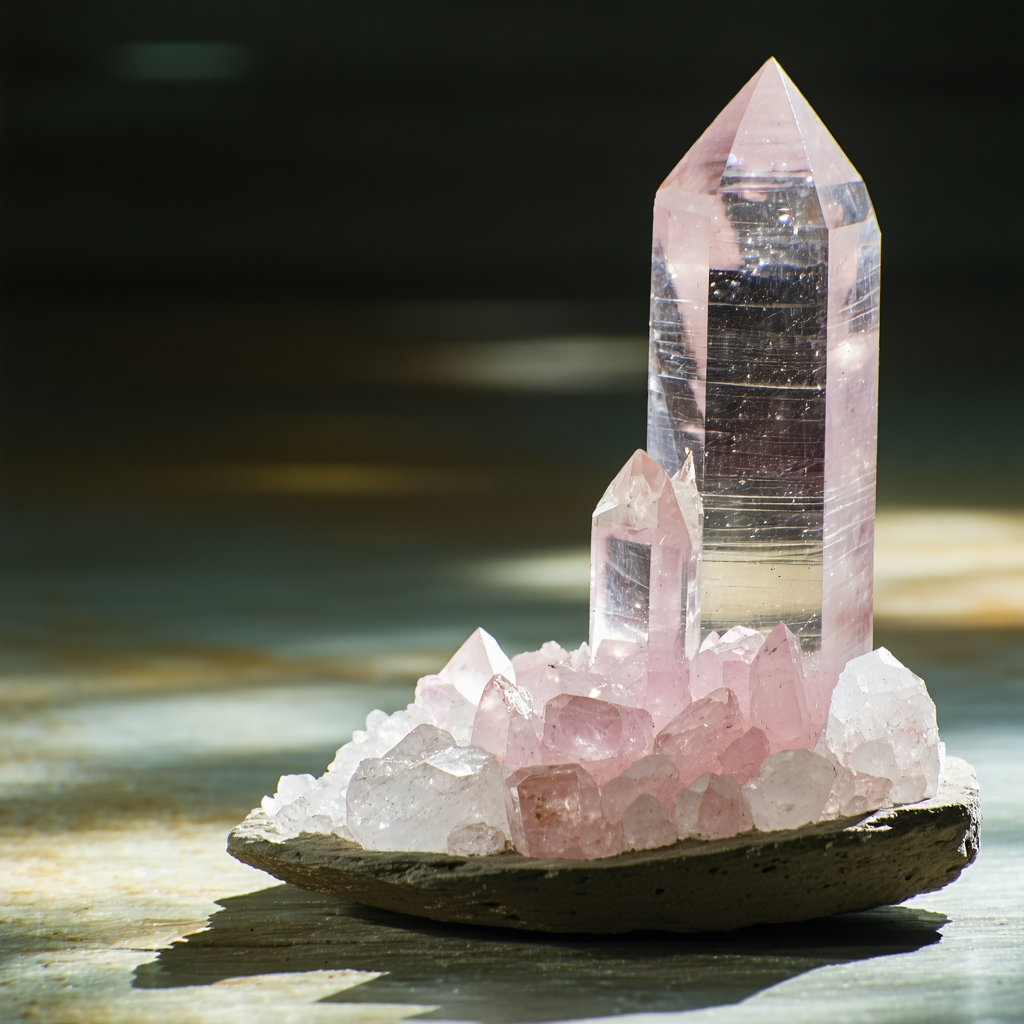
Crystal healing overview: what it is and how people use it
Crystal healing is a complementary wellness practice in which people place gemstones or minerals on or near the body with the intention of promoting relaxation, balance, and a general sense of well-being. This crystal healing overview will walk you through the history, the most commonly used stones, the practical steps for getting started, and what the current evidence actually says – so you can make an informed choice about whether it fits your routine. I have found that approaching crystal healing with curiosity rather than rigid expectation makes the experience far more rewarding.
- What crystal healing is
- A brief history of crystal use
- How crystal healing is said to work
- Common stones and their traditional associations
- How to get started with crystal healing
- Cleansing and charging your crystals
- Integrating crystal healing into daily life
- What the evidence says
- Safety considerations
- Frequently asked questions
What crystal healing is
At its core, this crystal healing overview begins with a simple definition: crystal healing is the intentional use of natural minerals and gemstones as a focus for mindfulness, relaxation, or energetic work. Practitioners believe that different stones carry distinct vibrational qualities that may interact with the body’s own energy field, sometimes called the biofield or aura.
It is important to note that crystal healing is considered a complementary practice – meaning it sits alongside, not in place of, conventional medical care. Most people who use crystals do so as one piece of a broader self-care puzzle that might also include meditation, yoga, journaling, or therapy.
The practice is highly personal. Some people use crystals purely for their aesthetic appeal and the mindful ritual of handling them. Others engage deeply with the metaphysical framework that underpins traditional crystal healing. Both approaches are entirely valid.
A brief history of crystal use
A thorough crystal healing overview would not be complete without some historical context. Humans have used gemstones and minerals for ritual, protection, and healing for thousands of years across many cultures.
Ancient civilizations and crystals
Ancient Egyptians used lapis lazuli, carnelian, and turquoise in amulets and burial rites, believing these stones offered protection and power. Ancient Greek soldiers reportedly rubbed hematite on their bodies before battle, associating it with Ares, the god of war. The word “crystal” itself comes from the Greek krystallos, meaning ice – because clear quartz was once thought to be permanently frozen water.
In traditional Chinese medicine, jade has held a revered place for millennia, associated with longevity and purity. Ayurvedic traditions in India have long used gem elixirs and stones placed on specific body points that correspond to chakras – energy centers along the spine.
The modern revival
Crystal healing as a recognizable modern practice gained significant momentum in the 1970s and 1980s alongside the broader New Age movement. Interest surged again in the 2010s, driven partly by social media and a wider cultural appetite for holistic self-care. Today, crystal healing is a global practice with a diverse community of practitioners ranging from casual hobbyists to dedicated professionals.
How crystal healing is said to work
Understanding the proposed mechanism is central to any crystal healing overview. Proponents offer a few different explanations, which I will summarize plainly so you can assess them for yourself.
The vibrational energy model
The most common explanation is that crystals possess a stable, coherent vibrational frequency – a result of their ordered atomic lattice structure. Proponents suggest that when a crystal is placed near the body, its frequency may interact with the body’s own electromagnetic field and encourage a more balanced or calm state.
It is worth noting that crystals do have measurable physical properties. Quartz, for example, exhibits the piezoelectric effect – it generates an electric charge under mechanical stress – which is why it is used in watches and electronic equipment. Whether this property translates into wellness benefits in the way crystal healing proponents describe has not been established by clinical research.
The placebo and mindfulness effect
A more evidence-supported explanation is that the ritual and intention involved in crystal healing may activate the placebo response or simply encourage a mindful, present-moment state. In my own routine, I have noticed that sitting quietly with a smooth piece of amethyst in my hand prompts me to slow my breathing and check in with how I am feeling – which is genuinely useful regardless of any energetic mechanism.
A 2001 study presented at the European Congress of Psychology by psychologist Christopher French found that participants reported similar sensations whether they held real crystals or fake ones, suggesting that expectation and focused attention play a significant role in the experience.
The chakra and biofield framework
Many crystal healing traditions map specific stones to the seven chakras – energy centers associated with different physical and emotional functions. For example, red stones like garnet or ruby are often linked to the root chakra at the base of the spine, associated with grounding and security. Green or pink stones like rose quartz or green aventurine are linked to the heart chakra, associated with love and compassion.
This framework provides a structured, intuitive system that many people find helpful for self-reflection and intentional practice, even if they hold the metaphysics lightly.
Common stones and their traditional associations
No crystal healing overview would be complete without a look at the stones people reach for most often. Below is a comparison of popular crystals, their traditional associations, and common uses.
- Clear quartz – Often called the “master healer,” traditionally associated with clarity, amplification of intention, and overall energy balance. A good starting point for beginners.
- Amethyst – Associated with calm, intuition, and restful sleep. Many people keep amethyst on a bedside table or hold it during meditation.
- Rose quartz – Linked to self-love, compassion, and emotional healing. Frequently used in heart-chakra practices.
- Black tourmaline – Traditionally regarded as a protective stone, said to absorb or deflect negative energy. Popular for grounding practices.
- Citrine – Associated with optimism, creativity, and abundance. Sometimes called the “merchant’s stone.”
- Lapis lazuli – Linked to truth, communication, and the throat chakra. One of the oldest stones used in human adornment.
- Selenite – Associated with clarity, cleansing, and higher states of awareness. Often used to cleanse other crystals.
- Green aventurine – Traditionally connected to luck, opportunity, and heart-centered energy.
- Obsidian – A volcanic glass associated with protection, truth, and shadow work.
- Carnelian – Linked to vitality, motivation, and the sacral chakra.
These associations come from traditional and metaphysical sources rather than clinical research. They are best understood as a cultural and intuitive vocabulary for self-exploration.
How to get started with crystal healing
One of the things I appreciate most about this practice is how low the barrier to entry is. You do not need an elaborate collection or years of study to begin exploring crystal healing.
Choosing your first crystal
A practical crystal healing overview for beginners often recommends starting with just one or two stones rather than buying a large set all at once. Clear quartz and amethyst are widely available, affordable, and versatile – making them excellent starting points.
When selecting a crystal, some practitioners advise letting intuition guide you: pick up several stones and notice which one feels most interesting or calming to hold. Others prefer to research stones whose traditional associations resonate with a current intention – for example, choosing rose quartz when focusing on self-compassion.
If you can, buy from a reputable seller who sources stones ethically. The crystal industry has faced criticism over mining practices, so looking for sellers who are transparent about sourcing is worthwhile.
Setting an intention
Intention-setting is central to most crystal healing practices. Before working with a stone, take a moment to clarify what you hope to focus on – whether that is greater calm, more creativity, or simply a mindful pause in your day. Hold the crystal in both hands, close your eyes, and state your intention silently or aloud.
This step is less about the crystal and more about you – it is a form of cognitive priming that directs your attention toward a specific goal. Many people find this simple act surprisingly grounding.
Basic placement techniques
The most common technique in crystal healing is lying down and placing stones on or near the body, often aligned with the chakra points. A simple beginner layout might involve:
- Placing a grounding stone such as black tourmaline near the feet or between the ankles.
- Resting a piece of rose quartz on the chest over the heart area.
- Placing amethyst above the crown of the head.
- Lying quietly for 10 to 20 minutes with slow, deliberate breathing.
You can also simply carry a crystal in your pocket, place one on your desk while you work, or hold one during a meditation session. The practice adapts easily to your lifestyle.
Cleansing and charging your crystals
Within the crystal healing overview framework, most traditions recommend cleansing new crystals before use and periodically thereafter. The idea is that stones may absorb or accumulate energy from their environment, and cleansing resets them to a neutral state.
Common cleansing methods
- Running water – Hold the crystal under cool running water for 30 to 60 seconds while visualizing any accumulated energy washing away. Note: some stones such as selenite, malachite, and pyrite are water-soluble or sensitive to moisture and should not be cleansed this way.
- Sunlight or moonlight – Place crystals in natural light for several hours. Full moonlight is a popular choice because it is gentle and works for almost all stones. Be aware that prolonged direct sunlight can fade some colored stones, including amethyst and rose quartz.
- Smoke cleansing – Pass the crystal through the smoke of burning herbs such as rosemary, cedar, or sustainably sourced sage. This is a practice found in many cultures, though it is worth being mindful of cultural context and sourcing.
- Sound – Use a singing bowl, tuning fork, or bells to bathe the crystal in sound vibrations. This method works well for large collections.
- Selenite or clear quartz clusters – Placing a crystal on or near selenite or a quartz cluster is said to cleanse and recharge it passively over several hours.
Charging your crystals
Charging is the process of infusing a crystal with a specific intention or energy. After cleansing, hold the stone, set your intention clearly in your mind, and visualize that intention flowing into the crystal. Some people prefer to charge crystals under a full moon, in sunlight, or buried briefly in the earth.
Integrating crystal healing into daily life
The most sustainable approach to any wellness practice – and this crystal healing overview is no exception – is to weave it into habits you already have rather than treating it as a separate, time-consuming ritual.
Morning and evening rituals
I keep a small piece of citrine on my bathroom shelf and hold it for about thirty seconds each morning while I set a simple intention for the day. In the evening, I sometimes hold amethyst during a short breathing exercise before sleep. Neither practice takes more than a few minutes, but both serve as anchors that help me transition between parts of my day more deliberately.
You might place a crystal near your coffee maker, on your meditation cushion, or on your nightstand – anywhere it will naturally catch your attention and prompt a moment of mindfulness.
Crystal healing at work
Many people keep crystals at their desks. Shungite and black tourmaline are popular choices for workspaces, traditionally associated with protection from electromagnetic fields – though it should be noted there is no scientific evidence supporting this specific claim. The practical benefit is more likely the mindful pause that comes from noticing and handling the stone during a stressful moment.
A small bowl of tumbled stones on your desk can serve as a tactile fidget tool that also prompts a grounding breath. That alone may support focus and calm during a demanding workday.
Meditation with crystals
Crystal healing and meditation pair naturally. Holding a stone during meditation gives your hands a focal point, which some people find helpful for staying present. You can also gaze softly at a crystal placed in front of you as a form of trataka – a traditional concentration practice.
Experiment with different stones during meditation and notice whether any seem to shift your experience. Some people report that certain stones feel energizing while others feel calming – and while this is subjective, it can be a useful guide for building a personal practice.
What the evidence says
Any responsible crystal healing overview must address the evidence base honestly. The short version: rigorous clinical evidence supporting crystal healing as a direct physiological intervention is currently lacking.
The National Center for Complementary and Integrative Health (NCCIH), part of the U.S. National Institutes of Health, notes that many complementary practices lack sufficient high-quality research and encourages people to discuss any complementary approach with their healthcare provider. You can read their guidance at nccih.nih.gov.
What the evidence does support is the value of mindfulness, intentional breathing, and relaxation practices – all of which crystal healing may naturally incorporate. The placebo effect is also a genuine physiological phenomenon: positive expectation can produce measurable changes in mood, pain perception, and stress markers. This does not make the benefits “fake” – it makes them real through a different mechanism than proponents often claim.
I think the most honest framing is this: crystal healing may support well-being primarily as a vehicle for mindfulness, intention, and ritual – and those are meaningful contributions to a wellness practice, even without a metaphysical mechanism.
Safety considerations
Crystal healing is generally considered safe for most people when used as a complementary practice. There are, however, a few practical points worth including in any crystal healing overview.
- Do not substitute crystals for medical care. If you have a health condition, crystals should complement – not replace – advice and treatment from qualified healthcare professionals.
- Some crystals are toxic. Certain minerals, including malachite, cinnabar, and galena, contain toxic compounds. Avoid making water elixirs with raw stones unless you have verified they are safe. Using an indirect method – placing the crystal outside a sealed glass container of water – is a safer approach.
- Water sensitivity. As noted above, some stones dissolve or degrade in water. Always check before submerging a crystal.
- Sun fading. Prolonged direct sunlight can alter the color of amethyst, rose quartz, fluorite, and other stones.
- Ethical sourcing. Some crystals are mined under conditions that raise environmental and labor concerns. Researching your supplier and choosing ethically sourced stones is a meaningful part of a conscientious practice.
Frequently asked questions
What is a crystal healing overview for beginners?
A crystal healing overview for beginners is a plain-language introduction to the practice of using gemstones and minerals as tools for mindfulness, relaxation, and intentional self-care. It covers what crystals are traditionally said to do, how to choose and care for them, and how to integrate simple crystal practices into daily life – without requiring any prior knowledge or a large investment.
Does crystal healing actually work?
The honest answer depends on what “work” means to you. There is currently no clinical evidence that crystals directly alter physiology in the ways many proponents claim. However, the mindfulness, ritual, and intention-setting involved in crystal healing may genuinely support relaxation and well-being – partly through the well-documented placebo response and partly through the inherent benefits of slowing down and focusing attention. Many people find real value in the practice for these reasons.
Which crystal is best for anxiety?
Amethyst is the stone most commonly associated with calm and anxiety relief in crystal healing traditions. Blue lace agate, lepidolite, and howlite are also frequently recommended for soothing nervous energy. From a practical standpoint, any smooth, cool stone that you find pleasant to hold can serve as a tactile grounding tool during moments of stress – the specific mineral matters less than the mindful attention you bring to it.
How do I know if my crystal needs cleansing?
Most crystal healing practitioners recommend cleansing a new crystal before first use and then periodically – especially after intense emotional experiences, after sharing it with others, or simply on a regular schedule such as each new or full moon. Some people report that a crystal feels “heavy” or less vibrant when it needs cleansing, though this is a subjective experience. When in doubt, a brief cleanse does no harm.
Can I use multiple crystals at once?
Yes, and many practitioners enjoy working with crystal grids or layouts that use several stones together. A common approach is to choose a central stone that represents your main intention and surround it with supporting stones. Beginners may find it easier to start with one or two stones and add more as they become familiar with the practice.
Is crystal healing connected to a specific religion?
Crystal healing draws on traditions from many cultures – including ancient Egyptian, Greek, Indian, and Chinese practices – but it is not tied to any single religion. Modern crystal healing is practiced by people with a wide range of spiritual beliefs and by those who approach it purely as a secular mindfulness tool. You can engage with crystal healing in whatever way aligns with your own worldview.
How much should I spend on crystals?
You do not need to spend a lot to begin exploring crystal healing. Tumbled stones – small, polished pieces – are typically inexpensive and widely available, often costing just a few dollars each. A basic starter set of three to five versatile stones such as clear quartz, amethyst, and black tourmaline can cost under twenty dollars. The size and price of a crystal do not determine its usefulness in practice.
Where is the best place to buy crystals?
Local gem shows, independent crystal shops, and reputable online retailers are all good options. When buying online, look for sellers who provide information about where their stones are sourced and how they are mined. Reading reviews and asking questions about sourcing transparency helps ensure you are getting genuine, ethically obtained stones rather than dyed, synthetic, or mislabeled pieces.
For more practical wellness ideas, browse the Health Living Today guide library.