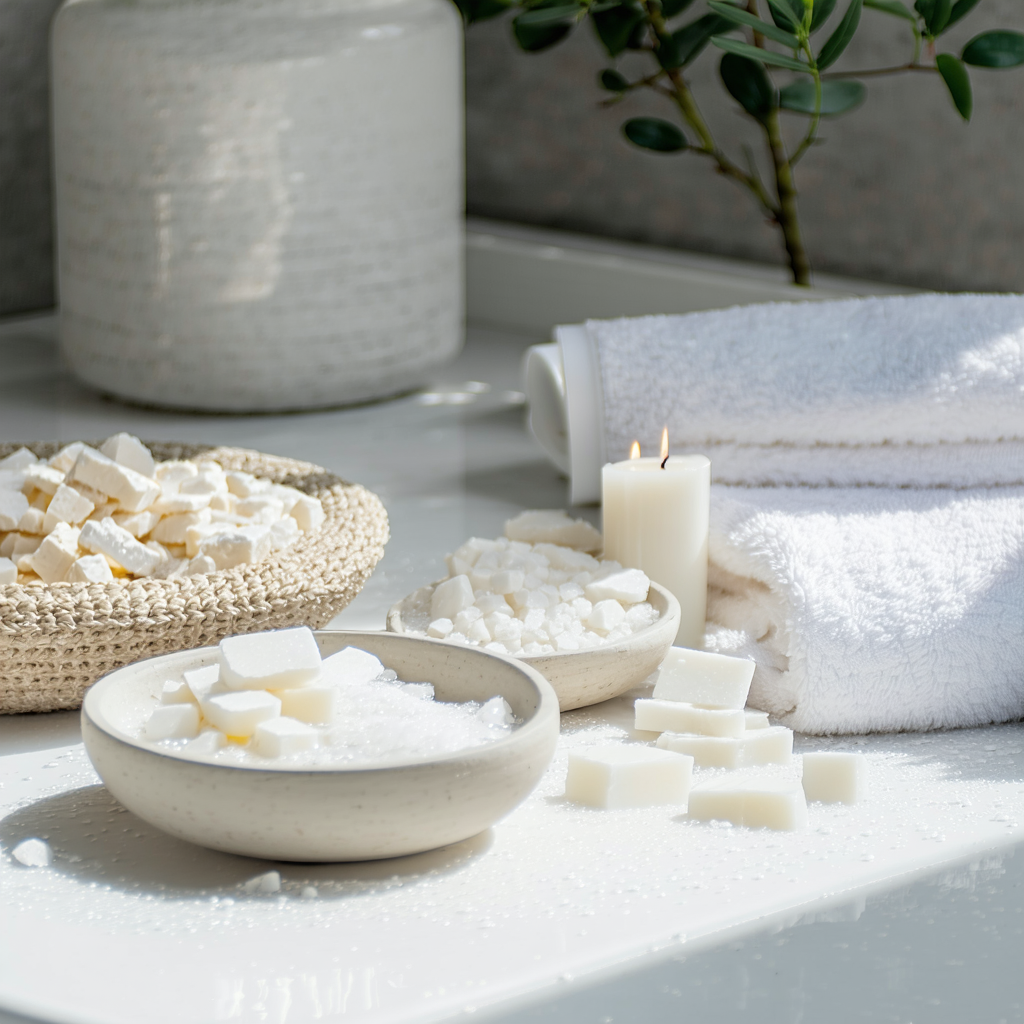
What are magnesium baths epsom and do they actually work?
Magnesium baths epsom – soaking in a tub of warm water dissolved with Epsom salt – are one of the most talked-about home wellness rituals, and for good reason. Many people, myself included, find that a regular Epsom salt soak leaves muscles feeling looser and the mind noticeably calmer. The science is still evolving, but the practice is low-risk, inexpensive, and easy to build into a weekly routine.
Table of contents
- What is Epsom salt and where does magnesium come in
- How skin absorption works – what research actually says
- Potential benefits of magnesium baths Epsom
- How to take an Epsom salt magnesium bath – step by step
- How much Epsom salt to use
- How often should you take magnesium baths
- Epsom salt vs magnesium flakes – a quick comparison
- Practical tips to get more from each soak
- Who should be careful with Epsom salt baths
- Frequently asked questions
What is Epsom salt and where does magnesium come in
Epsom salt is the common name for magnesium sulfate heptahydrate – a naturally occurring mineral compound first identified in the springs near Epsom, Surrey, England. It looks a lot like table salt but it is chemically very different. The key difference is that Epsom salt contains magnesium, a mineral that plays a role in over 300 enzymatic reactions in the human body, according to the National Institutes of Health Office of Dietary Supplements.
Magnesium supports muscle and nerve function, energy production, blood sugar regulation, and protein synthesis. Many adults in Western countries do not consistently meet the recommended daily intake through diet alone, which is part of why magnesium baths epsom have attracted so much interest as a supplementary route.
When you dissolve Epsom salt in warm bathwater, the magnesium sulfate dissociates into magnesium ions and sulfate ions. The question that researchers keep returning to is whether those ions can meaningfully cross the skin barrier and enter the bloodstream.
How skin absorption works – what research actually says
The skin is a remarkable barrier. Its outermost layer, the stratum corneum, is designed to keep most things out – including water and dissolved minerals. That said, the skin is not completely impermeable, and some small molecules can pass through hair follicles and sweat glands.
A small pilot study published in the Journal of Integrative Medicine found measurable increases in serum and urine magnesium levels in participants who soaked in Epsom salt baths for seven days. The increases were modest but statistically significant, suggesting that some transdermal absorption does occur. Larger, more rigorous trials are still needed, and mainstream dermatology has not reached a firm consensus.
I have found that focusing too much on the absorption debate misses a practical point. Even if the systemic magnesium uptake from a single magnesium bath epsom session is small, the warm water itself reduces muscle tension, improves circulation, and activates the parasympathetic nervous system. Those effects alone make the ritual worthwhile for many people.
Potential benefits of magnesium baths Epsom
Muscle recovery and soreness
One of the most common reasons people turn to magnesium baths epsom is post-exercise muscle soreness. Magnesium plays a direct role in muscle contraction and relaxation, and some athletes find that soaking after a hard training session may support faster recovery. The warm water increases blood flow to tired muscles, and the act of being still in a bath gives the body a genuine rest signal.
In my own routine, I started taking a 20-minute Epsom salt soak after long weekend runs, and I noticed my legs felt noticeably less stiff the following morning. I cannot attribute that entirely to magnesium absorption – the heat and the rest both matter – but the combination works well for me.
Stress and sleep support
Magnesium is involved in the regulation of the hypothalamic-pituitary-adrenal axis, which governs the stress response. Some research suggests that adequate magnesium status may support a calmer nervous system. A warm magnesium bath epsom taken about an hour before bed may help signal to the body that it is time to wind down.
The temperature drop that follows a warm bath – as your core body temperature falls after you get out – is itself a well-documented sleep cue. Pairing that thermal effect with the relaxing ritual of an Epsom salt soak creates a useful pre-sleep routine.
Skin comfort
Some people find that regular Epsom salt baths may support softer, less irritated skin. The sulfate component is thought to play a role here. People with certain skin conditions sometimes include magnesium baths epsom in their self-care routines, though it is always worth checking with a dermatologist before adding any new practice if you have a diagnosed skin condition.
Joint comfort and inflammation
Warm water immersion has long been used to ease stiff joints. Some people with general joint discomfort find that magnesium baths epsom may provide temporary relief, likely through the combination of heat, buoyancy, and whatever magnesium is absorbed through the skin. This is one of the areas where the evidence is more anecdotal than clinical, but the safety profile of a warm bath is high.
Mood and mental clarity
Magnesium is sometimes called the “relaxation mineral” because of its role in GABA receptor activity – GABA being the primary inhibitory neurotransmitter in the brain. Low magnesium status has been associated in some observational studies with increased anxiety and low mood. Whether a magnesium bath epsom meaningfully shifts magnesium status enough to affect mood is hard to say, but many people report feeling genuinely calmer after a soak, and that subjective experience has real value.
How to take an Epsom salt magnesium bath – step by step
- Fill the tub with warm water. Aim for a temperature between 37 and 40 degrees Celsius (98 to 104 degrees Fahrenheit). Too hot and you may feel lightheaded; too cool and the salts dissolve less efficiently and the relaxation effect is reduced.
- Add your Epsom salt. Measure out the appropriate amount (see the next section) and pour it under the running tap so it dissolves fully before you get in.
- Stir the water gently with your hand to make sure the salt is evenly distributed and not sitting at the bottom.
- Soak for 15 to 20 minutes. This is the window most commonly cited in the absorption research. Longer is not necessarily better, and staying in too long in hot water can be dehydrating.
- Rinse off lightly with clean water if you prefer, or simply pat dry. Some people skip the rinse to allow any residual minerals to remain on the skin.
- Hydrate. Drink a glass of water before and after your magnesium bath epsom session. Warm water causes sweating, and staying hydrated supports the overall experience.
- Rest afterward. If possible, follow your soak with 10 to 15 minutes of lying down. This is when the parasympathetic benefits tend to deepen.
How much Epsom salt to use
The amount of Epsom salt used in magnesium baths epsom varies across sources, but a commonly recommended starting point for a standard adult bathtub (roughly 150 to 200 litres of water) is 2 cups – about 450 to 500 grams. Some protocols for muscle recovery or therapeutic purposes suggest up to 4 cups.
If you are new to Epsom salt soaks, starting with 1 to 2 cups is sensible. You can increase the amount over time as you learn how your body responds. Using very large amounts is unlikely to cause harm in a healthy adult but is probably not necessary, and Epsom salt is most effective when the water concentration is sufficient to create an osmotic gradient across the skin.
For children’s baths, the amounts are much smaller – typically half a cup or less – and it is worth checking with a pediatrician before including children in any Epsom salt bath routine.
How often should you take magnesium baths
Most people who include magnesium baths epsom in their wellness routine soak two to three times per week. That frequency seems to offer a good balance between consistency and practicality. Daily soaks are used by some people during periods of high physical stress or when recovering from intense exercise, and that is generally considered safe for healthy adults.
If your main goal is stress reduction and better sleep, two sessions per week – perhaps midweek and on the weekend – can be enough to notice a difference over a few weeks. Consistency matters more than frequency. A reliable twice-weekly practice will outperform sporadic daily soaks in terms of building a sustainable habit.
I started with one soak per week and worked up to three. After about a month at that frequency, the ritual itself became a cue for my nervous system to relax, almost like a conditioned response.
Epsom salt vs magnesium flakes – a quick comparison
Epsom salt (magnesium sulfate) is not the only form of magnesium used in baths. Magnesium chloride flakes are a popular alternative, and the two are often confused or used interchangeably. Here is a plain comparison to help you decide which suits your goals.
- Epsom salt (magnesium sulfate) – widely available, very affordable, well-established in sports and wellness culture, contains both magnesium and sulfate ions, mild on most skin types
- Magnesium chloride flakes – often marketed as having superior absorption potential, contains magnesium and chloride, generally more expensive than Epsom salt, some practitioners prefer it for skin applications
- Absorption evidence – neither form has robust clinical evidence for significant transdermal uptake; the limited studies that do exist show modest increases with both forms
- Skin feel – magnesium chloride can feel slightly silkier in water; Epsom salt water feels closer to a regular bath
- Cost – Epsom salt is significantly cheaper per bath, making it more practical for regular use
- Sulfate content – unique to Epsom salt; some people specifically want the sulfate component for its potential role in detoxification pathways, though the evidence for that is limited
For most people starting out with magnesium baths epsom, standard Epsom salt is the practical and economical choice. Magnesium flakes are worth exploring if you want to experiment with different forms or if you find Epsom salt irritating to your skin.
Practical tips to get more from each soak
Use the right water temperature
Water that is too hot can cause dizziness and may actually work against relaxation by overstimulating the nervous system. The sweet spot for a magnesium bath epsom is warm but not uncomfortably hot – you should be able to ease in without hesitation.
Dim the lights and reduce stimulation
The point of the soak is partly to activate your rest-and-digest nervous system. Scrolling on a phone in the bath counteracts that. I keep my phone in another room and use the time for slow breathing or simply doing nothing, which turns out to be harder than it sounds.
Add complementary elements carefully
Some people add a few drops of lavender or chamomile essential oil to their magnesium baths epsom. If you do this, mix the oil with a carrier like a tablespoon of coconut oil or unscented body wash before adding it to the water – essential oils do not dissolve in water on their own and can irritate skin if they pool undiluted. Avoid adding any oils if you have sensitive skin until you know how you react.
Time your soak strategically
For sleep support, take your magnesium bath epsom 60 to 90 minutes before your intended bedtime. This allows enough time for the post-bath temperature drop to align with your sleep window. For muscle recovery, soaking within an hour or two after exercise tends to be most effective.
Keep the bathroom door closed
Keeping the room warm helps maintain your water temperature longer and creates a mild steam environment. The humidity can feel soothing to the respiratory tract and adds to the overall sensory experience of the soak.
Track how you feel over time
Because the effects of regular magnesium baths epsom are cumulative and subtle, keeping a simple log – even just a note in your phone – of how you feel on soak days versus non-soak days can help you assess whether the practice is genuinely working for you. Personal data beats general recommendations every time.
Who should be careful with Epsom salt baths
Epsom salt baths are generally considered safe for most healthy adults. However, certain groups should check with a healthcare provider before making magnesium baths epsom a regular practice.
- People with kidney disease – the kidneys regulate magnesium excretion, and impaired kidney function can lead to magnesium accumulating to problematic levels
- People with diabetes – hot baths can affect blood sugar and circulation, particularly in the feet; anyone with diabetic neuropathy should be especially cautious with water temperature
- Pregnant people – warm baths are generally considered safe in pregnancy, but very hot baths are not recommended; the magnesium component is unlikely to be an issue at typical bath concentrations, but checking with a midwife or obstetrician is sensible
- People with open wounds or active skin infections – soaking in any bath, including an Epsom salt bath, over broken skin is not advisable
- People with low blood pressure – warm water can cause blood vessels to dilate and blood pressure to drop; getting out of the tub slowly and having something to hold onto is a good habit for anyone, but especially important here
The safety profile of magnesium baths epsom is high relative to many wellness interventions. The main risks are related to the warm water itself – dehydration, lightheadedness, and slipping – rather than the Epsom salt specifically.
Frequently asked questions
How long should I soak in a magnesium Epsom salt bath?
Most guidance points to 15 to 20 minutes as the optimal soak time for a magnesium bath epsom. This appears to be enough time for some transdermal contact and for the thermal relaxation effects to take hold, without the dehydrating downsides of very long hot soaks. If you feel lightheaded at any point, get out slowly and drink some water.
Can I use Epsom salt in a foot bath instead of a full tub?
Yes. A magnesium Epsom salt foot soak is a practical alternative when a full bath is not possible. Use about half a cup of Epsom salt in a basin of warm water and soak your feet for 15 to 20 minutes. The surface area of absorption is smaller than a full-body soak, but many people find foot soaks just as effective for relaxation and local muscle comfort.
Will magnesium baths Epsom raise my magnesium levels significantly?
The evidence suggests that some increase in magnesium levels is possible, but the effect appears modest rather than dramatic. If you have a clinically confirmed magnesium deficiency, oral magnesium supplements are a more direct and evidence-supported route to raising serum levels. Magnesium baths epsom work best as a complementary practice alongside a magnesium-rich diet rather than as a primary correction strategy.
Is there a difference between food-grade and bath-grade Epsom salt?
Bath-grade Epsom salt is what you want for magnesium baths epsom. Food-grade Epsom salt exists and is used as a laxative in very small oral doses, but that is a very different application. For baths, standard bath-grade Epsom salt from a pharmacy or supermarket is appropriate and does not need to be food-grade. Always check the label to confirm it is pure magnesium sulfate with no added fragrances or fillers if you have sensitive skin.
Can children take Epsom salt baths?
Some parents include small amounts of Epsom salt in their children’s baths. The general guidance is to use much smaller quantities than adult doses – typically around a quarter to half a cup for a child’s bath – and to keep the water temperature comfortable rather than hot. It is worth checking with a pediatrician before introducing magnesium baths epsom for children, especially young children or those with any health conditions.
How do I store Epsom salt properly?
Epsom salt should be stored in a cool, dry place in a sealed container. Moisture causes it to clump, which makes measuring and dissolving it more difficult. A glass jar with a lid or the original resealable bag both work well. Properly stored Epsom salt does not expire and can last for years without losing effectiveness.
Can I take a magnesium bath epsom every day?
Daily Epsom salt baths are used by some people, particularly athletes in heavy training phases, and are generally considered safe for healthy adults. The main consideration is practical – daily hot baths can dry out the skin over time, so moisturizing after each soak is a good habit. If you find your skin becoming dry or irritated with daily soaks, reducing frequency to three or four times per week is a reasonable adjustment.
Do magnesium baths epsom help with anxiety?
Some people find that regular magnesium baths epsom may support a calmer mental state. The warm water bath itself activates the parasympathetic nervous system, and if magnesium is absorbed transdermally, its role in GABA receptor activity could contribute to a feeling of calm. The evidence is not strong enough to position Epsom salt baths as a standalone approach to anxiety, but as one element of a broader self-care routine – alongside sleep, movement, and nutrition – many people find them genuinely helpful.
For more practical wellness ideas, browse the Health Living Today guide library.