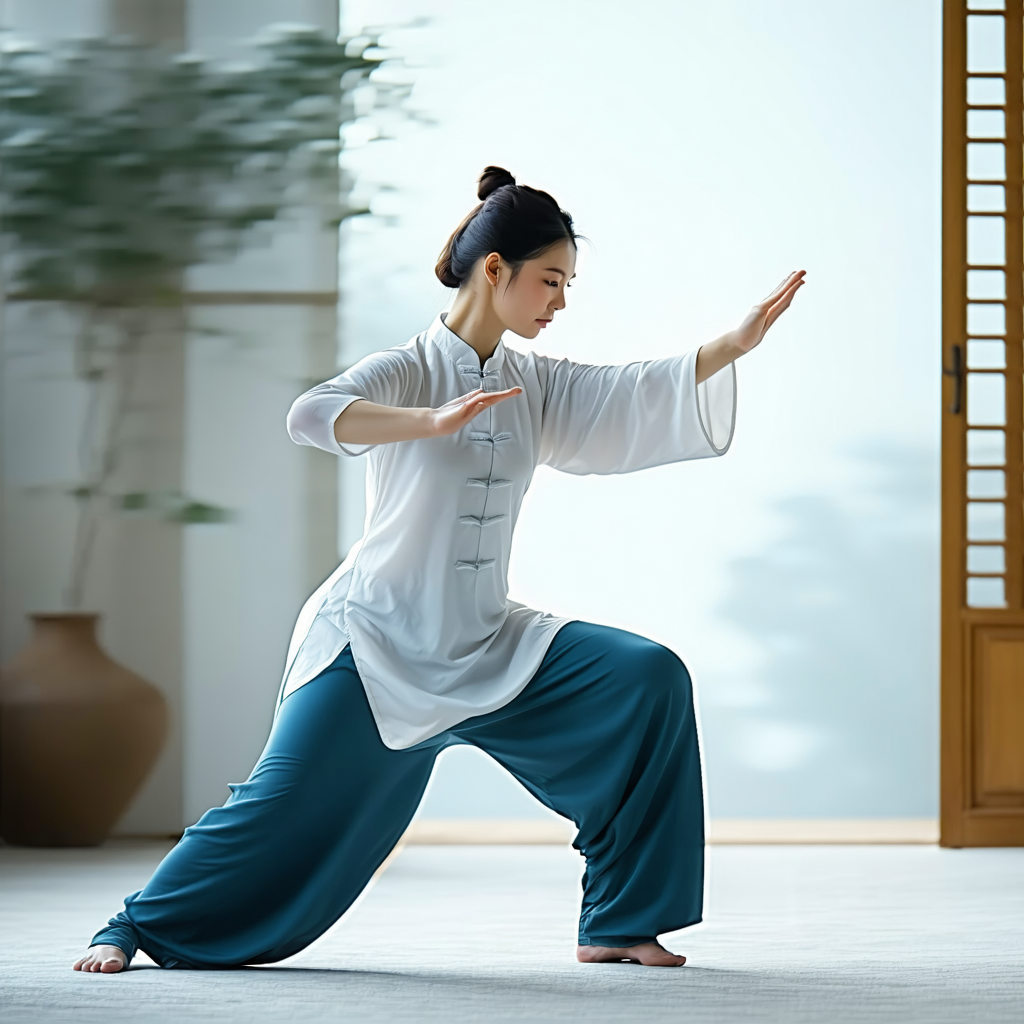
Tai chi for balance – what you need to know
Tai chi for balance is one of the most well-researched, accessible movement practices available for people who want to feel steadier on their feet. Research consistently shows it reduces fall risk, improves postural control, and builds the kind of quiet body awareness that other workouts often skip. I have found it to be one of the few practices where the benefits show up fast enough to keep you motivated.
Table of contents
- What tai chi actually is and why it targets balance so well
- The science behind tai chi for balance
- Who benefits most from tai chi for balance
- Which tai chi style is best for balance training
- How to get started with tai chi for balance
- Key movements that directly train balance
- Building a consistent tai chi routine
- Common mistakes that slow your progress
- Combining tai chi with other balance strategies
- How to track your balance improvements
- Frequently asked questions
What tai chi actually is and why it targets balance so well
Tai chi is a Chinese movement art that links slow, deliberate postures together into a flowing sequence. Each movement requires you to shift your weight from one leg to the other in a controlled way, which is precisely the physical skill that balance depends on.
Unlike a treadmill or a weight machine, tai chi asks your nervous system, your muscles, and your inner ear to coordinate at the same time. That triple demand is why tai chi for balance training produces results that feel different from ordinary exercise – you are not just building strength, you are rewiring how your body senses and responds to gravity.
The practice also trains what researchers call proprioception – your body’s internal map of where your limbs are in space. Good proprioception is the invisible foundation of steady movement, and it tends to decline with age or inactivity. Tai chi addresses that decline directly.
The science behind tai chi for balance
What the research actually shows
The evidence base for tai chi and balance is unusually strong for a mind-body practice. A landmark systematic review published by the Centers for Disease Control and Prevention identified tai chi as one of the most effective fall-prevention programs available, particularly for older adults.
Multiple randomized controlled trials have found that regular tai chi practice may reduce fall frequency by 20 to 45 percent in community-dwelling older adults. Those are meaningful numbers – not small statistical signals but real differences in daily life safety.
Studies also show improvements in specific balance measures such as single-leg stance time, functional reach, and the Berg Balance Scale. These are the same tests physical therapists use to assess fall risk, so the improvements are clinically relevant, not just theoretical.
Why slow movement is the secret
The deliberate slowness of tai chi is not a cultural quirk – it is a training mechanism. When you move slowly, your nervous system has time to detect and correct small errors in posture before they become falls. Fast movement bypasses this feedback loop.
Slow movement also increases the time your muscles spend in partial contraction, which builds the endurance and fine motor control that balance actually requires. Quick gym exercises tend to train peak force, not the sustained low-level activation that keeps you upright during everyday life.
Mental focus as a balance tool
Tai chi for balance works partly through attention. The practice requires you to focus on where your weight is, how your feet contact the ground, and where your center of gravity sits. That focused attention trains the same mental pathways that prevent distraction-related falls.
Some research suggests that tai chi may improve dual-task performance – the ability to walk safely while also thinking or talking. That is exactly the scenario where many real-world falls happen.
Who benefits most from tai chi for balance
Older adults concerned about falling
Tai chi for balance has the deepest evidence base in adults over 60. If you have had a fall, feel unsteady on stairs, or notice that you grab furniture for support, tai chi is worth prioritizing. The low-impact nature means most people can participate regardless of current fitness level.
People recovering from injury or illness
Some people find tai chi helpful during recovery from ankle sprains, hip replacements, or neurological conditions like Parkinson’s disease and stroke. The gentle loading and controlled weight shifts can help rebuild confidence and coordination. Always check with your healthcare provider before starting if you are in active rehabilitation.
Younger adults and athletes
Tai chi for balance is not only for older populations. Athletes use it to improve proprioception, reduce injury risk, and develop the kind of stable base that enhances performance in sports requiring agility. Younger practitioners often notice improvements in posture and core stability within a few weeks.
People with sedentary lifestyles
If you spend most of your day sitting, your balance systems are getting very little stimulation. Tai chi is one of the most efficient ways to reverse that deficit. Even two or three short sessions per week can begin to restore the neuromuscular patterns that sitting erodes.
Which tai chi style is best for balance training
A quick comparison of the main styles
- Yang style – the most widely practiced, uses large open postures and gentle transitions. Excellent for beginners and balance training because the movements are easy to see and replicate.
- Sun style – features a higher stance and unique step-close-step footwork that directly challenges balance. Often recommended in clinical fall-prevention programs.
- Wu style – smaller, more compact movements with a slight forward lean. Good for people with limited space or mobility but requires more instruction to learn safely.
- Chen style – alternates between slow and explosive movements. Effective for younger practitioners but may be too demanding for those starting with significant balance deficits.
- 24-form simplified tai chi – a standardized short form created for broad accessibility. This is the version used in most research studies and community health programs.
For most people starting tai chi for balance improvement, Yang style or the 24-form simplified version is the practical choice. Sun style is worth exploring once you have a foundation, because its footwork patterns are particularly well matched to balance rehabilitation.
How to get started with tai chi for balance
Finding the right instruction
Learning from a qualified instructor – at least for the first few months – makes a significant difference. A good teacher will correct your weight distribution and foot placement, which are the details that determine whether you are actually training balance or just going through the motions.
Community centers, YMCAs, and senior centers often offer low-cost or free tai chi classes specifically designed for balance and fall prevention. Online video classes can supplement in-person learning but work best after you have a basic understanding of the forms.
What to wear and where to practice
Wear flat, thin-soled shoes or practice in socks on a non-slip surface. Thick-soled athletic shoes reduce the ground feedback your feet need to sense balance accurately. A smooth floor or firm grass surface works well. Avoid soft carpet for balance work, as it adds instability that can be frustrating before you have built foundational skills.
My own starting experience
When I first tried tai chi for balance in a community center class, I was surprised by how much mental effort it took. I kept losing track of which foot should carry my weight. My instructor told me to watch my shadow on the floor and think of my body as a slowly swaying tree – roots down, upper body light. That single image changed how I approached every session afterward.
Session length and frequency for beginners
Start with 15 to 20 minutes per session, three times per week. That is enough to begin building the neuromuscular patterns that improve balance without overwhelming your body or your schedule. Most people find that 8 to 12 weeks of consistent practice produces noticeable changes in steadiness.
Key movements that directly train balance
Wuji standing – the foundation posture
Wuji is simply standing with feet shoulder-width apart, knees slightly bent, spine tall, and attention turned inward. It sounds simple but it is actively training your postural muscles and your proprioceptive awareness. I have found that five minutes of Wuji standing before a session sharpens the quality of everything that follows.
Practice by standing near a wall or chair for safety. Over time, try closing your eyes briefly to increase the balance challenge.
Single-leg weight shifts
Almost every tai chi transition involves moving 100 percent of your weight onto one leg while the other lifts or steps. This single-leg loading is the core mechanism by which tai chi for balance training works.
Practice the weight shift in isolation before attempting full forms. Stand near support, slowly shift all weight to your right foot, hold for three to five seconds, then shift to the left. Build up to 30-second holds on each side.
Cloud hands
Cloud hands is a side-stepping sequence where your arms move in slow horizontal circles while your weight shifts rhythmically left and right. It trains lateral balance – the direction in which most falls actually occur.
The movement also requires your eyes to track your moving hands, which trains the vestibulo-ocular reflex – the connection between your inner ear and your eye muscles that helps stabilize your vision during movement.
Brush knee and push
This movement involves stepping forward while one hand sweeps low and the other pushes forward. It trains your ability to balance during forward weight transfer, which mimics the mechanics of normal walking.
Golden rooster stands on one leg
This is the most direct balance challenge in the tai chi repertoire. You lift one knee to hip height while standing on the opposite leg, arms extended for counter-balance. Even holding the position for five to ten seconds builds significant single-leg stability.
Use a wall or chair nearby when you first practice this. Progress to freestanding holds, then try it with eyes closed as your confidence grows.
Building a consistent tai chi routine
A practical weekly structure
- Days 1, 3, 5 – full tai chi session of 20 to 30 minutes including warm-up, form practice, and Wuji standing cool-down.
- Days 2, 4 – short 10-minute balance micro-sessions focusing on single-leg holds and cloud hands.
- Days 6, 7 – rest or gentle walking to consolidate neuromuscular learning.
This structure gives your nervous system both stimulus and recovery. Balance improvements happen during rest as much as during practice, because the brain consolidates motor learning during sleep and downtime.
Progressing over time
After 8 weeks of basic practice, you can increase the challenge by narrowing your stance, closing your eyes during simpler postures, or adding head turns during weight shifts. Each of these modifications increases the demand on your vestibular and proprioceptive systems.
You can also lengthen your sessions gradually. Many experienced practitioners do 45 to 60 minutes of tai chi daily, but there is no need to rush toward that volume. Consistency over months matters far more than session length.
Staying motivated
Tai chi for balance progress is subtle at first. You may not notice it in the mirror, but you will notice it when you walk across an icy parking lot or reach for something on a high shelf. Keeping a simple log of your single-leg hold times gives you a concrete metric to track.
Practicing with a partner or a class also helps. The social element of tai chi is not incidental – it is one of the reasons community-based programs show better long-term adherence than home-only practice.
Common mistakes that slow your progress
Rushing through the movements
The most common error I see in beginners is moving too fast. Speed defeats the purpose of tai chi for balance training. If you are completing a full form in under five minutes, you are almost certainly moving too quickly for the balance benefits to accumulate.
Try timing yourself and deliberately adding five extra seconds to each transition. The discomfort of moving that slowly is the training stimulus.
Locking the knees
Straight, locked knees eliminate the micro-adjustments that balance requires. Keep a soft bend in both knees throughout practice. This also protects your joints and keeps your center of gravity lower, which is inherently more stable.
Holding the breath
Many beginners hold their breath during challenging postures. This increases muscle tension and actually impairs balance by reducing the sensory feedback from your postural muscles. Breathe slowly and continuously, coordinating exhales with weight shifts when possible.
Skipping the single-leg work
Some people modify tai chi by keeping both feet on the ground at all times to feel safer. This removes the primary balance training mechanism. Practice near support instead – a chair back or a wall – but do not eliminate the weight shifts entirely.
Practicing on soft or uneven surfaces too soon
Grass, sand, or thick carpet add instability that can be overwhelming before you have foundational skills. Start on a firm, level surface and add surface variety only after you can hold single-leg positions for 20 to 30 seconds confidently.
Combining tai chi with other balance strategies
Strength training as a complement
Tai chi for balance works best when your hip and ankle muscles have enough strength to respond to the signals your nervous system sends. Targeted strengthening of the glutes, hip abductors, and calf muscles – two sessions per week – can accelerate your tai chi progress significantly.
Simple exercises like calf raises, side-lying leg lifts, and mini-squats take less than 15 minutes and pair well with a tai chi practice schedule.
Walking with intention
Apply tai chi principles to your daily walking. Slow down slightly, feel each heel-to-toe transition, and notice your weight shift from foot to foot. This turns ordinary walking into balance practice and reinforces the neuromuscular patterns you are building in formal sessions.
Vision and vestibular health
Balance depends on three systems working together – proprioception, vision, and the vestibular system in your inner ear. If you have not had an eye exam recently, it is worth scheduling one. Uncorrected vision problems significantly increase fall risk and limit how much tai chi can compensate.
If you experience dizziness or vertigo, a vestibular physiotherapist can assess and treat inner ear issues that tai chi alone cannot address.
Reducing environmental hazards
Tai chi improves your internal balance systems, but external hazards still matter. Loose rugs, poor lighting, and cluttered pathways are responsible for a large proportion of home falls. Addressing these alongside your tai chi practice gives you the best overall protection.
How to track your balance improvements
The single-leg stance test
Stand near a wall, lift one foot slightly off the ground, and time how long you can hold the position without touching down or grabbing support. Test both sides. Record your baseline and retest every four weeks.
A general reference range for adults: under 60 years old, 30 seconds or more is typical. Over 60, 10 to 20 seconds is common at baseline. Consistent tai chi practice typically adds 5 to 15 seconds within 8 to 12 weeks.
The functional reach test
Stand beside a wall with your arm raised parallel to the floor. Without moving your feet, reach forward as far as you can and measure the distance. Greater reach indicates better dynamic balance and postural control. Retest monthly.
Subjective confidence
The Activities-Specific Balance Confidence Scale is a simple self-report questionnaire that asks how confident you feel doing 16 everyday activities. It is freely available online and takes about five minutes to complete. Tracking your score over time gives you a meaningful picture of how tai chi for balance training is changing your daily life.
Noticing everyday moments
Beyond formal tests, pay attention to moments in daily life – putting on shoes while standing, stepping off a curb, carrying groceries on uneven ground. These real-world observations often show progress before any formal test does.
Frequently asked questions
How long does it take to see balance improvements from tai chi?
Most people notice some improvement in steadiness within 6 to 8 weeks of practicing tai chi for balance three times per week. Measurable changes on formal balance tests typically appear within 10 to 12 weeks. The rate of progress depends on your starting point, consistency, and whether you are also addressing strength and vision.
Can tai chi for balance help if I have already had a fall?
Many fall-prevention programs specifically recruit people who have had a prior fall, because that history indicates elevated risk. Tai chi has shown meaningful benefits in this group in multiple studies. If you have had a fall, let your instructor know so they can ensure you are practicing near appropriate support and progressing at a suitable pace.
Is tai chi safe for people with osteoporosis?
Tai chi is generally considered suitable for people with osteoporosis because it is low-impact and does not involve jumping or high-force loading. The balance improvements it provides may reduce fall risk, which is the primary concern with osteoporosis. Discuss any specific movement restrictions with your doctor before starting.
How is tai chi different from yoga for balance?
Both practices may support balance, but they work differently. Tai chi for balance emphasizes continuous weight shifting and dynamic stability – moving balance. Yoga tends to emphasize static balance poses held for longer periods. Some people find tai chi more accessible because it does not require getting down to the floor. Others prefer yoga’s static holds for building single-leg stability. Combining both is a reasonable approach if you enjoy both practices.
Do I need any equipment to practice tai chi for balance?
No equipment is required. You need enough floor space to take two steps in any direction, flat shoes or bare feet on a non-slip surface, and comfortable clothing that allows free movement. A chair or wall nearby is helpful for safety during single-leg work when you are starting out.
Can I learn tai chi for balance entirely from videos?
Video instruction can work for motivated self-learners, but it has a significant limitation – no one can correct your weight distribution or foot placement remotely. The details that make tai chi effective for balance training are precisely the ones hardest to self-monitor. I would recommend at least a few in-person sessions to establish correct fundamentals before relying primarily on video guidance.
How many times per week should I practice tai chi for balance benefits?
The research that shows the strongest fall-prevention results typically involves two to three sessions per week, each lasting 30 to 60 minutes. However, even two shorter sessions per week produce measurable benefits over time. Daily practice of 15 to 20 minutes is another effective pattern if longer sessions are not realistic for your schedule.
Is tai chi effective for balance in people with Parkinson’s disease?
Several clinical trials have found that tai chi may improve balance, gait, and fall rate in people with mild to moderate Parkinson’s disease. The results are promising enough that some neurologists now recommend it as a complementary activity alongside conventional treatment. A tai chi instructor with experience working with neurological conditions is helpful in this context.
For more practical wellness ideas, browse the Health Living Today guide library.