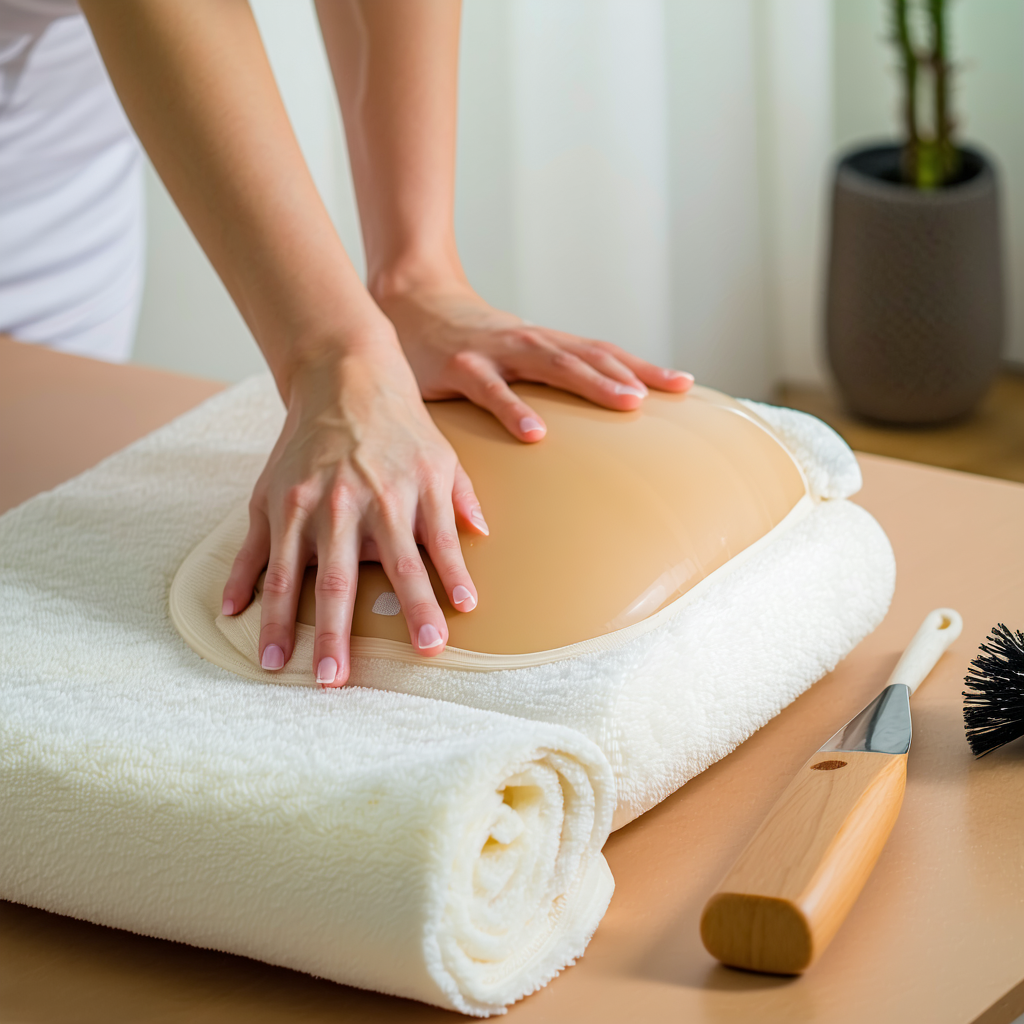
What are self massage fascia tools and do they actually work?
Self massage fascia tools are handheld or floor-based devices designed to apply sustained pressure, friction, or vibration to the connective tissue layer that wraps around your muscles and organs. Research suggests that consistent use may support tissue hydration, reduce perceived soreness, and improve range of motion over time. I have found that adding even ten minutes of targeted work with the right tool makes a noticeable difference in how my body feels the next morning.
Table of contents
- What is fascia and why does it matter
- How self massage fascia tools work on connective tissue
- The main types of self massage fascia tools explained
- Foam rollers – the entry-level workhorse
- Massage balls for targeted fascial release
- Percussive massage guns and vibration therapy
- Gua sha sticks and scraping tools
- How to use self massage fascia tools safely and effectively
- Building a simple daily self massage fascia routine
- Common mistakes to avoid with fascia tools
- How to choose the right self massage fascia tools for your goals
- Frequently asked questions
What is fascia and why does it matter
Fascia is a continuous web of collagen-rich connective tissue that surrounds every muscle, bone, nerve, and organ in your body. Think of it as a three-dimensional body stocking that provides structural support and transmits force between tissues.
When fascia becomes dehydrated, restricted, or adhered – often from repetitive movement patterns, prolonged sitting, or minor injuries – it can contribute to stiffness, reduced mobility, and localized discomfort. The tissue is densely packed with sensory nerve endings, which is why working on it with self massage fascia tools can produce such an immediate sensory response.
According to the National Institute of Arthritis and Musculoskeletal and Skin Diseases, connective tissue health plays a foundational role in overall musculoskeletal function. Keeping fascia mobile and well-hydrated is one of the simplest preventive habits you can build into a wellness routine.
How self massage fascia tools work on connective tissue
The core mechanism is mechanical deformation – applying pressure or shear force to the tissue causes a temporary change in its viscosity and encourages fluid movement within the ground substance of the fascia. This is sometimes called thixotropy, the property of a gel becoming more fluid when agitated.
Sustained pressure also stimulates mechanoreceptors embedded in the fascial layers. These receptors send signals to the nervous system that can reduce local muscle tone, which is one reason people feel looser after rolling or pressing into a tight area.
Vibration-based self massage fascia tools add another layer by creating rapid oscillations that may temporarily desensitize pain receptors and promote blood flow to the area. The combination of mechanical and neurological effects is what makes these tools genuinely useful rather than just a placebo.
The main types of self massage fascia tools explained
The market for self massage fascia tools has expanded significantly over the last decade. Below is a quick comparison to help you orient yourself before diving into each category.
- Foam rollers – broad surface area, great for large muscle groups, low cost
- Massage balls – small and precise, ideal for feet, glutes, and upper back
- Percussive massage guns – motorized, adjustable intensity, covers large areas quickly
- Gua sha sticks and scrapers – edge-based tools, borrowed from traditional East Asian medicine, good for superficial fascial layers
- Vibrating foam rollers – combine rolling with oscillation for enhanced effect
- Fascia blasters – textured plastic tools designed to break up superficial adhesions
Each category of self massage fascia tools has its own sweet spot. Knowing which tool matches which goal saves you money and gets you results faster.
Foam rollers – the entry-level workhorse
Foam rollers are the most widely used of all self massage fascia tools, and for good reason. They are inexpensive, durable, and versatile enough to address the calves, hamstrings, IT band, thoracic spine, and hip flexors in a single session.
Density matters more than most people realize. A soft white foam roller feels comfortable but may not deliver enough pressure to have a meaningful effect on deeper fascial layers. A firm black roller or a textured grid roller provides more targeted stimulus and tends to produce better results for people who are not extremely sensitive to pressure.
I remember buying my first foam roller during a period when I was running four days a week and dealing with persistent lateral knee tightness. Within two weeks of rolling my IT band and lateral quad for five minutes before bed, the tightness had noticeably reduced. It was the first time I genuinely believed that self massage fascia tools could deliver real, measurable change.
For best results, move slowly – about one inch per second – and pause on tender spots for twenty to thirty seconds rather than rolling back and forth rapidly. Rapid rolling generates heat but does little to create the sustained deformation that encourages fascial release.
Massage balls for targeted fascial release
Massage balls are among the most precise self massage fascia tools available. Because of their small surface area, they concentrate pressure into a very specific zone, making them ideal for areas that a foam roller simply cannot reach effectively.
Common target areas include the plantar fascia on the sole of the foot, the piriformis deep in the glute, the suboccipital muscles at the base of the skull, and the pec minor beneath the collarbone. These are all spots where fascial restriction is common and where a large roller would be too imprecise.
Lacrosse balls are a popular budget option. They are firm enough to create meaningful pressure and small enough to fit precisely under a shoulder blade or into the arch of the foot. Softer rubber balls work better for beginners or for areas with less surrounding muscle to buffer the pressure.
Double peanut balls – two balls fused together – are particularly useful for the thoracic spine because they straddle the spinous processes and apply pressure to the paraspinal muscles on either side without pressing directly on bone.
Percussive massage guns and vibration therapy
Percussive massage guns have become one of the most popular self massage fascia tools on the market. They deliver rapid, repetitive strokes – typically between 1,200 and 3,200 percussions per minute – through an interchangeable head attachment.
The evidence base for percussive therapy is growing. A 2020 review in the Journal of Clinical and Diagnostic Research found that vibration therapy may support recovery from delayed onset muscle soreness and improve short-term range of motion. While much of the research focuses on vibration broadly rather than percussion guns specifically, the underlying mechanisms are closely related.
Different attachment heads serve different purposes within the category of self massage fascia tools. A large ball head works well for quads and glutes. A flat head is better for the back. A bullet or cone head can get into smaller areas like the tibialis anterior or forearm extensors.
One practical tip – keep the gun moving and avoid holding it stationary on bony prominences or directly over joints. The goal is to work the muscular and fascial tissue, not to compress hard structures. Start at the lowest speed setting and only increase intensity once you understand how your tissue responds.
Gua sha sticks and scraping tools
Gua sha tools represent one of the oldest categories of self massage fascia tools, with roots in traditional Chinese medicine that stretch back centuries. Modern versions are typically made from smooth-edged stainless steel, rose quartz, or high-density plastic.
The technique involves applying a lubricant – a body oil works well – and then dragging the edge of the tool across the skin with moderate pressure in one direction. This creates a shearing force across the superficial fascial layers and may help break up minor adhesions between the skin and the underlying connective tissue.
Some people notice petechiae – small reddish marks – after using scraping tools. This is a normal response to the mechanical pressure and typically fades within a day or two. If you bruise easily or are taking blood thinners, scraping tools are probably not the right choice for you.
In my own routine, I use a stainless steel gua sha tool on my forearms and shins after long typing or running days. The sensation is intense but oddly satisfying, and the tissue tends to feel noticeably softer and less ropey afterward.
How to use self massage fascia tools safely and effectively
The most important principle is to work with your body’s response, not against it. Pain is a signal, not a goal. Discomfort – the kind that feels productive, like a deep stretch – is different from sharp or shooting pain, which is a sign to stop.
Here are the core guidelines I follow when using any of my self massage fascia tools.
- Hydrate first. Fascia responds better to pressure when it is adequately hydrated. Drink water before your session and consider it part of your warm-up.
- Warm the tissue. Five minutes of light movement – a short walk or gentle joint circles – increases blood flow and makes the tissue more pliable before you apply pressure.
- Go slow. Slow, sustained pressure is more effective than rapid, aggressive rolling. Give the nervous system time to respond.
- Breathe deliberately. Slow exhales help reduce the guarding reflex and allow you to sink deeper into a tender area.
- Limit session time per area. Two to four minutes per muscle group is usually sufficient. Longer is not always better and can sometimes cause local irritation.
- Finish with movement. After using your self massage fascia tools, move through the range of motion you just worked on. This helps the nervous system integrate the new tissue state.
Building a simple daily self massage fascia routine
Consistency matters far more than duration. A ten-minute daily practice with self massage fascia tools will produce better results over time than an occasional hour-long session.
Below is a simple framework organized by time available.
Five-minute morning routine
Roll the plantar fascia on each foot with a massage ball for sixty seconds per side. This wakes up the sensory system and primes the fascial chain that runs up through the calves and hamstrings. Follow with thirty seconds of slow thoracic extension over a foam roller.
Ten-minute post-workout routine
Use a foam roller on the primary muscle groups you trained. For a lower body day, that means quads, hamstrings, calves, and glutes – roughly ninety seconds each. Finish with a massage gun on the two tightest areas at a moderate speed setting for sixty seconds each.
Fifteen-minute evening wind-down routine
This is where I find the most value in my own practice. Slow, parasympathetic-friendly work with self massage fascia tools in the evening seems to support better sleep quality for me. I use a foam roller on my thoracic spine, a lacrosse ball on each glute, and a gua sha tool on my forearms. The pressure is lighter than during a post-workout session, and I pair it with slow nasal breathing.
Common mistakes to avoid with fascia tools
Even well-intentioned use of self massage fascia tools can be counterproductive if certain patterns go unchecked. Here are the most common errors I see and have made myself.
- Rolling too fast. Speed generates friction and surface heat but does not create the sustained mechanical deformation that actually influences fascial tissue. Slow down.
- Using too much pressure too soon. Aggressive pressure on unprepared tissue can trigger a protective muscle contraction that makes the area feel worse. Start gentle and progress gradually.
- Working directly on joints. Knees, ankles, and elbows are not appropriate targets for direct pressure tools. Work the surrounding musculature instead.
- Ignoring pain signals. Sharp, shooting, or radiating pain during use of self massage fascia tools is a reason to stop and consult a healthcare professional.
- Skipping the movement afterward. Using a tool without following up with active movement is like loosening a rusty hinge and then never opening the door. The movement is what reinforces the change.
- Treating tools as a substitute for professional care. Self massage fascia tools are a complement to, not a replacement for, professional assessment and treatment when something is genuinely wrong.
How to choose the right self massage fascia tools for your goals
With so many options available, choosing the right self massage fascia tools comes down to three questions – what areas do you want to target, how much pressure sensitivity do you have, and what is your budget.
For beginners on a budget
Start with a medium-density foam roller and a standard lacrosse ball. These two self massage fascia tools cover the vast majority of common target areas and cost less than thirty dollars combined. Master the basics before investing in more specialized equipment.
For athletes and active people
A firm foam roller, a double peanut ball, and a mid-range percussive massage gun form a strong core toolkit. The gun accelerates recovery between training sessions and allows you to work large areas efficiently when time is limited.
For desk workers and those with postural concerns
A thoracic foam roller, a massage ball for the pec minor and suboccipitals, and a gua sha tool for the forearms and neck are particularly well matched to the postural patterns that desk work creates. These self massage fascia tools address the areas most likely to become restricted from prolonged flexed postures.
For people with high pressure sensitivity
Softer foam rollers, rubber massage balls, and low-speed vibrating rollers are better starting points. The goal is still to create a meaningful mechanical stimulus, but the entry level should feel productive rather than painful. You can always progress to firmer tools as your tissue tolerance improves.
Budget comparison at a glance
- Under 30 dollars – foam roller plus lacrosse ball, covers most needs for beginners
- 30 to 80 dollars – textured or vibrating roller, double peanut ball, or quality gua sha set
- 80 to 200 dollars – entry-level percussive massage gun with multiple attachments
- 200 dollars and above – premium massage guns with longer battery life, quieter motors, and advanced speed settings
In most cases, the mid-range options deliver the best value. The most expensive self massage fascia tools are not necessarily the most effective – technique and consistency matter far more than price.
Frequently asked questions
How often should I use self massage fascia tools?
Most people benefit from daily or near-daily use, even if sessions are short. Five to fifteen minutes per day tends to produce better results than longer, infrequent sessions. Some people find that twice daily – morning and evening – works well, using lighter pressure in the evening to support recovery and sleep.
Can self massage fascia tools help with chronic tightness?
Many people find that consistent use of self massage fascia tools may support a reduction in chronic tightness over time, particularly when combined with regular movement, stretching, and adequate hydration. Results vary significantly between individuals, and persistent tightness with an unclear cause is worth discussing with a physical therapist or other qualified professional.
Is it normal to feel sore after using fascia tools?
Mild soreness for twelve to twenty-four hours after a session is common, especially when you are new to using self massage fascia tools or when you work an area that has been restricted for a long time. This is similar to the soreness that follows a deep tissue massage. If soreness is severe or lasts more than two days, you likely applied too much pressure and should reduce intensity in your next session.
Where should I avoid using self massage fascia tools?
Avoid using pressure tools directly over joints, bony prominences, varicose veins, open skin, bruises, or areas with known nerve damage. The lower back is also an area where many people over-apply pressure – work the glutes and thoracic spine instead, and leave direct lumbar pressure to a professional. If you have any diagnosed musculoskeletal conditions, check with your healthcare provider before starting.
Do I need to use oil or lotion with fascia tools?
For most tools – foam rollers, massage balls, and massage guns – no lubricant is needed and you work through clothing or directly on skin. Gua sha and scraping tools are the exception – they require a thin layer of oil to allow the edge to glide smoothly across the skin and create the intended shearing effect without causing skin irritation.
How long does it take to see results from self massage fascia tools?
Some people notice an immediate improvement in range of motion or reduction in perceived tightness within a single session. Longer-term changes in tissue quality and mobility tend to become apparent after two to four weeks of consistent daily use. Like most wellness habits, the benefits of self massage fascia tools compound over time rather than appearing overnight.
Are self massage fascia tools safe for older adults?
Yes, with appropriate modifications. Older adults often benefit from softer tools, lighter pressure, and shorter sessions. The plantar fascia, thoracic spine, and hip flexors are particularly responsive areas for older adults and are generally safe to work with standard self massage fascia tools. Anyone with osteoporosis or a history of stress fractures should consult a healthcare provider before using firm rollers or percussive devices.
For more practical wellness ideas, browse the Health Living Today guide library.