Reishi mushroom evening tea – what you need to know
Reishi mushroom evening tea is a simple, caffeine-free ritual that many people use to wind down before bed, leaning on the adaptogenic and calming properties that reishi (Ganoderma lucidum) has been studied for. Brewing a cup in the evening may support relaxation, a steadier stress response, and more restful sleep over time. I have found it to be one of the easiest wellness habits to stick with, because it slots neatly into a routine most of us already have – making a hot drink before bed.
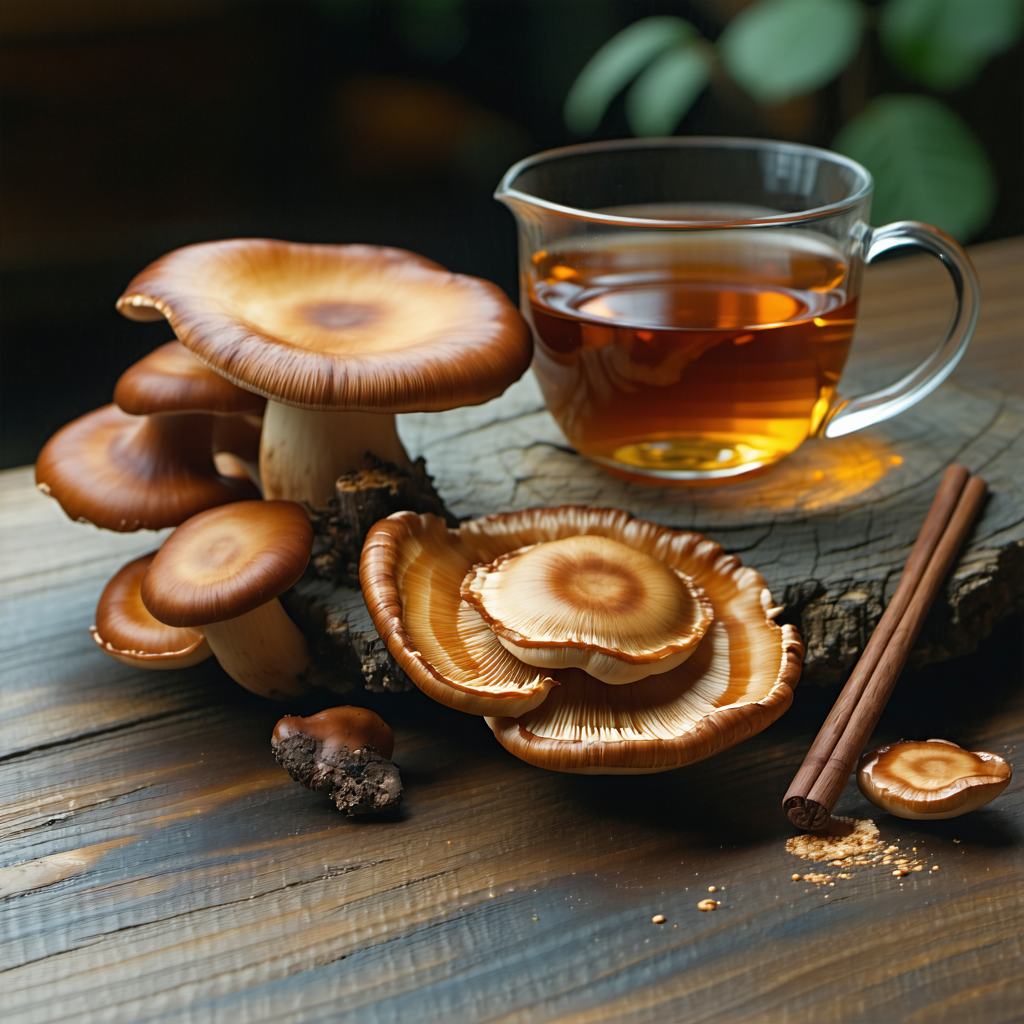
Table of contents
- What reishi mushroom is and why evening suits it
- Potential benefits of reishi mushroom evening tea
- How to brew reishi mushroom evening tea at home
- Reishi forms – powder, extract, or whole slices
- Flavor, bitterness, and how to make it taste better
- Best timing and dose for an evening cup
- Ingredients that pair well with reishi evening tea
- How to choose a quality reishi product
- Cautions and who should check with a doctor first
- Building a consistent reishi evening tea routine
- Frequently asked questions
What reishi mushroom is and why evening suits it
Reishi is a woody, shelf-like fungus that has been used in East Asian wellness traditions for over two thousand years. It contains a range of bioactive compounds – most notably triterpenes and beta-glucan polysaccharides – that researchers have been investigating for their effects on immune function, stress, and sleep quality.
The reason evening is a natural fit comes down to what reishi appears to do. Unlike green tea or coffee, reishi carries no caffeine. Several studies suggest its triterpene compounds may interact with the nervous system in ways that promote calm rather than stimulation. One often-cited animal study found that a water-soluble extract of Ganoderma lucidum increased total sleep time and non-REM sleep. For a deeper look at the research base, the National Center for Complementary and Integrative Health maintains an overview of what current evidence does and does not support.
I first came across reishi mushroom evening tea when a friend suggested it as an alternative to chamomile on nights when chamomile just was not doing the job. I was skeptical, but after two weeks of a nightly cup I noticed I was reaching for my phone less in bed – a small but meaningful shift.
Potential benefits of reishi mushroom evening tea
It is important to be honest here: the human clinical trial data on reishi is still building. That said, the existing evidence points to several areas where a regular reishi mushroom evening tea habit may support overall wellness.
Relaxation and stress response
Reishi is classified as an adaptogen – a substance thought to help the body regulate its response to physical and psychological stress. Some people find that drinking reishi tea in the evening helps them feel less mentally “wired” after a demanding day. The triterpenes in reishi are believed to modulate the HPA axis, which governs the cortisol stress cycle.
This does not mean reishi sedates you the way a pharmaceutical sleep aid might. The effect is subtler – more like the edge coming off rather than a hard stop.
Sleep quality
Several small human studies have found that reishi supplementation may support sleep quality, particularly in people who describe themselves as easily fatigued or stressed. A reishi mushroom evening tea ritual adds a behavioral layer on top of the compound itself – the act of making and drinking a warm, caffeine-free drink is itself a recognized sleep-hygiene practice.
Immune system support
Beta-glucans found in reishi are among the most studied immunomodulatory compounds in functional mushrooms. Regular consumption may help maintain a balanced immune response. While this benefit is not specific to evening use, it is a useful bonus for those who drink reishi tea daily.
Antioxidant activity
Reishi contains polyphenols and other antioxidants. Antioxidants may help reduce oxidative stress in cells over time, which is a factor in long-term wellness. Again, this is not an overnight effect – it is one reason that consistency with reishi mushroom evening tea matters more than any single cup.
How to brew reishi mushroom evening tea at home
Brewing reishi mushroom evening tea is straightforward, but the method you use depends on the form of reishi you have. Here are the three main approaches.
Using dried reishi slices
- Add 3 to 5 grams of dried reishi slices to 500 ml of water in a small saucepan.
- Bring to a gentle boil, then reduce to a low simmer.
- Simmer for 20 to 45 minutes – longer simmering extracts more triterpenes.
- Strain the liquid into a mug. Discard the slices or re-simmer them once more for a lighter second cup.
- Add any flavor enhancers (see the section below) and drink while warm.
This method gives you the most control over extraction strength. The resulting reishi mushroom evening tea will be noticeably bitter, which is considered a sign of good triterpene content.
Using reishi powder
- Heat water to around 85 to 90 degrees Celsius – just below a rolling boil.
- Add half a teaspoon to one teaspoon of reishi powder to your mug.
- Pour the hot water over the powder and stir well for 30 to 60 seconds.
- Let it steep for 3 to 5 minutes before drinking.
Reishi powder does not dissolve fully – some sediment is normal. If texture bothers you, use a fine-mesh strainer. This is the fastest method and works well when you want a reishi mushroom evening tea without a long simmering process.
Using a dual-extract reishi tincture or instant powder
Dual-extract products have already been through both water and alcohol extraction, so the bioavailable compounds are concentrated. You simply add the recommended amount – usually a dropper-full or a small scoop – to hot water or an existing herbal tea. This is the most convenient form of reishi mushroom evening tea, though it tends to be more expensive per serving.
Reishi forms – powder, extract, or whole slices
Choosing the right form of reishi for your evening tea matters for both potency and practicality. Here is a quick comparison.
- Dried whole slices – Most traditional form. Requires long simmering. Good potency if simmered correctly. Low cost per gram. Not convenient for busy evenings.
- Ground powder (fruiting body) – Moderate convenience. Potency depends heavily on source quality and whether it is a hot-water extract or raw ground mushroom. Mid-range cost.
- Dual-extract powder or tincture – Highest bioavailability. Most convenient for a nightly reishi mushroom evening tea habit. Highest cost per serving.
- Reishi tea bags – Convenient and approachable for beginners. Potency is often lower than loose forms. Good for building the habit before committing to stronger products.
I have used all four forms at different points. My personal daily driver is a dual-extract powder stirred into hot water with a little oat milk – it takes under two minutes and has become a reliable signal to my brain that the day is winding down.
Flavor, bitterness, and how to make it taste better
One of the most common reasons people abandon reishi mushroom evening tea is the taste. Reishi is genuinely bitter – the triterpenes responsible for many of its studied benefits are also responsible for that earthy, almost medicinal flavor. Calling it pleasant would be dishonest. But it is very manageable with a few additions.
Flavor pairings that work well
- Cinnamon – adds warmth and natural sweetness that cuts through bitterness well.
- Ginger – a small slice of fresh ginger or a pinch of ground ginger adds spice and depth.
- Honey or maple syrup – a small amount rounds out the bitterness without masking the earthy notes entirely.
- Oat milk or other plant milks – creaminess softens the flavor and makes the drink feel more substantial.
- Cardamom – a pinch adds a floral, slightly sweet note that pairs surprisingly well with reishi.
- Vanilla extract – even a small drop changes the aromatic profile in a helpful direction.
- Chamomile or rooibos base – brewing your reishi mushroom evening tea with chamomile or rooibos instead of plain water adds another layer of flavor and pairs well with reishi’s calming intentions.
Start with less reishi than you think you need and work up. Half a teaspoon of powder in a chamomile base with honey is a good entry point for people who are sensitive to bitter flavors.
Best timing and dose for an evening cup
Timing your reishi mushroom evening tea well can make a noticeable difference. I have found that drinking it 60 to 90 minutes before I want to be asleep works best – far enough from bedtime that I am not making a late bathroom trip, but close enough that any calming effect is still present when my head hits the pillow.
Suggested dose ranges
- Beginners – 500 mg to 1 gram of a hot-water or dual extract, or one standard reishi tea bag.
- Intermediate – 1 to 1.5 grams of a quality dual-extract powder, or 3 to 5 grams of dried slices simmered for 30 minutes.
- Established routine – up to 2 to 3 grams of extract, as tolerated. Most human studies have used doses in the 1.5 to 3 gram range.
These are general guidance ranges, not medical recommendations. Start at the lower end and adjust based on how you feel. Some people find even small amounts of reishi mushroom evening tea produce a noticeable sense of calm; others need a few weeks of consistent use before they notice anything.
Ingredients that pair well with reishi evening tea
Reishi does not have to work alone. Several other evidence-supported herbs and compounds pair naturally with a reishi mushroom evening tea blend.
Ashwagandha
Another well-researched adaptogen, ashwagandha may complement reishi’s stress-modulating effects. A small amount of ashwagandha root powder added to your evening blend may support a calmer transition into sleep. The two adaptogens are commonly combined in commercial evening wellness blends for this reason.
Passionflower
Passionflower has been studied for its potential to support sleep quality and reduce feelings of anxiousness. It pairs well flavor-wise with reishi and adds a mild floral note. Using a passionflower herbal tea as the liquid base for your reishi mushroom evening tea is a practical approach.
L-theanine
L-theanine, the amino acid found naturally in green tea, is often added to evening blends for its association with relaxed alertness. If you find reishi alone does not shift your mental state enough after a high-stress day, adding 100 to 200 mg of L-theanine to your reishi mushroom evening tea is a common and well-tolerated approach.
Magnesium
While not something you add to the tea itself, drinking your reishi mushroom evening tea alongside a magnesium glycinate supplement is a habit many sleep-focused wellness enthusiasts use. Magnesium is involved in hundreds of enzymatic processes and some research suggests it may support sleep quality, particularly in older adults.
How to choose a quality reishi product
The reishi market is crowded and quality varies enormously. Here is what to look for when buying reishi for your evening tea.
Fruiting body vs. mycelium
Look for products made from the fruiting body of Ganoderma lucidum, not mycelium grown on grain. Fruiting body products generally contain higher concentrations of the triterpenes and beta-glucans that give reishi its studied properties. Mycelium-on-grain products often contain significant amounts of starch from the substrate, which dilutes the active compounds.
Third-party testing
Reputable brands publish certificates of analysis from independent labs. These confirm beta-glucan content, verify that the product is free from heavy metals, and confirm species identity. If a brand does not make this information available, that is a reason to look elsewhere.
Extraction method
For a reishi mushroom evening tea, a hot-water extract or dual-extract (water plus alcohol) will give you the most bioavailable triterpenes and polysaccharides. Raw ground reishi powder has a lower bioavailability because the cell walls of fungi are made of chitin, which humans cannot digest efficiently without extraction.
Beta-glucan percentage
A quality fruiting-body extract should list its beta-glucan content – typically 20% to 40% for a concentrated product. Be cautious of products that only list “polysaccharides” without specifying beta-glucans, as starch also counts as a polysaccharide and can inflate that number.
Cautions and who should check with a doctor first
Reishi mushroom evening tea is well-tolerated by most healthy adults, but there are situations where a conversation with a healthcare provider makes sense before starting a regular habit.
- Blood thinners – reishi may have mild anticoagulant properties. If you take warfarin, aspirin therapy, or other anticoagulants, check with your doctor before adding reishi to your routine.
- Autoimmune conditions – because reishi may modulate immune activity, people with autoimmune conditions or those on immunosuppressant medications should seek medical guidance first.
- Pregnancy and breastfeeding – there is not enough safety data on reishi use during pregnancy or breastfeeding, so caution is warranted.
- Liver conditions – there are rare case reports of liver-related issues with very high-dose reishi supplementation, though causality has not been firmly established. People with existing liver conditions should discuss use with a doctor.
- Upcoming surgery – due to potential effects on blood clotting and immune function, it is generally recommended to stop reishi supplementation at least two weeks before any scheduled surgery.
For most people, a moderate daily cup of reishi mushroom evening tea is a low-risk addition to a wellness routine. Starting with a lower dose and monitoring how you feel is always a sensible approach with any new supplement or herb.
Building a consistent reishi evening tea routine
Consistency is where the real benefit of reishi mushroom evening tea tends to show up. Many of reishi’s studied effects – on stress adaptation, immune function, and sleep quality – appear to build over weeks rather than appearing after a single cup. Here is how to make the habit stick.
Anchor it to an existing habit
Habit stacking works well here. Link your reishi mushroom evening tea to something you already do every evening – brushing your teeth, turning off work notifications, or switching from overhead lights to lamps. The habit becomes automatic faster when it rides alongside an established behavior.
Prepare the night before
If you use dried slices that require simmering, batch-brew a larger amount and refrigerate it. Reheat a portion each evening. This removes the “it takes too long” barrier that causes people to skip their reishi mushroom evening tea on busy nights.
Keep a simple log
For the first four to six weeks, jot down a quick note about your sleep quality and stress level each morning. This gives you real personal data rather than relying on vague impressions. Many people find the log itself motivating – you start to notice patterns that make the habit feel worth continuing.
Be patient with the timeline
Some people notice a difference from their first few cups of reishi mushroom evening tea. Others need four to six weeks of consistent use before they observe any meaningful change. This is normal for adaptogenic herbs. The absence of an immediate dramatic effect is not a sign that reishi is not working – it is a sign that it is working the way adaptogens tend to work, gradually and cumulatively.
Adjust the recipe to keep it enjoyable
A ritual you enjoy is one you will keep. Experiment with the flavor additions mentioned earlier. Try different bases – chamomile one week, rooibos the next. Make the experience of preparing and drinking your reishi mushroom evening tea something you look forward to rather than a chore you tolerate.
Frequently asked questions
Can I drink reishi mushroom evening tea every night?
Most healthy adults can drink reishi mushroom evening tea nightly without issue. The majority of human studies have used daily supplementation over periods of four to twelve weeks without reporting significant adverse effects. Starting at a lower dose and increasing gradually is a practical approach if you are new to reishi.
Will reishi mushroom evening tea make me feel drowsy right away?
Reishi does not work like a sedative or antihistamine. Most people describe the effect as a gradual easing of mental tension rather than sudden drowsiness. If you are expecting to feel immediately sleepy, you may be disappointed – the benefit tends to be more about overall sleep quality over time than a knockout effect on any given night.
Is reishi mushroom evening tea safe to combine with melatonin?
Many people combine reishi mushroom evening tea with low-dose melatonin without reported problems. That said, combining multiple sleep-supporting substances is worth discussing with a healthcare provider, particularly if you are also taking any prescription medications.
What is the difference between reishi tea and a reishi supplement capsule?
The active compounds are essentially the same, assuming comparable quality and extraction methods. The practical difference is in the ritual. Drinking reishi mushroom evening tea involves a behavioral component – a warm drink, a pause in the evening – that a capsule does not provide. For sleep and stress support, that behavioral element is not trivial. The ritual itself is a recognized sleep-hygiene strategy.
How bitter is reishi mushroom evening tea and can I get used to it?
Reishi is noticeably bitter – more so than most herbal teas. Most people do adapt to the flavor over one to two weeks, especially when they use flavor additions like cinnamon, honey, or a plant milk. Starting with a lower dose of reishi in a flavorful base like chamomile or rooibos makes the adjustment easier.
Can children drink reishi mushroom evening tea?
There is not enough clinical data on reishi use in children to make a confident recommendation. It is best to consult a pediatrician before giving reishi mushroom evening tea or any reishi supplement to a child.
How long does it take to notice results from reishi mushroom evening tea?
Individual responses vary considerably. Some people report feeling calmer after the first week. For others, meaningful changes in sleep quality or stress resilience take four to six weeks of consistent nightly use. Keeping a simple sleep and mood log during the first month helps you track your own response more accurately than relying on memory alone.
Does reishi mushroom evening tea interact with antidepressants or anti-anxiety medications?
There is limited research on specific interactions between reishi and psychiatric medications. If you take any prescription medications for mood or anxiety, discussing reishi use with your prescribing doctor before starting is the responsible approach. This is not a reason to assume reishi is unsafe in that context – it is simply a gap in the current evidence that warrants professional input.
For more practical wellness ideas, browse the Health Living Today guide library.