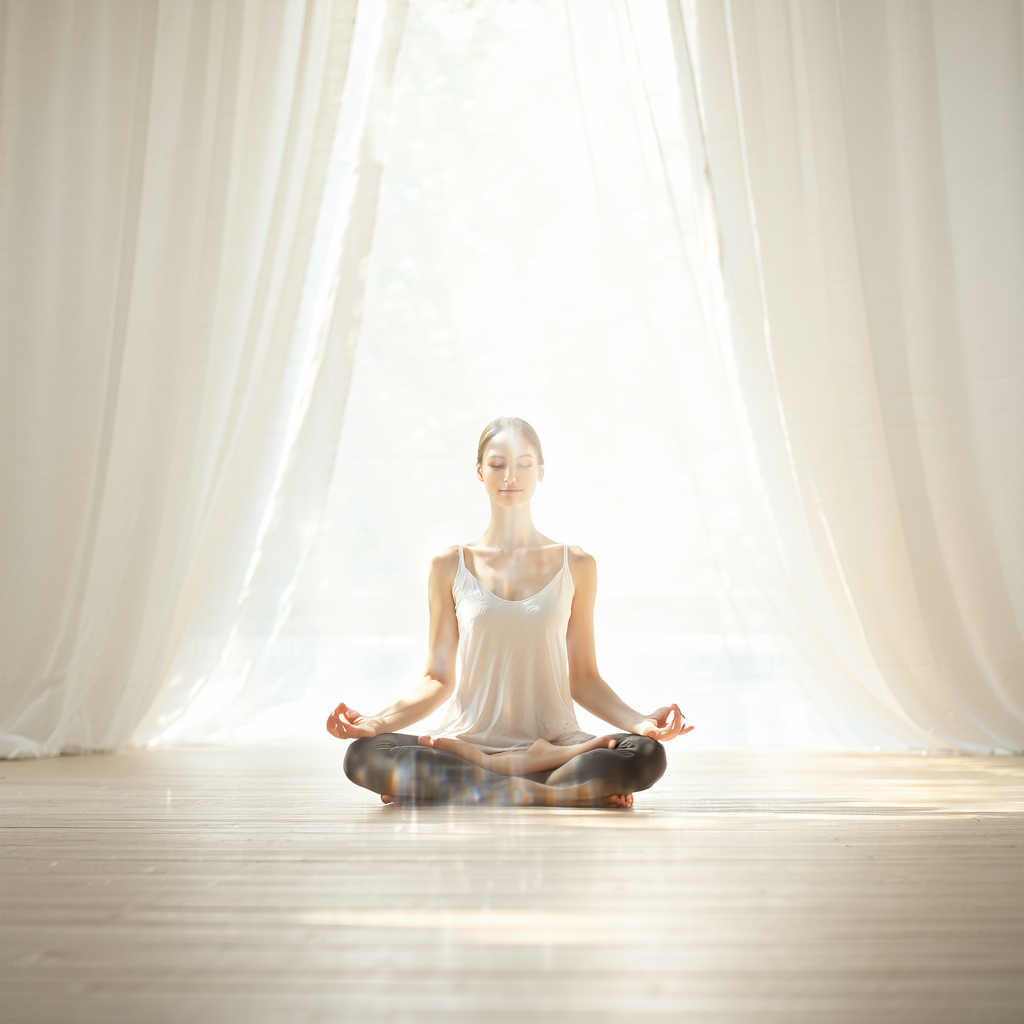
What is merkaba meditation and does it work?
Merkaba meditation is a structured visualization and breathwork practice rooted in ancient sacred-geometry traditions, centered on imagining two interlocked tetrahedra spinning around the body to cultivate focus, calm, and a felt sense of energetic balance. Many practitioners – myself included – find that the combination of precise breath patterns, body awareness, and geometric visualization makes it one of the more immersive forms of seated meditation available. While rigorous clinical trials on merkaba meditation specifically are limited, the underlying mechanisms it relies on – controlled breathing, sustained attention, and body-scan awareness – are well-supported by broader meditation research.
Table of contents
- What the word merkaba actually means
- Origins and historical context
- How merkaba meditation works – the core mechanics
- The breath patterns used in merkaba meditation
- Step-by-step merkaba meditation for beginners
- Potential benefits people report
- What the science says about related practices
- Practical tips for building a consistent practice
- Common mistakes and how to avoid them
- Frequently asked questions
What the word merkaba actually means
The word merkaba – sometimes spelled merkabah – comes from ancient Hebrew and Egyptian roots. In Hebrew, mer means light, ka refers to spirit or the subtle body, and ba relates to the physical body or reality. Together, the word is often translated as “light-spirit-body” or “chariot of light.”
In the Kabbalistic tradition, the Merkabah was the divine chariot described in the Book of Ezekiel – a celestial vehicle of ascent. In modern spiritual practice, the term was popularized in the late twentieth century, particularly through the work of teacher Drunvalo Melchizedek, who developed a detailed system of merkaba meditation drawing on sacred geometry, ancient Egyptian mystery schools, and breath science.
The central image is a star tetrahedron – two triangular pyramids interlocked, one pointing upward and one pointing downward, forming a three-dimensional Star of David shape. In merkaba meditation, you visualize this structure surrounding your body and set it into counter-rotating motion using specific breath sequences.
Origins and historical context
The roots of merkaba meditation span several traditions. The earliest references appear in Jewish mysticism, where Merkabah mysticism was a major current between roughly the first and tenth centuries CE. Practitioners sought visions of the divine throne described by Ezekiel through fasting, chanting, and deep meditative states.
Egyptian mystery schools also worked with geometric light-body concepts, and some researchers draw connections between the Egyptian word mer (a specific kind of light) and the Hebrew tradition. These threads were woven together in the modern synthesis that most people encounter today.
Contemporary merkaba meditation as a codified practice became widely known in the 1990s through Melchizedek’s “Flower of Life” workshops and books. Since then it has spread through the global wellness community and sits at an interesting crossroads between ancient mysticism, sacred geometry, and modern breathwork.
How merkaba meditation works – the core mechanics
At its core, merkaba meditation asks you to do several things simultaneously: hold a precise geometric visualization, move through a sequence of specific mudras (hand positions), follow a carefully structured breathing pattern, and direct your awareness through different energy centers of the body. This multi-layered engagement is part of what makes the practice feel distinctly different from simple breath-focused meditation.
The star tetrahedron is visualized as existing in three pairs. One pair is associated with the earth energy field (pointing downward), one with the cosmic or solar field (pointing upward), and one with the individual human field. In practice, you typically work with the star tetrahedron as a unified field surrounding your body from the Earth below to the sky above, extending roughly 55 feet in diameter according to the classical teaching – though beginners simply start by imagining the shape surrounding the body comfortably.
The counter-rotation is key. The two tetrahedra are visualized spinning in opposite directions, which in the model of the practice is said to generate the merkaba field – a toroidal energy structure that connects the individual to larger fields of consciousness. Whether you hold a literal or metaphorical interpretation of this, the sustained visualization itself is a powerful attentional training tool.
The breath patterns used in merkaba meditation
Breath is the engine of merkaba meditation. The classical Melchizedek system uses a 17-breath sequence, though many teachers offer simplified versions for newcomers. Here is a plain-language breakdown of the structure.
The first 6 breaths – clearing and grounding
These breaths use a yogic full-breath pattern: inhale slowly through the nose filling the belly first, then the chest, hold briefly, then exhale fully. The mudras for these breaths are specific finger positions – typically thumb touching each successive finger. These breaths are intended to clear and balance the energy field before the geometric work begins.
Breaths 7 through 14 – building the field
These breaths shift to a slightly different rhythm. On the inhale you visualize the upward-pointing tetrahedron filling with light from the Earth. On the exhale you visualize the downward-pointing tetrahedron filling from above. The mudras shift at breath 7. Many practitioners find this the most absorbing phase because the visualization becomes more active.
Breaths 15 through 17 – activating the merkaba
These final breaths are the most distinctive. Breath 15 uses a rapid “tube breathing” technique – a sharp, complete exhale followed by a natural inhale – to create a sense of energetic activation. Breaths 16 and 17 stabilize the field. The final breath is held in a specific ratio while you visualize the star tetrahedron spinning and expanding into its full toroidal form.
I want to be honest here: learning this sequence from text alone is genuinely challenging. I spent several weeks with a recorded audio guide before the breath-mudra coordination felt natural. I would strongly encourage beginners to use a guided audio or video resource for the first month at minimum.
Step-by-step merkaba meditation for beginners
This simplified version gives you a practical starting point without requiring mastery of the full 17-breath system. Think of it as an on-ramp.
Step 1 – Set up your space and posture
Sit cross-legged on the floor or in a chair with your spine upright and your hands resting on your knees. Choose a quiet space where you will not be interrupted for at least 20 minutes. Some people light a candle or use gentle instrumental music, but silence works just as well.
Step 2 – Ground yourself with three natural breaths
Close your eyes and take three slow, full breaths – in through the nose, out through the nose. Let your shoulders drop. Feel the weight of your body on the seat. This simple grounding step is easy to skip but genuinely useful for settling the nervous system before you begin the visualization work.
Step 3 – Visualize the star tetrahedron
Imagine a glowing triangular pyramid above you, apex pointing toward the sky, base at the level of your heart. Now imagine a second pyramid below you, apex pointing toward the Earth, base also at the level of your heart. Together they form an interlocked star shape around your entire body. Hold this image as steadily as you can. It is normal for it to flicker or dissolve – simply rebuild it each time.
Step 4 – Begin the breath sequence
Inhale slowly for a count of seven, imagining light and energy flowing up from the Earth into the lower pyramid. Hold for a count of one. Exhale for a count of seven, imagining light flowing down from above into the upper pyramid. Repeat this for 6 to 8 full breath cycles. Keep the visualization active throughout.
Step 5 – Set the field in motion
On your next inhale, intend – just intend, without forcing – that the upper pyramid begins rotating clockwise when viewed from above, and the lower pyramid begins rotating counter-clockwise. You do not need to see this vividly in your mind’s eye. Even a vague sense of movement or a simple mental instruction is enough to begin with. Continue breathing naturally for 5 to 10 more cycles while holding this sense of gentle rotation.
Step 6 – Rest in the field
After your final breath cycle, let the breath return to its natural rhythm. Keep your eyes closed. Simply sit inside the sense of the rotating field – or the memory of it – for 3 to 5 minutes. This resting phase is where many people report the deepest sense of stillness.
Step 7 – Close the practice
Gently wiggle your fingers and toes. Take one full breath and exhale with a slow sigh. Open your eyes. Take 60 seconds before reaching for your phone or standing up. This transition time helps integrate the practice.
Potential benefits people report
People who practice merkaba meditation regularly report a range of benefits. It is worth being clear that most of these are self-reported and that individual results vary considerably.
- Reduced mental chatter – the multi-layered focus required by the practice leaves less room for ruminative thinking
- Improved breath awareness – working with structured breath sequences naturally develops greater sensitivity to breathing patterns throughout the day
- A felt sense of calm and centeredness – many practitioners describe feeling “settled in the body” after a session
- Enhanced visualization ability – regular geometric visualization practice tends to strengthen the capacity for mental imagery generally
- Greater body awareness – the combination of mudras, breath, and body-centered visualization builds a more detailed felt sense of the physical body
- Spiritual or transpersonal experiences – some practitioners report feelings of expanded awareness, connection, or deep peace that they describe in spiritual terms
- Sleep quality – some people find that practicing in the evening may support more restful sleep, likely through the relaxation response triggered by slow, controlled breathing
What the science says about related practices
Direct studies on merkaba meditation as a named practice are scarce. However, merkaba meditation draws on several well-researched components, and looking at the evidence for those gives a clearer picture of what may be happening physiologically.
Controlled breathing and the autonomic nervous system
The slow, rhythmic breathing used in merkaba meditation – typically around 5 to 7 breaths per minute during the core sequence – falls within the range that research associates with increased heart rate variability (HRV) and parasympathetic activation. A 2018 review published in Frontiers in Human Neuroscience found that slow-paced breathing consistently activated the parasympathetic nervous system and reduced markers of physiological stress. You can read more about the science of breathing and relaxation at the National Center for Complementary and Integrative Health, which maintains a thorough overview of meditation research.
Visualization and attentional training
Sustained mental imagery – the kind required to hold and rotate a three-dimensional geometric form in the mind – activates overlapping networks with actual visual perception and has been studied in the context of athletic performance, pain management, and cognitive rehabilitation. The attentional demands of merkaba meditation are genuinely high, which may explain why practitioners often report feeling mentally clearer after sessions.
Mudras and proprioceptive engagement
The specific hand positions used in merkaba meditation add a tactile, proprioceptive layer to the practice. Some research suggests that deliberate hand gestures during meditation may help anchor attention and support state-changes, though this area remains under-studied relative to breath and mindfulness research.
Comparison with other meditation styles
- Merkaba meditation vs. mindfulness meditation – mindfulness typically asks you to observe what is already present; merkaba asks you to actively construct and maintain a specific inner experience. Both cultivate attention, but through different mechanisms.
- Merkaba meditation vs. loving-kindness meditation – loving-kindness focuses on emotional content and directed compassion; merkaba focuses more on geometric visualization and breath structure.
- Merkaba meditation vs. pranayama – pranayama practices share the breath-sequencing element but do not typically include geometric visualization or mudra sequences in the same integrated way.
- Merkaba meditation vs. chakra meditation – chakra practices share the energy-body framework but tend to work with vertical energy centers rather than a surrounding geometric field.
Practical tips for building a consistent practice
In my own experience, the biggest barrier to merkaba meditation is not the complexity of the practice itself – it is remembering to do it. Here are the habits I have found most useful.
Start shorter than you think you need to
A 10-minute simplified session practiced five days a week will build more genuine familiarity with the practice than a 45-minute session attempted once a week. The geometric visualization and breath coordination become natural only through repetition. Start short and let duration grow organically.
Use audio guidance for the first month
Trying to remember the sequence while also executing it defeats the purpose. A recorded guide lets you keep your eyes closed and your attention inward. There are several free and paid audio guides available – listen to a few before committing to one, since the pacing and tone of the guide matters a lot to how the session feels.
Keep a brief practice journal
After each session, write two or three sentences about what you noticed – the quality of your visualization, how the breath felt, any shifts in mood or body sensation. This is not about tracking progress competitively. It is about building a feedback loop that keeps you curious about the practice rather than treating it as a chore.
Practice at the same time each day
Habit research consistently shows that attaching a new behavior to an existing anchor – morning coffee, post-lunch break, pre-sleep wind-down – dramatically improves follow-through. I practice merkaba meditation immediately after my morning shower. The transition is smooth and I rarely skip it.
Be patient with the visualization
Many beginners worry that their mental imagery is not vivid enough. I spent the first two weeks barely seeing anything – mostly just a vague sense of shape and direction. That is entirely normal. The practice works through intention and attention, not photographic mental imagery. Keep showing up and the visualization naturally sharpens over time.
Common mistakes and how to avoid them
Rushing through the breath sequence
The breath counts in merkaba meditation are there for a reason – they slow the nervous system and create the internal conditions for the visualization to land. Rushing the breaths to “get to the good part” undermines the whole practice. If you find yourself rushing, add a one-count pause at the top and bottom of each breath.
Treating it as a purely intellectual exercise
Merkaba meditation involves sacred geometry, and people with analytical minds sometimes get caught in trying to understand the geometry perfectly before they feel entitled to practice. The geometry is a vehicle, not a destination. You do not need a degree in mathematics to benefit from the practice – you just need to show up and try.
Skipping the grounding phase
The early breaths in the sequence are easy to dismiss as “just breathing,” but they serve an important function – they settle the mind and body before the more complex visualization begins. Skipping them to save time often results in a fragmented, distracted session.
Practicing when significantly sleep-deprived
The sustained, multi-layered attention required by merkaba meditation is genuinely demanding. Practicing when you are very tired often results in drifting off or losing the thread of the visualization repeatedly. If you are exhausted, a simple body-scan or breath-awareness practice will serve you better that day.
Expecting dramatic experiences immediately
Some people’s first merkaba meditation session is profound. Many people’s first session is confusing and a little awkward. Both are fine. The practice tends to deepen gradually, and the most consistent long-term practitioners I have spoken with describe a quiet, steady accumulation of benefit rather than a single dramatic breakthrough.
Frequently asked questions
How long should a merkaba meditation session be?
For beginners, 15 to 20 minutes is a practical starting point. The full classical 17-breath sequence, done at the recommended pace, takes approximately 20 to 30 minutes on its own. As you become more comfortable with the practice, many people extend sessions to 30 to 45 minutes by spending more time in the resting phase at the end.
Do I need any special equipment or training to practice merkaba meditation?
No special equipment is needed – a comfortable seat and a quiet space are sufficient. Formal training or certification is not required for a personal practice, though working with an experienced teacher can accelerate your learning considerably, especially for the full 17-breath sequence. Many people start successfully with a good audio guide and a willingness to be patient with themselves.
Is merkaba meditation connected to any specific religion?
Merkaba meditation draws on Jewish mysticism, Egyptian spiritual traditions, and the modern sacred-geometry movement, but it is not formally part of any single organized religion. Many practitioners come from secular backgrounds and engage with it as a contemplative and wellness practice rather than a religious one. Others integrate it into existing spiritual paths. The practice itself does not require any particular belief system.
Can merkaba meditation be combined with other meditation practices?
Yes, and many people do combine it with other approaches. Some practitioners use mindfulness meditation on weekdays and merkaba meditation on weekends. Others use a brief body-scan or breath-awareness session as a warm-up before moving into the merkaba sequence. The practices are generally complementary rather than contradictory.
How often should I practice merkaba meditation to notice results?
Most teachers and experienced practitioners suggest daily practice, or at minimum four to five sessions per week, for the first three months. This frequency allows the breath-mudra-visualization coordination to become familiar enough that the practice feels fluid rather than effortful. Many people report noticing meaningful shifts in calm and focus within the first two to four weeks of consistent practice.
Are there any situations where merkaba meditation is not recommended?
The breathwork components of merkaba meditation – particularly the more intensive phases – may not be suitable for people with certain cardiovascular or respiratory conditions. If you have any health concerns, it is worth speaking with a qualified healthcare provider before beginning any new breathwork practice. People who experience dissociation or who are in acute mental health crises are generally advised to work with simpler, more grounding practices first and to consult a mental health professional.
What does the star tetrahedron have to do with merkaba meditation?
The star tetrahedron – two interlocked triangular pyramids forming a three-dimensional Star of David shape – is the geometric form at the center of merkaba meditation. In the practice, this shape is visualized surrounding the body and set into counter-rotation using the breath sequence. Geometrically, the star tetrahedron is one of the Platonic solid-derived forms associated with sacred geometry traditions worldwide. In merkaba meditation, it serves as both a visualization anchor and, within the cosmology of the practice, as the structure of the light-body field itself.
Can children practice merkaba meditation?
Simplified versions of the visualization – imagining a glowing star shape around the body and breathing slowly – are generally considered appropriate for older children and teenagers. The full 17-breath sequence with its specific mudras and breath ratios is typically taught to adults. If you are considering introducing any breathwork practice to a child, parental guidance and age-appropriate instruction are important, and consulting a pediatric wellness professional is always a sensible step.
For more practical wellness ideas, browse the Health Living Today guide library.