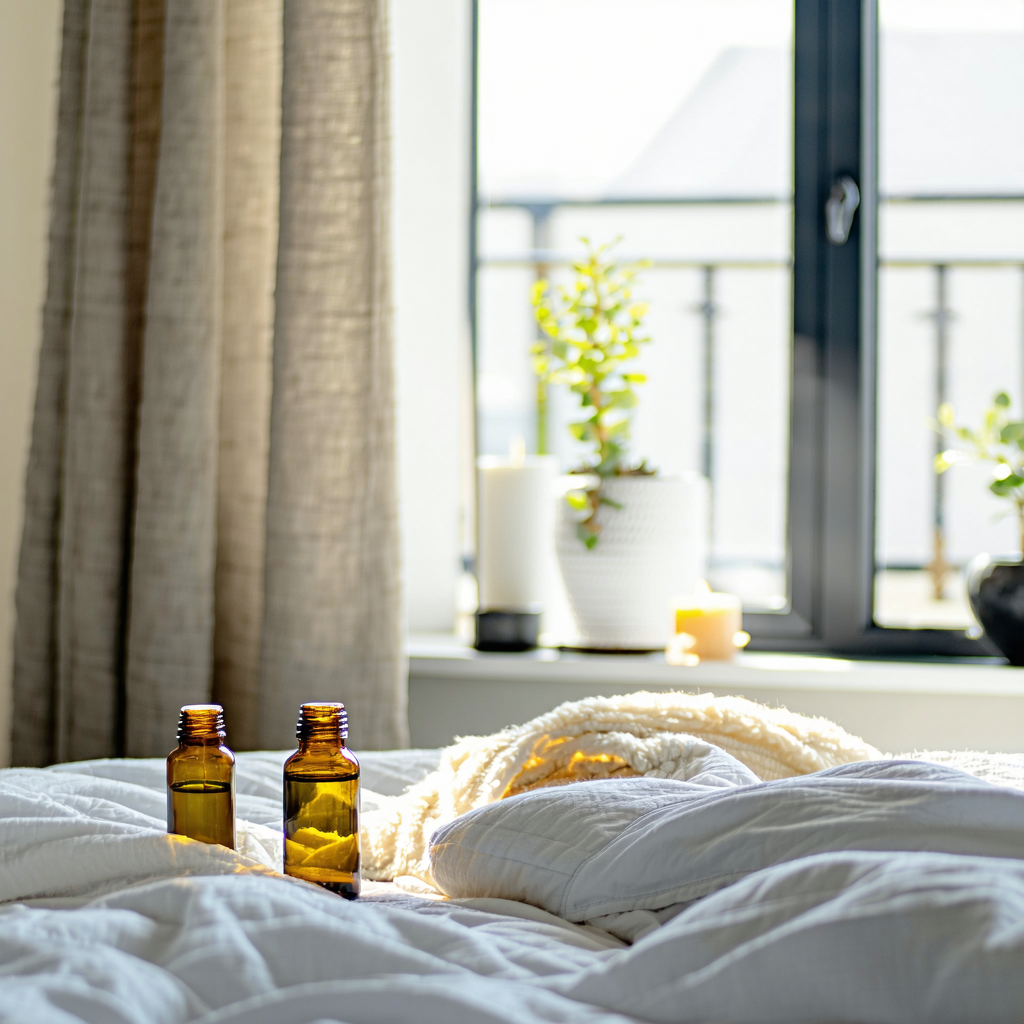
Essential oils for the bedroom – a practical guide to better sleep and calm
Using essential oils bedroom routines is one of the simplest ways to shift the atmosphere of your sleeping space without major effort or expense. Certain plant-derived oils – lavender and cedarwood being the most studied – may support relaxation and help signal to your brain that it is time to wind down. I have found that a consistent diffuser routine makes falling asleep feel noticeably less like a battle.
Table of contents
- Why use essential oils in the bedroom
- The best essential oils for bedroom use
- How to use essential oils in the bedroom
- Diffuser vs spray vs topical – a quick comparison
- Simple essential oil bedroom blends to try tonight
- Safety considerations for bedroom use
- Building a consistent essential oils bedroom routine
- Common mistakes and how to avoid them
- Frequently asked questions
Why use essential oils in the bedroom
The bedroom is the one room in your home that is almost entirely dedicated to rest. Adding essential oils bedroom practices to that space works because scent is processed by the olfactory system, which connects directly to the limbic brain – the area involved in emotion, memory, and autonomic functions like heart rate and breathing.
Research published by the National Center for Complementary and Integrative Health notes that aromatherapy may support relaxation, though it stops short of calling it a treatment for any condition. That aligns with my own experience: oils do not knock me out, but they do help me feel ready for sleep rather than still buzzing from the day.
A secondary reason to use essential oils in the bedroom is environmental. Some oils – tea tree and eucalyptus in particular – have properties that may support a fresher-smelling space, which many people find conducive to rest. Scent is a powerful environmental cue, and a bedroom that smells calm tends to feel calm.
The best essential oils for bedroom use
Lavender
Lavender is the most researched oil for sleep and relaxation. Multiple small studies have found that inhaling lavender oil before bed may reduce the time it takes to fall asleep and improve sleep quality scores in healthy adults. It is the oil I reach for first when building any essential oils bedroom setup.
The key compound is linalool, which appears to have a calming effect on the nervous system. A few drops in a diffuser about 30 minutes before bed is the most common and practical approach.
Cedarwood
Cedarwood has a warm, woody scent that many people find grounding. It contains cedrol, a compound that some animal studies suggest may have sedative properties. In my own routine I blend cedarwood with lavender because the combination smells like a quiet forest cabin – which, for me, is the exact mental image that helps me let go of the day.
It is also one of the more affordable oils, which makes it a good starting point if you are new to using essential oils in the bedroom.
Roman chamomile
Roman chamomile is gentler and more floral than German chamomile. It is often used in children’s bedroom blends because of its mild character, but adults find it equally useful. Some people find it especially helpful during periods of stress or anxious thinking at night.
Bergamot
Bergamot is a citrus oil with a surprisingly calming profile – unlike most citrus oils, which tend to be energising. It is sometimes described as the oil that bridges the gap between uplifting and relaxing. Using bergamot in your essential oils bedroom diffuser blend can help with the mental chatter that makes it hard to settle.
Vetiver
Vetiver has a deep, earthy, smoky scent that is not for everyone but is beloved by those who respond to it. It is sometimes called the “oil of tranquility” in traditional Ayurvedic practice. A very small amount goes a long way – one drop in a blend of five is usually enough.
Frankincense
Frankincense has been used in meditative and spiritual contexts for centuries. Its slow, resinous scent encourages slower, deeper breathing, which is a genuine physiological pathway to relaxation. It pairs well with lavender and cedarwood in a bedroom diffuser blend.
Eucalyptus and peppermint – a note of caution
These two oils are popular but tend to be stimulating rather than sedating. They are better suited to a morning shower routine than an essential oils bedroom environment. The exception is if you are using eucalyptus to support clear breathing during a cold – in that case, a very light diffusion may be helpful, but keep the amount minimal.
How to use essential oils in the bedroom
Ultrasonic diffuser
An ultrasonic diffuser is the most popular method for using essential oils in the bedroom. It uses water and ultrasonic vibrations to disperse a fine mist into the air. You add a few drops of oil to the water reservoir, and the diffuser does the rest. Most modern diffusers have a timer function, which I consider essential – you do not want to run a diffuser all night.
A good rule of thumb is to diffuse for 30 to 60 minutes before sleep, then let the diffuser switch off. This gives the scent time to fill the room without over-saturating the air.
Pillow spray
A pillow spray is simply a diluted mixture of essential oil and water (with a small amount of alcohol or a dispersant to help the oil mix). You spray it lightly on your pillow or pillowcase a few minutes before lying down. This is a very direct and personal way to use essential oils in the bedroom, and many people find it more effective than room diffusion because the scent stays close throughout the night.
Reed diffuser
Reed diffusers provide a continuous, low-level scent rather than an intense burst. They work well as a background presence in a bedroom – not strong enough to be the main event, but useful for maintaining a baseline calm atmosphere throughout the day and evening.
Topical application
Some people apply diluted essential oils directly to the skin – commonly to the wrists, temples, or the soles of the feet – as part of a pre-sleep ritual. Always dilute in a carrier oil (such as jojoba, sweet almond, or fractionated coconut oil) at a ratio of about 2 to 3 percent essential oil to carrier. Never apply undiluted essential oil directly to skin.
Linen sachets
A small fabric sachet filled with dried lavender or a few drops of oil on cotton balls and placed in a pillowcase or drawer is a low-tech but effective approach. It is particularly useful for travel when you want to bring the familiar scent of your essential oils bedroom routine with you.
Diffuser vs spray vs topical – a quick comparison
- Ultrasonic diffuser – best for whole-room scenting; requires water and electricity; easy to control with a timer; not suitable for very small rooms with poor ventilation
- Pillow spray – personal, direct, and portable; easy to make at home; scent fades faster than diffusion
- Reed diffuser – passive and low-maintenance; good for consistent background scent; less intensity than an ultrasonic diffuser
- Topical application – most personal method; requires careful dilution; combines scent with touch, which may enhance the ritual effect
- Linen sachet – no electricity needed; travel-friendly; scent is subtle and long-lasting
Simple essential oil bedroom blends to try tonight
Classic sleep blend
This is the blend I started with, and I still come back to it regularly. It is simple, well-tolerated by most people, and the combination of oils is supported by more evidence than almost any other pairing.
- 3 drops lavender
- 2 drops cedarwood
- 1 drop frankincense
Add to a diffuser with water and run for 45 minutes before turning out the light.
Stress-release blend
This blend works well on evenings when the mental noise of the day is particularly loud. Bergamot lifts the mood slightly while chamomile and lavender bring it back down to calm.
- 3 drops bergamot
- 2 drops Roman chamomile
- 1 drop lavender
Deep earthy blend
For those who prefer grounding, forest-like scents over floral ones, this combination is worth trying in your essential oils bedroom diffuser.
- 3 drops cedarwood
- 2 drops frankincense
- 1 drop vetiver
Simple pillow spray recipe
Mix 10 drops of lavender essential oil with 1 tablespoon of witch hazel and top up with distilled water in a small spray bottle (about 60ml total). Shake before each use and mist lightly over your pillow. This is one of the most practical ways to bring an essential oils bedroom habit into your nightly routine with minimal equipment.
Safety considerations for bedroom use
Ventilation
A bedroom is a relatively enclosed space, and essential oils are potent. Always ensure there is some air circulation – a slightly open window or a gap under the door is usually enough. Avoid running a diffuser in a completely sealed room for extended periods.
Pets
This is important. Cats are particularly sensitive to many essential oils because they lack certain liver enzymes needed to metabolise compounds like phenols and monoterpenes. Tea tree, eucalyptus, clove, and cinnamon oils are among the most concerning. If you share your bedroom with a cat, consult a veterinarian before using any diffuser. Dogs are somewhat more tolerant but can still be affected by concentrated diffusion. Keep the room ventilated and allow pets to leave if they choose.
Children
Young children – particularly infants and toddlers – have more sensitive respiratory systems. If a child sleeps in the room, use very low concentrations, choose gentle oils like diluted lavender, and always ensure good ventilation. Some practitioners recommend avoiding diffusion entirely in rooms where infants sleep.
Pregnancy
Some essential oils are not recommended during pregnancy. Clary sage, rosemary, and certain citrus oils are among those that some practitioners advise avoiding. If you are pregnant, speak with your healthcare provider before adding new essential oils to your bedroom routine.
Skin dilution
Repeat this rule because it matters: never apply undiluted essential oil to skin. Even lavender, which is sometimes described as safe to use neat, can cause sensitisation over time with repeated undiluted use. A 2 to 3 percent dilution in a carrier oil is the standard recommendation for adults.
Oil quality
Not all essential oils are created equal. Look for oils that list the botanical name (for example, Lavandula angustifolia for true lavender), the country of origin, and the extraction method. Avoid oils labelled only as “fragrance oil” or “aromatherapy oil” without further detail – these are often synthetic and do not carry the same properties as genuine plant-derived essential oils.
Building a consistent essential oils bedroom routine
The real benefit of using essential oils in the bedroom comes from consistency. Scent works partly through conditioning – your brain learns to associate a particular smell with sleep, and over time the smell itself begins to trigger that state. This is the same mechanism that makes the smell of coffee energising before you have even taken a sip.
I built my essential oils bedroom routine over about three weeks by using the same blend every single night at the same time. By the end of the first week, I noticed I was feeling sleepy before I had even finished my pre-bed reading. That is the conditioning effect at work.
Here is a simple structure to start with:
- Set a consistent bedtime and start your wind-down about 60 minutes before it.
- Start your diffuser with your chosen blend 30 to 45 minutes before you plan to sleep.
- Dim the lights in the bedroom while the diffuser runs.
- Do a quiet activity – reading, light stretching, journaling – while the scent fills the room.
- Turn off the diffuser (or let the timer do it) when you get into bed.
- Use a pillow spray as a final cue if you want an additional anchor.
Stick with the same blend for at least two weeks before switching. Changing scents too often slows down the conditioning process and reduces the effectiveness of your essential oils bedroom habit.
Common mistakes and how to avoid them
Using too much oil
More is not better with essential oils. Overloading a diffuser can cause headaches, nausea, or a feeling of overwhelm rather than calm. Start with 3 to 4 drops total in your diffuser and adjust from there. If you finish a session feeling headachy, use less next time.
Running the diffuser all night
Continuous diffusion through the night is not recommended. It can overstimulate the olfactory system, cause respiratory irritation, and in some cases disrupt sleep rather than support it. Use a timer and aim for 30 to 60 minutes of diffusion before sleep.
Buying low-quality oils
Synthetic fragrance oils smell similar to essential oils but do not carry the same plant compounds. They may also contain synthetic additives that are irritating when inhaled. Investing in a small number of high-quality, pure essential oils is better than buying a large set of cheap ones for your essential oils bedroom routine.
Ignoring the rest of the sleep environment
Essential oils are a supportive tool, not a solution on their own. If your bedroom is too warm, too bright, or filled with screen time right up to sleep, an essential oils bedroom routine will have limited impact. Pair it with good sleep hygiene – a cool, dark room, a consistent schedule, and reduced screen exposure in the hour before bed.
Switching blends too often
As mentioned above, the conditioning effect depends on consistency. Rotating through five different blends in a week prevents your brain from building a strong association between any single scent and sleep. Pick one blend and use it every night for at least two weeks.
Not cleaning the diffuser
Oil residue builds up in diffusers over time and can affect the scent quality and even the device’s performance. Rinse the water reservoir with clean water after each use and do a deeper clean with a small amount of white vinegar every week or two. This keeps your essential oils bedroom setup working properly and prevents mould growth in the water tank.
Frequently asked questions
What is the best essential oil for the bedroom?
Lavender is consistently the most recommended essential oil for bedroom use because it has the most research behind it and is well-tolerated by most adults. Cedarwood is a close second, particularly for people who prefer woody rather than floral scents. A blend of both is a practical starting point for any essential oils bedroom routine.
Is it safe to sleep with a diffuser running all night?
Most aromatherapy practitioners recommend against running a diffuser all night. Continuous exposure can cause sensory fatigue, headaches, or respiratory irritation. A timer-controlled session of 30 to 60 minutes before sleep is the safer and more effective approach.
Can I use essential oils in the bedroom if I have a cat?
Cats are sensitive to many essential oils and should not be exposed to concentrated diffusion. If your cat sleeps in your bedroom, consult a veterinarian before using any essential oils in that space. At minimum, ensure the room is well-ventilated and that the cat can leave freely.
How many drops of essential oil should I put in a diffuser for the bedroom?
For a standard bedroom-sized ultrasonic diffuser, 3 to 5 drops total is a reasonable starting point. If you are new to essential oils or sensitive to strong scents, start with 3 drops and adjust upward only if the scent feels too faint. More drops does not mean better results – it often means the opposite.
Can essential oils in the bedroom help with anxiety at night?
Some people find that certain oils – lavender, bergamot, and Roman chamomile in particular – may support a calmer mental state before sleep. The evidence is modest but consistent enough to be worth trying. Essential oils are not a substitute for professional support if anxiety is significantly affecting your sleep or daily life.
What carrier oil should I use to dilute essential oils for bedroom topical use?
Jojoba, sweet almond, and fractionated coconut oil are all popular choices. Jojoba is particularly good because it is shelf-stable, absorbs well, and has a neutral scent that does not compete with the essential oil. Use a 2 to 3 percent dilution – roughly 10 to 15 drops of essential oil per 30ml of carrier oil.
How long does it take for an essential oils bedroom routine to start working?
Some people notice a difference in how quickly they feel relaxed from the very first night. The deeper conditioning effect – where the scent itself begins to trigger sleepiness – typically builds over one to three weeks of consistent use. Sticking with the same blend every night speeds up this process.
Can I make my own pillow spray for the bedroom?
Yes, and it is straightforward. Combine 10 drops of lavender essential oil with 1 tablespoon of witch hazel in a small spray bottle, then top up with distilled water. Shake before each use and mist lightly over your pillow. This is one of the most accessible ways to start an essential oils bedroom habit without buying any specialist equipment.
For more practical wellness ideas, browse the Health Living Today guide library.