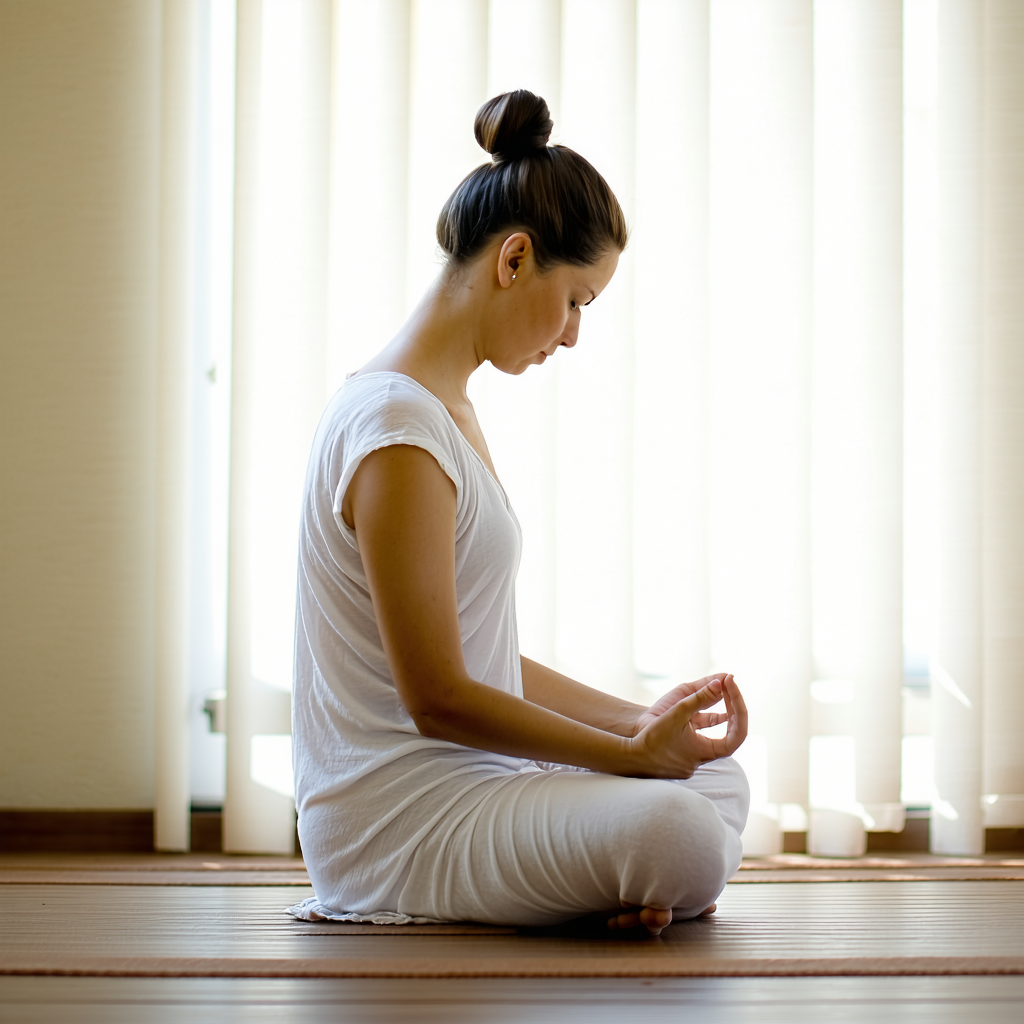
Meditation vs prayer – which one is right for you?
Meditation and prayer are both powerful practices for calming the mind and supporting overall well-being, and for many people they overlap more than they differ. When you look closely at meditation vs prayer, the core distinction comes down to direction – meditation typically turns attention inward toward awareness itself, while prayer is usually directed outward toward a higher power, a divine presence, or a sense of something greater than the self. In practice, I have found that understanding both helps you build a routine that actually fits your life, whether you are secular, spiritual, or somewhere in between.
Table of contents
- What is meditation
- What is prayer
- Meditation vs prayer – key differences
- Meditation vs prayer – surprising similarities
- The science behind both practices
- Mental health and emotional well-being benefits
- Which practice suits which person
- Can you combine meditation and prayer
- Practical steps for starting or deepening either practice
- Common mistakes people make
- Frequently asked questions
What is meditation
Meditation is a set of mental training techniques designed to cultivate focused attention, open awareness, or a specific quality like compassion. It does not require any religious belief, though it has deep roots in Buddhist, Hindu, Taoist, and other contemplative traditions.
The most widely studied form today is mindfulness meditation, which involves paying deliberate, non-judgmental attention to the present moment – often starting with the breath. Other forms include loving-kindness meditation, body-scan practices, transcendental meditation, and visualization.
What unites all of these is the inward direction of attention. You are not speaking to anyone outside yourself. You are observing, resting in, or gently redirecting your own awareness.
Common types of meditation
- Mindfulness meditation – observing thoughts and sensations without judgment
- Focused attention meditation – anchoring awareness to a single object such as the breath or a candle flame
- Loving-kindness (metta) meditation – cultivating warmth and goodwill toward self and others
- Transcendental meditation – silently repeating a personal mantra to settle the mind
- Body-scan meditation – moving attention systematically through the body to release tension
- Visualization meditation – holding a calming or aspirational mental image
What is prayer
Prayer is a form of intentional communication directed toward a higher power, God, the universe, or a sacred presence – depending on your tradition or personal belief. It can be spoken aloud, whispered, written, or held silently in the heart.
Prayer takes many forms: petition (asking for something), gratitude, confession, intercession (praying on behalf of others), and contemplative prayer, which comes closest to meditation in its quiet, receptive quality. Major world religions – Christianity, Islam, Judaism, Hinduism, Buddhism in certain schools, and many indigenous traditions – all include structured forms of prayer.
Unlike meditation, prayer usually implies a relationship. There is a “you” speaking and a “someone” or “something” being addressed. That relational quality is often what makes prayer feel personally meaningful and emotionally sustaining for people who hold religious or spiritual beliefs.
Common types of prayer
- Petitionary prayer – making a specific request
- Gratitude prayer – expressing thanks for blessings received
- Intercessory prayer – praying for the well-being of others
- Contemplative prayer – resting silently in divine presence (common in Christian mysticism)
- Liturgical prayer – reciting set prayers from a tradition, such as the rosary or salah
- Spontaneous prayer – speaking freely from the heart in the moment
Meditation vs prayer – key differences
When people ask about meditation vs prayer, they are often really asking: do I need to be religious to benefit, and will one work better than the other for my specific goals? Here is a plain-language breakdown.
- Direction of attention – meditation turns inward; prayer turns outward toward a higher power or sacred presence
- Religious requirement – meditation can be entirely secular; prayer is inherently spiritual or religious in orientation
- Goal – meditation often aims at mental clarity, stress reduction, or insight; prayer often aims at connection, guidance, or gratitude
- Communication – meditation is non-verbal observation or silent resting; prayer is often a form of dialogue or address
- Tradition – meditation has secular, clinical, and religious forms; prayer is tied to specific religious or spiritual traditions
- Measurability – meditation has a large body of clinical research; prayer research exists but is smaller and more contested
The comparison of meditation vs prayer is not really a competition. They are different tools that serve overlapping but distinct purposes. Choosing between them – or combining them – depends on your beliefs, your goals, and honestly, what you will actually do consistently.
Meditation vs prayer – surprising similarities
Despite the differences, the meditation vs prayer conversation reveals striking common ground. Both practices share a set of features that likely explain why each has survived and spread across cultures for thousands of years.
- Stillness and quiet – both work best when you slow down and reduce external distraction
- Repetition and ritual – both benefit from regularity, whether that is a daily sit or morning prayers
- Intention setting – both involve deliberately choosing a mental focus rather than letting the mind wander randomly
- Physiological calming – both activate the parasympathetic nervous system, slowing heart rate and reducing cortisol
- Sense of meaning – both connect practitioners to something felt as larger or more significant than daily worries
- Community potential – both can be done alone or in groups, and group practice tends to deepen both
I have found in my own routine that the moments when prayer and meditation feel most similar are the quiet ones – sitting still, breathing slowly, and simply being present. That overlap is not accidental. Contemplative traditions across the world arrived at similar postures, rhythms, and attitudes through centuries of practice.
The science behind both practices
Research on meditation is substantial and growing. The National Center for Complementary and Integrative Health (NCCIH) summarizes evidence showing that mindfulness meditation may support reductions in anxiety, depression, and pain perception, and that it produces measurable changes in brain structure and function with regular practice.
Studies using neuroimaging have shown that experienced meditators tend to have increased gray matter density in regions linked to attention, emotional regulation, and self-awareness. Even short programs – eight weeks of mindfulness-based stress reduction (MBSR) – have shown meaningful shifts in brain activity patterns.
Research on prayer is less extensive and methodologically harder to conduct, partly because prayer is so personal and variable. That said, studies on religious practice broadly – which includes regular prayer – have found associations with lower rates of depression, greater life satisfaction, and better resilience in the face of illness or loss. It is important to note that these are associations, not proof of cause and effect.
One consistent finding across both bodies of research is that frequency and regularity matter. A single session of meditation or a one-off prayer rarely produces lasting change. The benefits accumulate through consistent, repeated practice over weeks and months.
Mental health and emotional well-being benefits
Both meditation and prayer may support emotional well-being, though they tend to do so through slightly different mechanisms.
How meditation may support mental health
Meditation, particularly mindfulness-based approaches, has been studied extensively for its effects on anxiety and stress. Regular practice may help people observe their thoughts without being overwhelmed by them – a skill sometimes called “cognitive defusion” in acceptance-based therapies.
Some people find that meditation reduces rumination, the repetitive negative thinking loop that underlies much of depression and anxiety. By training attention to return to the present moment, meditation may interrupt that loop before it gains momentum.
How prayer may support mental health
Prayer appears to support mental health through a different but equally valuable pathway – meaning, connection, and perceived support. When someone believes they are heard by a higher power, they may feel less alone in their struggles, which is a powerful buffer against despair.
Gratitude prayer in particular has interesting parallels with gratitude journaling, a well-researched positive psychology intervention. Regularly naming what you are thankful for – whether to God or simply on paper – tends to shift attention away from what is lacking and toward what is present and good.
Intercessory prayer, praying for others, may also strengthen prosocial feelings and a sense of purpose, which are both linked to better emotional resilience.
Which practice suits which person
The honest answer to the meditation vs prayer question is that it depends on who you are and what you are looking for. Neither is universally superior.
Meditation may suit you better if
- You are secular or non-religious and want evidence-based stress relief
- You want to improve focus, attention, or cognitive clarity
- You are drawn to self-observation and understanding your own mental patterns
- You prefer a practice that does not require any specific belief system
- You are working with a therapist and want a complementary skill – mindfulness is embedded in several clinical therapies
Prayer may suit you better if
- You already hold religious or spiritual beliefs and want a practice that aligns with them
- You find comfort in the idea of being heard by someone or something beyond yourself
- You want a practice embedded in community and tradition
- You are going through grief, illness, or crisis and need a sense of being held or supported
- You value the ritual and structure of your religious tradition
Neither is objectively superior
I remember going through a period of high work stress a few years ago. I tried a structured meditation app and found it helpful for sleep – but what actually got me through the harder emotional moments was a simple habit of speaking out loud what I was grateful for each morning, which felt more like prayer than anything else. That personal anecdote is not data, but it illustrates something the research supports: the best practice is the one you will actually do.
When comparing meditation vs prayer, the most important variable is not which one is scientifically superior. It is which one you will return to tomorrow, and the day after that.
Can you combine meditation and prayer
Yes – and many people already do, often without labeling it. Contemplative prayer traditions within Christianity (centering prayer, lectio divina), Sufi dhikr in Islam, Jewish hitbonenut, and certain Buddhist practices all blur the line between prayer and meditation in meaningful ways.
If you want to combine both deliberately, here are a few practical approaches I have seen work well.
Approaches for combining meditation and prayer
- Begin with prayer, end with meditation – speak what is on your heart first, then sit in silence and observe what arises
- Use a sacred phrase as a meditation anchor – instead of a neutral word, use a phrase from your tradition (“be still,” “shalom,” “alhamdulillah”) as your returning point
- Loving-kindness as prayer – the metta phrases (“may you be happy, may you be well”) can be directed toward God, a saint, or a loved one, bridging both forms
- Gratitude as a bridge – begin with a few minutes of gratitude prayer, then transition into a body scan or breath awareness practice
- Contemplative reading – read a short passage from a sacred text slowly, then sit in quiet awareness of what resonates
Combining the two is not a compromise – it can be a richer practice than either alone. Many of the world’s deepest contemplative traditions have always held both.
Practical steps for starting or deepening either practice
Whether you are new to both or returning to one after a gap, consistency beats intensity every time. Here are practical, low-friction ways to begin.
Starting meditation
- Choose a consistent time – morning tends to work best before the day’s demands pile up
- Start with five minutes, not thirty – short sessions you actually complete are more valuable than long ones you skip
- Sit comfortably with your back reasonably upright – you do not need a special cushion or posture
- Anchor attention to your breath – notice each inhale and exhale without trying to change it
- When your mind wanders (it will), gently return attention to the breath without self-criticism
- Use a free app or a simple timer – you do not need to spend money to meditate effectively
- Add one minute per week until you reach your target duration
Starting or deepening prayer
- Choose a quiet place and a consistent time – morning, evening, or before meals all work
- Begin with what is true for you right now – gratitude, a request, or simply acknowledging where you are
- If your tradition has set prayers, use them as a structure and let spontaneous words fill the gaps
- Write prayers in a journal if speaking aloud feels awkward – some people find written prayer easier to sustain
- Sit in silence after speaking – this receptive pause is where contemplative prayer begins
- Connect with a community if possible – shared prayer tends to deepen personal practice
Building consistency in either practice
Habit research consistently shows that attaching a new practice to an existing anchor – your morning coffee, brushing your teeth, or sitting down at your desk – dramatically increases follow-through. In comparing meditation vs prayer for long-term sustainability, both practices benefit equally from this kind of habit stacking.
Tracking a simple streak on paper or in an app also helps. Not because streaks are sacred, but because the visual record makes the habit feel real and worth protecting.
Common mistakes people make
Understanding the meditation vs prayer landscape also means knowing where people tend to go wrong with each practice.
Common meditation mistakes
- Expecting a blank mind – the goal is not to stop thinking but to observe thoughts without getting swept away by them
- Starting too long – twenty or thirty minutes on day one often leads to frustration and quitting
- Judging the quality of each session – a “restless” session where you kept returning your attention is still good practice
- Treating it as a quick fix – benefits from meditation accumulate over weeks, not hours
- Skipping days without a plan to resume – missing one day is fine; missing a week without re-entry is where habits die
Common prayer mistakes
- Only praying in crisis – prayer as a daily habit tends to be more sustaining than prayer only when things go wrong
- Treating it as a transaction – expecting specific outcomes from prayer often leads to disappointment and abandonment of the practice
- Rushing through set prayers without engagement – slowing down and meaning each word tends to produce more felt benefit
- Neglecting the listening side – many prayer traditions emphasize receptive silence as much as speaking
- Comparing your prayer life to others – what works for someone else may not be the right form or frequency for you
In the ongoing conversation about meditation vs prayer, one of the most useful reframes is to stop asking which is better and start asking which you can do with genuine presence. A distracted thirty-minute session of either practice is less valuable than five genuinely attentive minutes.
Frequently asked questions
Is meditation the same as prayer?
Meditation and prayer are not the same, though they overlap significantly. Meditation is typically a non-theistic practice of training attention inward, while prayer is a relational act directed toward a higher power or sacred presence. Some forms – like contemplative prayer or loving-kindness meditation – come very close to each other, and many people practice both within a single sitting.
Can I meditate if I am religious?
Yes. Many deeply religious people meditate regularly, and most major religious traditions have their own contemplative practices that function similarly to meditation. Meditation does not require you to abandon or contradict your beliefs. In fact, some people find that meditation deepens their prayer life by improving their capacity for stillness and presence.
Is prayer scientifically proven to work?
Research on prayer shows associations between regular religious practice – including prayer – and better mental health outcomes such as lower rates of depression and greater resilience. However, the evidence base is smaller and more methodologically complex than the evidence for meditation. It is accurate to say that prayer may support well-being for many people, particularly through mechanisms of meaning, connection, and perceived support.
Which is better for anxiety – meditation or prayer?
Mindfulness meditation has a stronger clinical evidence base for anxiety specifically, with multiple randomized controlled trials supporting its effectiveness. That said, prayer may also support anxiety reduction for people with religious or spiritual beliefs, particularly through the sense of not being alone in one’s struggles. In the meditation vs prayer comparison for anxiety, the best choice is the one you will practice consistently and that aligns with your worldview.
How long should I meditate or pray each day?
Research on meditation suggests that even ten to fifteen minutes daily can produce meaningful benefits over several weeks. Many religious traditions have structured prayer times ranging from a few minutes to longer devotional periods. Starting with five to ten minutes and building gradually tends to work better than ambitious targets that are hard to maintain. Consistency over time matters more than session length.
Can meditation and prayer be done together?
Yes, and many contemplative traditions have always combined them. Practical ways to do this include beginning with spoken or written prayer and then transitioning into silent breath-awareness, using a sacred phrase as a meditation anchor, or practicing loving-kindness meditation directed toward people or a divine presence you care about. The meditation vs prayer boundary is more fluid in practice than it appears in theory.
Do I need a teacher or guide for meditation or prayer?
Neither requires a teacher to begin, though guidance can accelerate progress and help you avoid common pitfalls. For meditation, many people start successfully with a free app, a book, or a recorded guided session. For prayer, a faith community, a spiritual director, or simply the texts of your tradition can serve as useful guides. Over time, some people find that working with a teacher – whether a meditation instructor or a spiritual mentor – meaningfully deepens their practice.
What if I do not believe in God – can prayer still benefit me?
Some people find value in prayer-like practices without directing them toward a personal God – writing gratitude, speaking intentions aloud, or addressing the universe or nature as a whole. Whether this counts as prayer depends on how you define the word. What the research suggests is that the underlying mechanisms – gratitude, intentional reflection, a sense of connection to something larger – may be beneficial regardless of specific theological beliefs. In the meditation vs prayer discussion, secular people often find that meditation gives them access to similar benefits without requiring any belief they do not hold.
For more practical wellness ideas, browse the Health Living Today guide library.