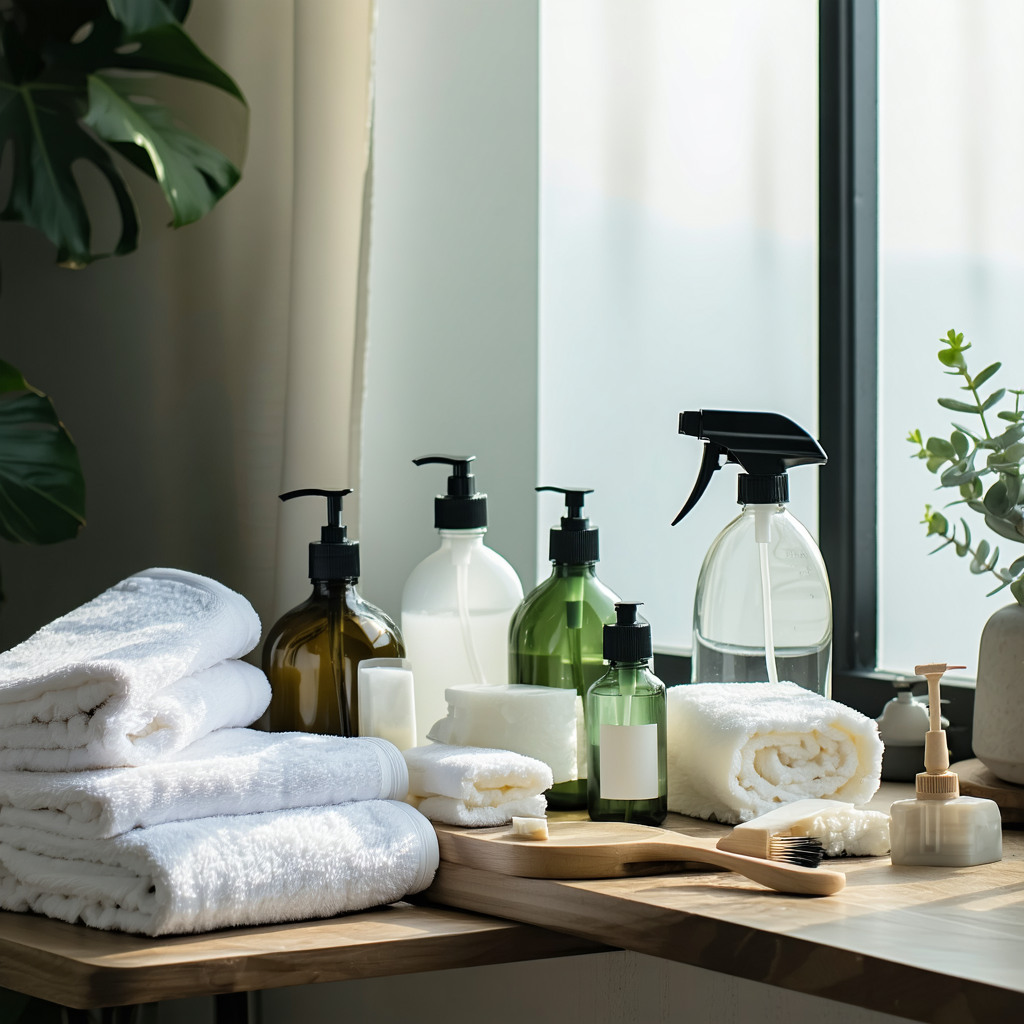
What are non toxic cleaning essentials and why do they matter?
Non toxic cleaning essentials are the core products, ingredients, and habits that let you keep your home clean without relying on harsh synthetic chemicals that may irritate skin, airways, or the broader environment. Switching to a non toxic cleaning routine does not require an expensive overhaul – a handful of simple, well-chosen supplies can handle the vast majority of household cleaning tasks. I have found that once you understand which ingredients actually do the work, the whole process feels far less complicated than the crowded cleaning aisle makes it seem.
Table of contents
- Why conventional cleaners raise concerns
- The core non toxic cleaning ingredients
- Essential tools that support a non toxic routine
- Room-by-room guide to non toxic cleaning
- Simple DIY recipes you can make today
- How to read labels when buying ready-made products
- Common mistakes when switching to non toxic cleaning
- Special considerations for homes with kids and pets
- Non toxic vs conventional cleaners – a quick comparison
- Frequently asked questions
Why conventional cleaners raise concerns
Many standard household cleaners contain compounds such as ammonia, chlorine bleach, synthetic fragrances, and quaternary ammonium compounds. According to the U.S. Environmental Protection Agency’s Safer Choice program, some of these ingredients can contribute to indoor air quality problems and may cause respiratory irritation with repeated exposure.
Indoor air can actually be more polluted than outdoor air in some homes, largely because of the products we use inside. Volatile organic compounds (VOCs) released by conventional sprays and disinfectants linger in enclosed spaces. People who clean frequently – whether professionally or at home – tend to report higher rates of airway sensitivity, which is one reason interest in non toxic cleaning essentials has grown so steadily.
I want to be clear: this is not about fear. It is about making informed choices that align with the kind of home environment you want to maintain for yourself and the people you live with.
The core non toxic cleaning ingredients
Building your non toxic cleaning essentials kit starts with understanding a short list of workhorses. These ingredients are inexpensive, widely available, and backed by real cleaning science.
White distilled vinegar
Vinegar is a mild acid (acetic acid, typically 5% concentration) that cuts through mineral deposits, soap scum, and light grease. It works well on glass, tile, and stainless steel. One thing I have found in my own routine is that the smell dissipates quickly once surfaces dry, so the sharpness is only temporary.
Do not use vinegar on natural stone surfaces like marble or granite – the acid can etch the finish over time. It is also not a registered disinfectant for killing pathogens, so pair it with other strategies when sanitizing is the goal.
Baking soda
Baking soda (sodium bicarbonate) is a mild abrasive and odor absorber. It is gentle enough to scrub sinks and tubs without scratching most surfaces, and it neutralizes acidic odors rather than masking them. Sprinkle it directly on a damp surface, scrub, and rinse – simple and effective.
Castile soap
Castile soap is a plant-based liquid soap made from oils such as olive, coconut, or hemp. A small amount diluted in water works as an all-purpose cleaner, dish soap, floor cleaner, and even a gentle laundry booster. It biodegrades readily and leaves no harsh residue.
Washing soda
Washing soda (sodium carbonate) is a stronger alkaline than baking soda. It cuts through heavy grease and is useful in laundry formulas or for degreasing stovetops. Wear gloves when using it in concentrated form because it can irritate skin.
Hydrogen peroxide (3%)
The standard 3% hydrogen peroxide sold in drugstores is a mild oxidizer that may support surface sanitizing. It breaks down into water and oxygen, leaving no chemical residue. Store it in its original dark bottle to preserve potency, and do not mix it with vinegar in the same spray bottle – the combination creates peracetic acid, which is more irritating than either ingredient alone.
Essential oils (optional)
Tea tree, lavender, and eucalyptus oils are popular additions to non toxic cleaning recipes, primarily for scent. Tea tree oil does have some antimicrobial properties in research settings, though concentrations in typical DIY recipes are lower than those studied. Think of them as a pleasant bonus rather than the active cleaning agent.
Essential tools that support a non toxic routine
The right tools extend the power of your non toxic cleaning essentials and reduce how much product you need overall.
- Microfiber cloths – These trap and lift dust, bacteria, and debris using only water in many cases. They are washable and reusable, which also reduces waste.
- Glass spray bottles – Glass does not react with acidic or alkaline solutions the way some plastics can, and it holds up longer.
- Natural fiber scrub brushes – Bamboo or wood-handled brushes with plant-fiber bristles handle tough scrubbing without shedding microplastics.
- Squeegee – A simple squeegee on shower walls after each use dramatically reduces mold and soap scum buildup, cutting down on how often you need to deep clean.
- Reusable mop pads – Washable cotton or microfiber mop pads replace disposable sheets and work well with diluted castile soap solutions.
Room-by-room guide to non toxic cleaning
Kitchen
The kitchen demands grease-cutting power and occasional sanitizing. For everyday countertop cleaning, a diluted castile soap solution in a spray bottle handles most messes. For baked-on grease on the stovetop, a paste of washing soda and a little water, left for a few minutes, makes scrubbing much easier.
For the sink, baking soda scrubbed in with a damp cloth removes stains and neutralizes food odors. Follow with a rinse of diluted white vinegar to leave things bright. The refrigerator interior responds well to a simple solution of one tablespoon baking soda per quart of warm water – it cleans without leaving a scent that transfers to food.
Bathroom
The bathroom is where most people feel they need the strongest products. In my experience, a baking soda scrub on the tub and toilet bowl, combined with a hydrogen peroxide spray on surfaces left for five to ten minutes, handles the job without fumes that make the space uncomfortable to be in.
For tile grout, a paste of baking soda and a small amount of castile soap applied with an old toothbrush works well. Rinse thoroughly. Glass shower doors and mirrors respond beautifully to a straight white vinegar spray and a microfiber cloth or squeegee.
Living areas and bedrooms
Dusting with a slightly damp microfiber cloth traps particles instead of pushing them back into the air. For wood furniture, a few drops of castile soap in water, wrung out almost completely, cleans surfaces without leaving moisture behind. A drop of lemon or orange essential oil added to your dusting cloth gives a pleasant scent and adds a light conditioning effect to wood.
Carpets and rugs benefit from a baking soda treatment – sprinkle generously, leave for 15 to 30 minutes, then vacuum. This is one of my favorite weekend habits because it pulls odors out of fibers without any spray residue.
Laundry
A basic non toxic laundry routine can use washing soda, baking soda, and castile soap as a homemade powder, or you can choose a certified non toxic laundry detergent. White vinegar in the fabric softener compartment softens clothes and helps strip detergent residue from fibers. It does not leave a vinegar smell on dried laundry.
Simple DIY recipes you can make today
All-purpose spray
- 1 cup water
- 1 cup white distilled vinegar
- 15 drops tea tree essential oil
- 10 drops lavender essential oil
Combine in a glass spray bottle. Shake before each use. Suitable for countertops, sinks, and tile. Avoid natural stone.
Soft scrub paste
- 1/2 cup baking soda
- Enough liquid castile soap to form a paste (roughly 2 to 3 tablespoons)
- 10 drops lemon essential oil
Mix in a small jar. Apply with a cloth or sponge, scrub, rinse well. Use on sinks, tubs, and tile. This keeps for several weeks in a sealed container.
Glass and mirror cleaner
- 2 cups water
- 1/2 cup white distilled vinegar
- 1/4 cup rubbing alcohol (70% concentration)
Combine in a spray bottle. Spray on glass and wipe with a microfiber cloth in circular motions. Streak-free and fast-drying.
Toilet bowl cleaner
- 1/2 cup baking soda
- 1/4 cup white distilled vinegar (add slowly to avoid fizzing overflow)
- 10 drops tea tree oil
Pour baking soda into the bowl, then slowly add vinegar. Add tea tree oil, scrub with a toilet brush, leave for 10 minutes, then flush.
How to read labels when buying ready-made products
Not everyone wants to make their own products, and that is completely fine. There are solid ready-made non toxic cleaning essentials on the market – the key is knowing what to look for and what to avoid.
Look for these markers
- EPA Safer Choice certification – This label means the EPA has reviewed every ingredient for human health and environmental safety.
- Full ingredient disclosure – Trustworthy brands list every ingredient, including fragrance components. Vague terms like “cleaning agents” or “preservative system” are red flags.
- Plant-based surfactants – Look for ingredients like sodium coco-sulfate, decyl glucoside, or coco-glucoside rather than petroleum-derived surfactants.
- Fragrance-free or essential oil scented – “Fragrance” as a single ingredient can represent dozens of undisclosed chemicals. Products scented only with named essential oils are more transparent.
Ingredients worth avoiding
- Sodium hypochlorite (bleach) in everyday cleaners – reserve for targeted disinfection only
- Ammonia – irritating to airways and eyes
- Phthalates – often hidden within “fragrance”
- Triclosan – an antimicrobial that has raised environmental persistence concerns
- Quaternary ammonium compounds (“quats”) – linked to respiratory sensitization with repeated exposure
Common mistakes when switching to non toxic cleaning
I made several of these myself when I first started building out my non toxic cleaning essentials collection, so consider this a shortcut past the trial-and-error phase.
Mixing vinegar and castile soap
This is one of the most common DIY mistakes. Vinegar (acid) reacts with castile soap (alkaline) and causes it to unsaponify – essentially turning it back into a greasy, curdled mess that is harder to rinse off than either ingredient alone. Use them separately.
Expecting instant results on built-up grime
Non toxic cleaners often require a slightly longer dwell time than their conventional counterparts. Spray, wait a few minutes, then scrub. Patience makes a real difference in results.
Using too much product
Concentrated ingredients like castile soap and washing soda are powerful in small amounts. Using too much leaves a residue that attracts more dirt. Less is genuinely more with these formulas.
Skipping the microfiber cloth
Paper towels or old cotton rags do not lift particles the way microfiber does. Investing in a set of quality microfiber cloths noticeably improves cleaning results with non toxic solutions.
Assuming “natural” means safe for every surface
Even natural ingredients can damage certain surfaces. Vinegar on marble, baking soda on polished aluminum, or undiluted essential oils on certain plastics can all cause problems. Always test in a small, hidden area first.
Special considerations for homes with kids and pets
Families with young children and pets have extra reasons to prioritize non toxic cleaning essentials. Children spend more time on floors and put hands and objects in their mouths, which increases their contact with cleaning residues. Pets groom themselves and walk on freshly cleaned surfaces, making residue exposure a real concern.
The good news is that the core ingredients covered in this guide – vinegar, baking soda, castile soap, and hydrogen peroxide – are among the safest options available. A few additional tips for these households:
- Allow surfaces to dry fully before children or pets return to the area.
- Store even non toxic products out of reach – baking soda and castile soap are low-risk but should not be ingested in large amounts.
- Avoid essential oil diffusers in rooms where cats spend a lot of time, as cats lack the liver enzymes to process certain compounds in essential oils.
- Choose fragrance-free formulas for areas where babies sleep or play, since even natural fragrances can be irritating to very young respiratory systems.
Non toxic vs conventional cleaners – a quick comparison
- Ingredient transparency – Non toxic products typically disclose all ingredients; conventional products often do not.
- VOC emissions – Non toxic options generally produce fewer or no VOCs; many conventional sprays release significant VOCs during and after use.
- Surface safety – Both categories have surface restrictions, but non toxic options tend to be gentler on finishes over time.
- Disinfection power – Conventional bleach-based products are stronger registered disinfectants; non toxic options like hydrogen peroxide offer moderate sanitizing support.
- Cost over time – DIY non toxic cleaning essentials are significantly less expensive per use; some premium ready-made non toxic brands cost more upfront.
- Environmental impact – Non toxic formulas biodegrade more readily and are less likely to contribute to waterway contamination.
- Scent experience – Conventional cleaners often use synthetic fragrances that linger; non toxic options use essential oils or are fragrance-free.
Frequently asked questions
What are the most important non toxic cleaning essentials to start with?
If you are just beginning, start with white distilled vinegar, baking soda, and liquid castile soap. These three ingredients cover the majority of everyday cleaning tasks and cost very little. Add a set of microfiber cloths and a glass spray bottle and you have a functional non toxic cleaning essentials kit from day one.
Are non toxic cleaners as effective as conventional products?
For everyday cleaning – removing dust, light grease, soap scum, and food residue – non toxic cleaning essentials perform comparably to conventional products. For heavy-duty disinfection in situations involving illness or immune-compromised household members, conventional disinfectants registered with the EPA may be more appropriate. Most households find that non toxic options handle their needs very well with a small adjustment in technique, mainly allowing a longer dwell time.
Is white vinegar a disinfectant?
White vinegar has some antimicrobial properties but is not classified as a disinfectant by regulatory agencies. It is effective for general cleaning and reducing surface bacteria counts, but it should not be relied upon as the sole sanitizing agent in situations where pathogen control is critical. For those situations, 3% hydrogen peroxide or an EPA-registered disinfectant is a better choice.
Can I use non toxic cleaning essentials on all surfaces?
Not universally. Vinegar should be avoided on natural stone, cast iron, and waxed surfaces. Baking soda is too abrasive for some polished surfaces. Castile soap can leave a film on glass if not rinsed well. Always check the manufacturer’s care guidance for your specific surfaces and test any new cleaning solution in an inconspicuous spot first.
How do I know if a store-bought product is truly non toxic?
Look for the EPA Safer Choice label, which indicates the product has undergone ingredient-level review. Beyond certification, check for full ingredient disclosure on the label or the brand’s website. Avoid products that list “fragrance” without further detail, as this term can conceal dozens of undisclosed compounds. Third-party databases such as the Environmental Working Group’s cleaning product guide can also help you evaluate specific products.
Are DIY non toxic cleaning recipes safe to store?
Most DIY non toxic cleaning recipes are shelf-stable for several weeks to a few months when stored in clean, sealed containers away from direct sunlight. Recipes containing fresh citrus juice or aloe vera have shorter shelf lives and should be made in small batches. Label each container with the date made and the ingredients, and discard any mixture that changes color, develops a strange odor, or shows visible separation that does not resolve with shaking.
Do non toxic cleaners cost more than conventional ones?
DIY non toxic cleaning essentials made from bulk ingredients like baking soda, washing soda, castile soap, and vinegar are almost always less expensive per use than conventional cleaners. Premium ready-made non toxic brands can cost more upfront, but concentrated formulas often make the per-use cost competitive. Over a full year, most households that switch to DIY non toxic routines report meaningful savings on cleaning supplies.
For more practical wellness ideas, browse the Health Living Today guide library.