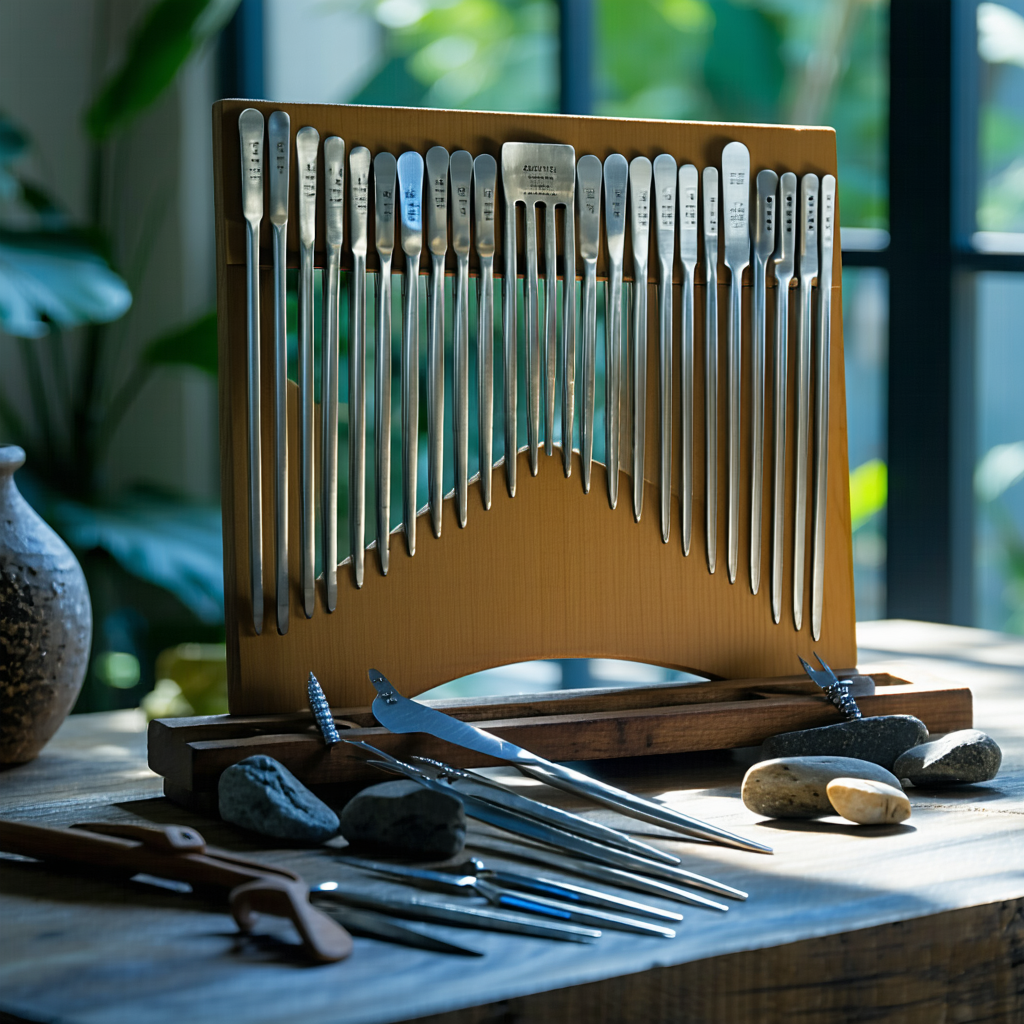
Sound Healing Tuning Forks: What You Need to Know
Sound healing tuning forks are calibrated metal instruments that produce precise frequencies, and many people use them to support relaxation, focus, and overall well-being. The practice draws on the idea that specific vibrations may help the body and nervous system move toward a calmer, more balanced state. Whether you are brand new to this or already curious about adding it to your routine, this guide walks you through everything in plain, practical terms.
Table of Contents
- What are tuning forks and how do they work in sound healing
- A brief history of sound healing with tuning forks
- Types of sound healing tuning forks
- What the science says
- Potential benefits people report
- How to use sound healing tuning forks at home
- Choosing the right tuning fork for your goals
- Combining tuning forks with other wellness practices
- Safety and practical considerations
- Frequently asked questions
What Are Tuning Forks and How Do They Work in Sound Healing
A tuning fork is a two-pronged metal instrument, typically made from aluminum or steel, that vibrates at a specific frequency when struck. In sound healing, practitioners use these vibrations either near the ears or directly on the body to encourage a state of ease.
The core idea is resonance – the tendency of one vibrating object to influence another nearby object to vibrate at a similar frequency. Proponents suggest that placing a vibrating tuning fork on or near the body may encourage tissues, cells, and the nervous system to “entrain,” or synchronize, with the fork’s frequency.
I have found that even a basic 128 Hz tuning fork held near my temples after a long workday creates a noticeable shift in how tense my shoulders feel. It is hard to explain fully, but the sensation is real and consistently calming for me.
Sound healing tuning forks are used both in self-care settings and by trained practitioners. Some practitioners place them on acupressure points or along the spine, while others simply hold them close to the body in the air.
A Brief History of Sound Healing with Tuning Forks
Tuning forks were invented in 1711 by British musician John Shore, originally as a tool for musicians to tune their instruments accurately. Their medical use came later, when physicians began using them to test hearing and bone conduction – a practice still used in clinical audiology today.
The broader concept of sound as a healing tool is far older. Ancient cultures from Egypt to Greece used chanting, drums, and singing bowls to support health rituals. Sound healing tuning forks represent a more modern, frequency-specific branch of this long tradition.
In the late twentieth century, practitioners such as John Beaulieu began developing structured systems for using tuning forks therapeutically. His work helped bring sound healing tuning forks into wellness spaces, yoga studios, and integrative health practices around the world.
Types of Sound Healing Tuning Forks
Not all tuning forks are the same. The frequency, material, and intended use all vary, and choosing the right one matters. Here is a comparison of the most common categories.
- Unweighted tuning forks – These are lightweight and produce sound primarily for the ears. They are often used near the head and are popular for relaxation and auditory entrainment.
- Weighted tuning forks – These have small weights on the ends of the prongs, which amplifies vibration and makes them better suited for placing on the body, such as on joints or along the spine.
- Solfeggio tuning forks – These are tuned to a set of ancient frequencies (396 Hz, 417 Hz, 528 Hz, and so on) that some traditions associate with specific emotional or energetic qualities.
- Planetary tuning forks – These are calibrated to frequencies said to correspond to the orbital cycles of planets. They are popular in some holistic and ceremonial practices.
- Otto tuning forks – A weighted set commonly used at 32 Hz, 64 Hz, and 128 Hz, often placed on bony prominences to transmit vibration into the body.
- Biosonics tuning forks – A brand name that has become associated with professional-grade sound healing sets, often used in clinical or therapeutic contexts.
For most beginners, a simple unweighted 128 Hz or 256 Hz fork is a practical starting point. These frequencies are gentle, widely studied in audiology, and easy to find at a reasonable price.
What the Science Says About Sound Healing Tuning Forks
The research on sound healing tuning forks is still in early stages, but a few areas show genuine promise. It is important to read this honestly – some studies are small, and the field lacks the large-scale randomized trials that would provide certainty.
One well-documented mechanism is binaural beats. When two slightly different frequencies reach each ear, the brain perceives a third, pulsing frequency equal to the difference between them. Research published in sources such as the National Institutes of Health’s PubMed Central suggests binaural beat stimulation may support relaxation and reduce anxiety in some contexts.
Vibration applied directly to the body is also studied in physiotherapy. Low-frequency vibration has been shown to influence pain perception, circulation, and muscle tone in clinical settings. Sound healing tuning forks that are placed on the body may work through similar physical pathways.
The concept of cellular resonance – the idea that specific frequencies can directly influence cellular function – is more speculative. Some researchers are exploring it, but it is not yet supported by mainstream clinical evidence. I think it is fair to say that sound healing tuning forks may support well-being through relaxation and nervous system calming, even if the deeper mechanisms are still being studied.
For a grounded overview of how sound and vibration interact with human physiology, the National Center for Complementary and Integrative Health (NCCIH) provides accessible, evidence-based summaries worth reading.
Potential Benefits People Report from Sound Healing Tuning Forks
Based on practitioner reports, user accounts, and the limited but growing body of research, here are the most commonly mentioned benefits. Note that these are not medical claims – they reflect what some people find helpful in their own experience.
- Stress reduction – Many people find that a short tuning fork session helps quiet mental chatter and lower perceived stress.
- Improved sleep quality – Some users report that using sound healing tuning forks as part of a wind-down routine may support falling asleep more easily.
- Reduced muscle tension – Weighted forks placed on tight muscles or joints may help ease physical tension, possibly by encouraging the muscles to release.
- Enhanced focus and clarity – Certain frequencies, particularly those used in binaural beat protocols, are associated with improved concentration in some studies.
- Emotional release – In sound healing sessions, clients sometimes experience unexpected emotional responses, which practitioners interpret as a form of release or processing.
- Support for meditation – The sustained tone of a tuning fork gives the mind a clear focal point, which many people find helpful for deepening a meditation practice.
In my own routine, I use sound healing tuning forks mainly for sleep preparation. I strike a weighted 128 Hz fork and place it gently on my sternum for about 30 seconds. I have no way to prove what is happening physiologically, but my sleep tracker consistently shows faster sleep onset on evenings when I do this.
How to Use Sound Healing Tuning Forks at Home
Getting started with sound healing tuning forks does not require formal training or expensive equipment. Here is a step-by-step approach that works well for self-practice.
Step 1 – Choose a quiet space
Find a room where you will not be interrupted for at least 10 to 15 minutes. Dim the lights if possible. A mat on the floor or a comfortable chair both work fine.
Step 2 – Set an intention
Before you begin, take three slow breaths and briefly note what you are hoping to experience – relaxation, focus, physical ease, or simply curiosity. This is not mystical; it is just a way of directing your attention.
Step 3 – Activate the fork correctly
Strike the fork firmly against a rubber activator, your knee, or the heel of your palm – not against a hard surface, which can damage the prongs. You want a clean, resonant tone, not a clang. Hold the fork by the stem, not the prongs, so you do not dampen the vibration.
Step 4 – Use the fork near or on the body
For an unweighted fork, hold it about two to four inches from your ear and let the tone fade naturally. For a weighted fork, place the flat end of the stem gently on a bony area – the top of the head, the sternum, the collarbone, or along the spine. Move slowly and notice any sensations.
Step 5 – Work in intervals
A typical home session with sound healing tuning forks lasts 10 to 20 minutes. Strike the fork, let the tone fully decay, pause for a breath, then repeat. Rushing through it reduces the effect. Allow silence to be part of the practice.
Step 6 – Close the session
Rest quietly for two to three minutes after your final tone. Notice how your body feels compared to when you started. Drinking a glass of water afterward is something many practitioners recommend, though the evidence for this specific suggestion is anecdotal.
Choosing the Right Sound Healing Tuning Fork for Your Goals
With so many options available, the choice can feel overwhelming. Here is a practical breakdown to simplify the decision.
For general relaxation and stress support
A single unweighted 128 Hz or 256 Hz fork is a solid starting point. These frequencies are gentle, easy to use, and widely available. You do not need a full set to begin.
For physical tension and body-based work
A weighted Otto fork at 128 Hz is one of the most practical choices. Its vibration transmits well through bone and soft tissue, and it is the frequency most commonly used in physiotherapy-adjacent applications.
For meditation and focus
Many people working with sound healing tuning forks for meditation prefer the interval of a perfect fifth – two forks whose frequencies are in a 3:2 ratio, such as 256 Hz and 384 Hz. Striking both simultaneously creates a harmonious, brain-calming interval that is widely used in sound therapy training.
For emotional and energetic work
Solfeggio tuning forks are popular in this space. The 528 Hz fork in particular has attracted significant interest, with some practitioners associating it with emotional balance and cellular repair – though the scientific evidence for these specific claims is not yet established.
Budget considerations
A single quality aluminum tuning fork typically costs between 15 and 40 dollars. A complete Solfeggio set or a professional biosonics set can run from 80 to over 300 dollars. I would suggest starting with one or two forks, learning them well, and expanding only if you find the practice genuinely useful.
Combining Sound Healing Tuning Forks with Other Wellness Practices
Sound healing tuning forks work well alongside other practices rather than as a standalone system. Here are some combinations that many people find effective.
Tuning forks and breathwork
Pairing slow, diaphragmatic breathing with a tuning fork session amplifies the relaxation response. Try inhaling for four counts as the tone fades, then exhaling for six counts in the silence. The combination of controlled breathing and auditory focus is particularly grounding.
Tuning forks and yoga or stretching
Some yoga practitioners use a tuning fork at the start or end of a session to signal a shift in nervous system state. Placing a weighted fork on a tight area before stretching it may help the tissue release more easily – though this is based more on practitioner experience than controlled research.
Tuning forks and meditation
The sustained tone of a sound healing tuning fork provides a natural anchor for attention during meditation. When the mind wanders, the fading tone draws focus back without effort. This makes tuning forks especially useful for people who find silent meditation difficult.
Tuning forks and journaling
After a session, some people find that writing down any thoughts, sensations, or images that arose helps them process the experience. This is not required, but if you are using sound healing tuning forks to support emotional well-being, pairing them with reflective writing can deepen the practice over time.
Safety and Practical Considerations
Sound healing tuning forks are generally considered very safe for most people. However, there are a few practical points worth knowing.
- Avoid placing forks directly on open wounds, inflamed areas, or implanted devices – The vibration, while gentle, is not appropriate near pacemakers or metal implants without medical guidance.
- Use caution near the ears – Do not insert a tuning fork into the ear canal. Holding it a few inches away is sufficient and safe.
- Pregnancy – Some practitioners advise caution with certain frequencies during pregnancy. If you are pregnant, check with your healthcare provider before beginning any new wellness practice.
- Neurological sensitivities – People with conditions such as epilepsy or extreme sound sensitivity may want to start very slowly and with professional guidance.
- Sound healing tuning forks are not a replacement for medical care – They may support relaxation and well-being, but they are not a substitute for professional diagnosis or treatment of any health condition.
From a practical standpoint, store your forks in a padded pouch or case to prevent dents to the prongs, which can alter their frequency. Keep them dry and away from extreme temperatures. A well-cared-for aluminum tuning fork can last decades.
Frequently Asked Questions
What frequency tuning fork is best for sound healing beginners?
Most beginners do well starting with a 128 Hz or 256 Hz tuning fork. These frequencies are gentle, widely used in both clinical audiology and wellness settings, and easy to work with. A single unweighted fork in this range gives you enough to explore the practice without needing a full set.
How often should I use sound healing tuning forks?
There is no fixed rule, but many people find that using sound healing tuning forks three to five times per week produces noticeable benefits over time. Daily use is also common and generally considered safe. Even a five-minute session can be meaningful if done consistently.
Can I use tuning forks on myself, or do I need a practitioner?
Self-use is entirely possible and is how many people begin. A trained practitioner can offer a more structured session and may be helpful if you are exploring tuning forks for specific concerns, but self-practice at home is a valid and accessible starting point.
What is the difference between sound healing tuning forks and singing bowls?
Both are tools used in sound healing, but they work differently. Singing bowls produce a rich, multi-frequency resonance that fills a room, while tuning forks produce a single, precise frequency. Tuning forks are better for targeted body placement and specific frequency work, while singing bowls tend to create a broader, more ambient sound environment.
Do sound healing tuning forks actually work?
The honest answer is: it depends on what you mean by “work.” The relaxation response that many people experience is real and consistent with what we know about how sound and vibration affect the nervous system. The more specific claims – such as cellular repair at particular frequencies – are not yet supported by strong clinical evidence. Sound healing tuning forks may genuinely support relaxation, stress reduction, and well-being for many people, and that is a meaningful benefit even without a complete scientific explanation.
Are expensive tuning forks better than inexpensive ones?
Not necessarily. The most important factor is that the fork is made from quality aluminum alloy and accurately calibrated to its stated frequency. A well-made fork in the 20-to-40-dollar range can be just as effective as a premium brand for personal use. The main advantage of higher-end sets is consistency across multiple forks and professional-grade durability for practitioners working with many clients daily.
Can children use sound healing tuning forks?
Many families use sound healing tuning forks with children for relaxation and focus support, and it is generally considered gentle and safe. Children often respond well to the clear, sustained tones. That said, keep volume and duration moderate, avoid placing forks near young ears without care, and as always, consult a healthcare provider if you have specific health concerns about your child.
How do I know if a tuning fork is accurately calibrated?
A tuning fork purchased from a reputable wellness or music supplier will typically be accurate enough for personal use. If you want to verify calibration, a free smartphone tuner app can measure the frequency your fork produces when struck. For professional therapeutic use, some practitioners send their forks to calibration services periodically to confirm accuracy.
For more practical wellness ideas, browse the Health Living Today guide library.