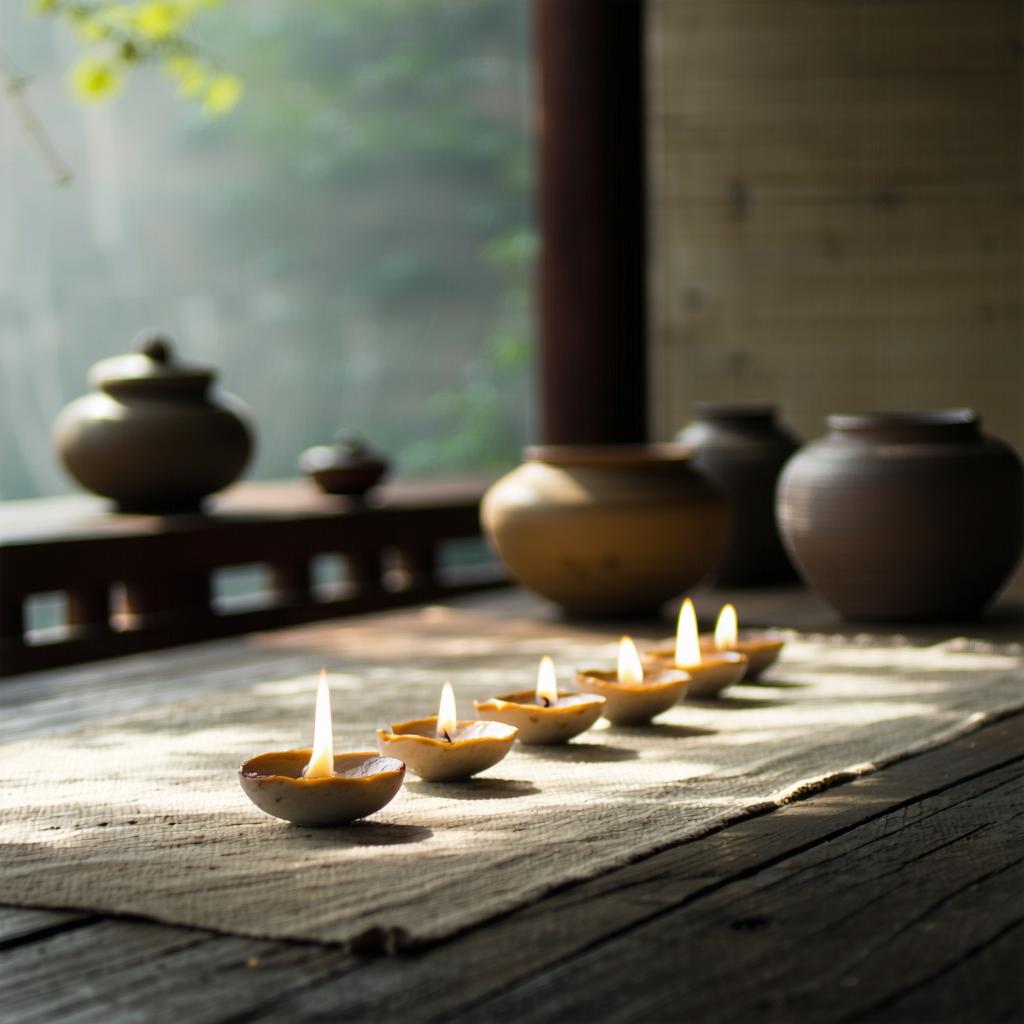
What is tonglen buddhist practice – a quick answer
Tonglen buddhist practice is a Tibetan meditation technique that involves breathing in the suffering of yourself and others, then breathing out relief, compassion, and spaciousness. It flips the instinct to push away pain and instead trains the mind to move toward difficulty with an open heart. Many people find it one of the most direct ways to cultivate genuine compassion in everyday life.
Table of contents
- What is tonglen and where does it come from
- The core mechanics of the tonglen buddhist practice
- Step-by-step guide for beginners
- What the research says about compassion meditation
- Common mistakes and how to avoid them
- How to weave tonglen into a daily routine
- Useful variations on the basic practice
- My own experience starting tonglen
- Frequently asked questions
What is tonglen and where does it come from
The word tonglen comes from Tibetan: tong means sending out, and len means taking in. The practice belongs to a collection of mind-training teachings called lojong, developed in Tibet around the 11th and 12th centuries. The Indian teacher Atisha is often credited with bringing the lojong lineage to Tibet, and later teachers such as Geshe Chekhawa systematized it into the 59 slogans many practitioners still work with today.
The tonglen buddhist practice sits within the Mahayana tradition, which emphasizes the aspiration to free all beings from suffering – not just oneself. That broader motivation is part of what makes tonglen feel different from breath-focused relaxation practices. You are not meditating to feel better in isolation; you are deliberately connecting your own discomfort to the shared human experience of pain.
American Buddhist teacher Pema Chodron has done more than almost anyone to bring tonglen to Western audiences. Her books and audio teachings describe the practice in plain, accessible language that strips away cultural barriers without losing the depth of the original instruction.
The core mechanics of the tonglen buddhist practice
At its simplest, tonglen works on a single radical reversal: instead of breathing in fresh air and breathing out tension the way most relaxation techniques teach, you breathe in what is heavy and breathe out what is light. You take in darkness, heat, and heaviness – symbols of suffering – and you send out brightness, coolness, and spaciousness – symbols of relief.
This reversal matters because it directly challenges the habitual pattern of self-protection. Most of us spend enormous energy trying to avoid feeling bad. Tonglen asks you to sit with discomfort on purpose, first your own, then the discomfort of people you love, then strangers, and eventually even people you find difficult.
The traditional instruction breaks the tonglen buddhist practice into four stages, which I will walk through in detail in the next section. For now, the key point is that the practice is not about harming yourself or wallowing in negativity. The intention is that what you breathe in gets transformed – like a filter – and what you breathe out is genuinely generous. Many teachers use the image of a vast, open sky that can hold any weather without being damaged by it.
Step-by-step guide for beginners
Stage one – flash of openness
Before you begin the breathing rhythm, you pause for a moment and rest in open awareness. Some teachers call this a brief glimpse of your natural mind – spacious, clear, and without agenda. You are not trying to manufacture a feeling; you are simply pausing before the deliberate work begins.
Even a few seconds of this settling is useful. It gives the practice a foundation that is wider than your current emotional state.
Stage two – working with texture
Next, you synchronize the breath with contrasting textures. On the in-breath, you visualize or sense something heavy, dark, and hot – the feeling of being stuck or suffocated. On the out-breath, you visualize or sense something light, bright, and cool – the feeling of relief and openness.
You are not yet thinking about specific people or situations. This stage is purely about training the breathing rhythm so it becomes a reliable vehicle. Spend a few minutes here until the rhythm feels natural.
Stage three – working with a personal situation
Now you bring in something real. Start with a situation in your own life where you are suffering – anxiety about work, grief, physical pain, or a relationship difficulty. On the in-breath, you breathe in that specific suffering: the tightness, the fear, the sadness. On the out-breath, you send yourself relief, kindness, and ease.
Many people find this stage surprisingly hard. We are often more willing to help others than to extend genuine compassion to ourselves. The tonglen buddhist practice treats self-compassion as the necessary starting point, not a form of selfishness.
Stage four – expanding to others
Once you have worked with your own situation for a few breaths, you begin to expand. You recognize that countless other people are experiencing the same kind of suffering right now. You breathe in their pain alongside yours, and you breathe out relief to all of them.
You can move outward in widening circles: people you love, people you feel neutral about, people you find difficult, and eventually all beings. The traditional tonglen buddhist practice does not rush this expansion. You move at whatever pace feels genuine rather than performative.
Practical session length and posture
A beginner session of 10 to 15 minutes is plenty. Sit in any position that lets your spine be reasonably upright without tension. Eyes can be slightly open with a soft downward gaze, or closed if that helps you focus. There is no single correct posture – comfort and alertness are the two goals.
As you become more comfortable with the tonglen buddhist practice, sessions of 20 to 30 minutes become natural. Some experienced practitioners do brief versions of tonglen in real time – while waiting in line, sitting in traffic, or watching someone struggle – without any formal seated session at all.
What the research says about compassion meditation
Tonglen is not the same as the compassion meditation protocols studied in clinical settings, but it shares enough structural features that the research is relevant and worth knowing about. The most studied protocol is Compassion Cultivation Training developed at Stanford, and there is also a substantial body of work on Loving-Kindness Meditation (metta), which is a related practice from the Theravada tradition.
A summary from the National Institutes of Health notes that compassion-based meditation practices may support changes in brain regions associated with empathy and emotional regulation. Studies have found associations between regular compassion practice and reduced self-reported stress, increased positive affect, and greater prosocial behavior – though most studies are small and more research is needed.
What seems consistent across studies is that deliberately directing attention toward suffering – rather than away from it – does not necessarily increase distress when done within a structured compassion framework. In fact, some people find the opposite: that turning toward difficulty with an intentional warm attitude reduces the sense of being overwhelmed by it. This aligns closely with what the tonglen buddhist practice is designed to do.
It is worth noting that tonglen is not a treatment for clinical depression, trauma, or anxiety disorders. If you are working with serious mental health challenges, it is wise to discuss any new meditation practice with a qualified professional before starting.
Common mistakes and how to avoid them
Treating it as a visualization exercise only
Tonglen uses imagery – dark and light, heavy and spacious – but the point is not to create vivid mental pictures. The point is to shift your felt relationship to suffering. If you find yourself working hard on the visuals but not feeling anything, ease up on the imagery and focus more on the physical sensation in your chest and belly as you breathe.
Skipping self-compassion and going straight to others
It is tempting to skip stage three and jump immediately to helping others. This can feel more virtuous, but it often produces a kind of hollow generosity that runs out quickly. The tonglen buddhist practice is designed so that your own genuine pain becomes the doorway to understanding others’ pain. Starting with yourself is not selfishness – it is the architecture of the method.
Forcing the expansion too quickly
Some practitioners try to include all beings in the first session and feel nothing because the scope is too abstract. Start small. One person, one situation. Let the expansion happen organically over weeks and months of practice rather than forcing it in a single session.
Confusing tonglen with rumination
Rumination is passive and repetitive – you circle the same painful thought without movement. Tonglen is active and directional – you breathe in with intention and breathe out with intention. If you notice you are simply thinking about suffering rather than working with it through the breath, gently return to the physical sensation of the breathing rhythm. The breath is the anchor that distinguishes tonglen from ordinary worry.
Expecting to feel better immediately
The tonglen buddhist practice is not a quick mood fix. Some sessions feel meaningful; others feel dry and mechanical. Both are normal. The shift that most practitioners report happens gradually over months – a greater ease with discomfort, a less reactive relationship to other people’s pain, and a subtle but real sense of connection to others.
How to weave tonglen into a daily routine
The most effective approach I have found is to anchor tonglen to something you already do. For me, that is the first five minutes after I sit down on my meditation cushion each morning. Because the habit of sitting is already established, adding tonglen does not require extra willpower.
Here are some practical integration strategies:
- Morning anchor – do 10 minutes of tonglen before or after your existing meditation or journaling practice.
- Commute practice – use the tonglen breathing rhythm during your commute, directing it toward anyone you see who looks tired or stressed.
- Real-time tonglen – when you witness someone in pain or difficulty, breathe in their suffering for one breath and breathe out relief. No formality needed.
- Difficult-person practice – when someone frustrates you, use that irritation as the raw material for a brief tonglen moment rather than suppressing it or acting on it.
- Bedtime review – spend two or three minutes at night doing tonglen for anyone you encountered during the day who seemed to be struggling.
The goal is not to do more meditation. The goal is to let the tonglen buddhist practice change the texture of how you move through ordinary moments.
Useful variations on the basic practice
Tonglen for physical pain
If you are dealing with chronic pain or illness, you can direct the practice specifically at your physical experience. Breathe in the sensation of pain – its texture, its weight, its heat – without trying to fix it. Breathe out spaciousness around it. Many people who practice this version report that the pain does not necessarily decrease, but their relationship to it becomes less tense and contracted.
You can also expand this to include others who share your condition. The recognition that your pain is not uniquely yours – that thousands of people are experiencing something similar right now – can shift the feeling of isolation that often accompanies chronic illness.
Tonglen for anxiety and fear
Anxiety tends to make us contract and withdraw. The tonglen buddhist practice offers a counter-movement: instead of trying to suppress anxious feelings or distract yourself from them, you breathe them in deliberately and breathe out calm and steadiness. This is not about manufacturing false confidence. It is about practicing the willingness to be with fear rather than fleeing it.
Tonglen for grief
Grief is one of the most natural applications of tonglen. When you are grieving, you can breathe in the full weight of your loss and breathe out tenderness toward yourself and toward everyone else who is grieving right now. This version of the tonglen buddhist practice can help grief feel less isolating and more like a shared human experience rather than a private catastrophe.
Group tonglen
Some meditation communities practice tonglen together, either in silence or with a teacher guiding the imagery aloud. Practicing in a group can amplify the sense of shared intention and make the expansion to others feel more natural and less effortful. If you have access to a sangha or meditation group, asking whether they incorporate tonglen is worth doing.
My own experience starting tonglen
I first tried the tonglen buddhist practice during a period when a close friend was seriously ill. I had been doing breath-focused meditation for several years, but I found that sitting quietly while someone I loved was suffering felt insufficient – almost beside the point. A teacher suggested tonglen as a way to do something with the helplessness I was feeling.
The first few sessions were awkward. I kept second-guessing whether I was doing it right and whether breathing in someone else’s suffering was actually helping them in any real sense. What shifted for me was letting go of that question and focusing instead on what was happening in my own chest. I noticed that when I breathed in my friend’s pain deliberately – rather than trying to push away the grief I felt – something loosened. The tightness did not disappear, but it became less like a wall and more like weather I could move through.
Over the following weeks, I started doing brief tonglen moments throughout the day – on the train, in waiting rooms, whenever I saw someone who looked exhausted or sad. I am not claiming any of this helped my friend directly. But it changed how I showed up in her presence: less anxious, more available, less focused on managing my own discomfort and more genuinely present with hers. That felt like the real result of the practice.
A quick comparison – tonglen versus other compassion practices
- Tonglen vs. Loving-Kindness (metta): Metta focuses on radiating warmth and goodwill outward; tonglen works with the active taking-in of suffering before sending relief. Both cultivate compassion but through different entry points.
- Tonglen vs. mindfulness of emotions: Mindfulness observes emotions without reacting; tonglen actively engages suffering as material for transformation. They complement each other well.
- Tonglen vs. self-compassion practices (MSC): Mindful Self-Compassion focuses primarily on one’s own pain; tonglen uses personal pain as a bridge to universal suffering. The self-compassion stage in tonglen overlaps significantly with MSC.
- Tonglen vs. visualization practices: Some Tibetan practices use elaborate visualizations; tonglen is deliberately simple – dark and light, heavy and airy – making it accessible without extensive training.
Key principles to keep in mind
The tonglen buddhist practice rests on a few core ideas that are worth returning to regularly:
- Pain is workable – it is not something to be eliminated before you can practice.
- Your suffering and others’ suffering are not fundamentally separate – they share the same basic texture of human difficulty.
- The willingness to move toward difficulty – rather than away from it – is itself a form of strength.
- Compassion is a trainable capacity, not a fixed personality trait.
- Consistency over intensity – a short daily practice outperforms an occasional long session.
Frequently asked questions
Is tonglen buddhist practice safe for beginners with no meditation experience?
Most people can begin the tonglen buddhist practice without prior meditation experience. The basic instruction is straightforward, and many beginner-friendly guides – including Pema Chodron’s audio teachings – are widely available. That said, if you are currently in acute emotional crisis or working through recent trauma, it may be worth starting with a simpler grounding practice first and introducing tonglen once you have some stability. Speaking with a meditation teacher or mental health professional before starting is always a reasonable step.
Can tonglen actually help the people I am practicing for
This is a question the tradition itself holds lightly. From a scientific standpoint, there is no evidence that tonglen directly transmits relief to another person at a distance. What the practice demonstrably can do is change how you relate to that person – with more openness, less defensiveness, and more genuine care – which can affect your interactions with them in concrete ways. Many practitioners find that distinction sufficient to make the practice feel worthwhile.
How long before I notice results from the tonglen buddhist practice
Most people who practice consistently for four to eight weeks report some shift in their felt sense of compassion and their comfort with difficult emotions. That said, tonglen is not a quick-result practice. The deeper changes – a less reactive nervous system, a more natural orientation toward others’ pain – tend to accumulate slowly over months and years. Treating each session as complete in itself, rather than as a step toward a future state, tends to make the practice more sustainable.
Do I need a teacher to practice tonglen correctly
A teacher is helpful but not strictly necessary for the basic tonglen buddhist practice. The core instruction is simple enough to learn from a book or audio guide. Where a teacher becomes more valuable is if you want to explore the broader lojong framework, if you encounter strong emotional reactions during practice, or if you want to integrate tonglen into a more complete Tibetan Buddhist path. Online communities and local meditation centers are good places to find guidance if you want it.
What if breathing in suffering makes me feel worse
Some people do feel temporarily more uncomfortable when they first try tonglen, particularly if they are already carrying a heavy emotional load. If this happens, the standard advice is to scale back – work with smaller, less charged situations until the breathing rhythm feels more stable. You can also spend more time in stage one, resting in open awareness, before moving into the taking-and-sending rhythm. If distress persists across multiple sessions, that is a signal to speak with a teacher or mental health professional rather than pushing through.
Is tonglen a religious practice – do I need to be Buddhist to do it
The tonglen buddhist practice has Buddhist roots, and understanding those roots can enrich the practice. But many people practice tonglen entirely outside a religious framework, treating it as a compassion-training technique that stands on its own merits. The core mechanics – breathing in suffering, breathing out relief, expanding awareness to include others – do not require any particular belief system. What matters most is genuine intention and consistent practice.
For more practical wellness ideas, browse the Health Living Today guide library.