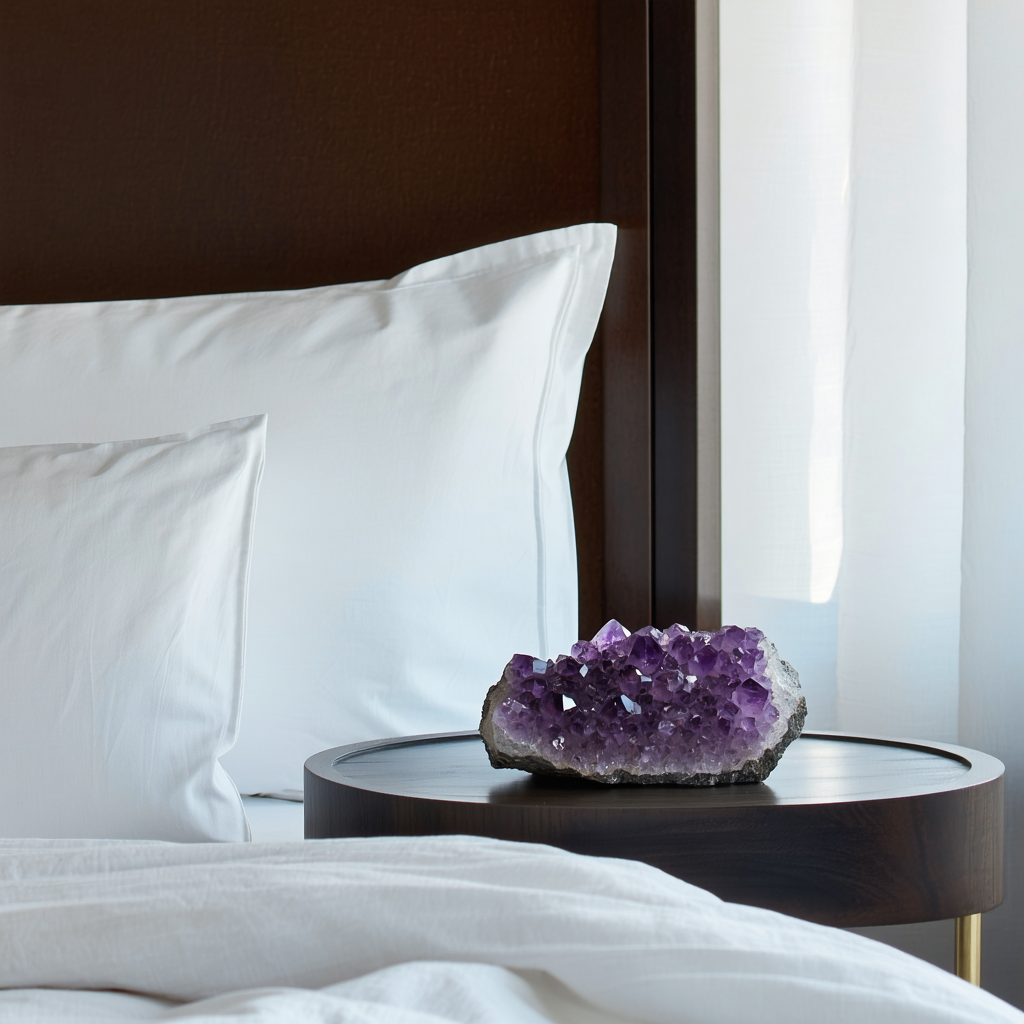
Amethyst bedside table: the short answer
An amethyst bedside table setup – placing amethyst crystals or amethyst-inlaid furniture near your bed – is a popular wellness practice that many people use to support a calmer sleep environment. The evidence is largely anecdotal, but the ritual itself can reinforce good sleep hygiene habits. I have found that combining a thoughtful amethyst bedside table arrangement with consistent pre-sleep routines makes a noticeable difference in how settled I feel at night.
Table of contents
- What is an amethyst bedside table setup
- Why people choose amethyst for the bedroom
- What the science says about sleep environments
- How to set up your amethyst bedside table
- Choosing the right amethyst for your nightstand
- Amethyst bedside table furniture options
- Pairing your amethyst bedside table with sleep routines
- Caring for amethyst on your bedside table
- Common mistakes to avoid
- Frequently asked questions
What is an amethyst bedside table setup
An amethyst bedside table setup means intentionally placing amethyst – in raw, tumbled, or slab form – on or near the small table next to your bed. Some people take this further and invest in actual furniture pieces that incorporate amethyst geodes or amethyst-inlaid surfaces as part of the table itself.
The practice sits at the intersection of interior design, crystal wellness, and sleep hygiene. Whether you believe in the metaphysical properties of amethyst or simply appreciate its deep purple aesthetic, the result is a bedside space that feels intentional and calming.
I started my own amethyst bedside table experiment after a particularly stressful work period left me lying awake most nights. I placed a small raw amethyst cluster on my nightstand alongside my usual lamp and book, mostly out of curiosity. Within a couple of weeks I noticed I was actually sitting down and doing a short wind-down routine – partly because the crystal reminded me to slow down. That ritual shift, more than anything else, seemed to help.
Why people choose amethyst for the bedroom
Amethyst has been associated with calm, clarity, and restful sleep across many cultures for centuries. In traditional crystal wellness practices, it is considered one of the most “sleep-friendly” stones, which is why the amethyst bedside table concept has grown so consistently popular.
Historical and cultural context
Ancient Greeks believed amethyst protected against intoxication – the name comes from the Greek word amethystos, meaning “not drunk.” Over time, that protective symbolism extended to protecting the mind from anxious or restless thoughts, making it a natural fit for the bedroom.
In feng shui, amethyst is often placed in the bedroom to soften energy and encourage a quieter mental state before sleep. Many practitioners recommend the bedside table as the ideal location because it keeps the stone within your immediate personal space throughout the night.
The aesthetic appeal
Beyond wellness tradition, amethyst is genuinely beautiful. Its violet-to-purple color range pairs well with neutral bedroom palettes, warm wood tones, and linen textiles. An amethyst bedside table arrangement – whether a small tumbled stone or a dramatic geode slice – adds visual interest without visual noise.
Good sleep environments benefit from sensory calm, and a visually pleasing, uncluttered bedside table contributes to that. The color purple is also associated in color psychology research with relaxation and introspection, which may be one reason people find amethyst pieces soothing to look at before bed.
What the science says about sleep environments
The direct scientific evidence for crystal healing is limited. However, the broader science of sleep environments is robust and supports many of the habits that an amethyst bedside table ritual naturally encourages.
Sleep hygiene and environmental cues
The National Heart, Lung, and Blood Institute notes that consistent pre-sleep routines and a calm bedroom environment are among the most evidence-supported strategies for improving sleep quality. Creating a deliberate bedside setup – whatever its components – is one practical way to build those environmental cues.
When you arrange your amethyst bedside table thoughtfully each evening, you are essentially performing a small behavioral ritual. Behavioral cues like this can signal to your brain that sleep is approaching, which may support a smoother transition into rest.
The role of intention and ritual
Research on placebo effects and expectation suggests that believing a practice will help can itself produce measurable benefits, particularly for subjective experiences like stress and sleep quality. If your amethyst bedside table arrangement helps you feel calmer and more prepared for sleep, that outcome is real and worth pursuing – regardless of the mechanism.
Some people find that holding or looking at their amethyst piece during a short breathing exercise anchors the practice and makes it easier to repeat consistently. Consistency is what most sleep researchers point to as the critical variable.
How to set up your amethyst bedside table
Setting up an effective amethyst bedside table is less about following rigid rules and more about creating a space that genuinely supports your wind-down routine. Here is a practical approach I have refined over time.
Step 1 – Clear and declutter first
Before adding any amethyst piece, remove everything from your bedside table that does not serve sleep or your evening routine. Receipts, charging cables tangled in a heap, and old water glasses all create low-level visual stress. A clear surface makes the amethyst the focal point rather than one more item in a pile.
Step 2 – Choose a placement position
Most people place their amethyst bedside table piece toward the back or corner of the surface, behind their lamp or book. This keeps it visible from your pillow without being in the way of practical items. If you have a larger amethyst slab or geode, it can serve as a base layer that other items rest near.
Step 3 – Pair with one or two complementary items
An amethyst bedside table works best when it is not overcrowded. Consider pairing your amethyst with:
- A small lamp with warm, dimmable light
- A physical book or journal
- A glass or bottle of water
- A single small plant such as lavender
Keep the total item count low. The goal is calm, not collection.
Step 4 – Establish a nightly interaction
The amethyst bedside table becomes most effective when it anchors a brief ritual. Each night before you reach for your phone or book, take thirty seconds to hold or simply look at your amethyst piece while taking three slow breaths. This small act signals the start of your wind-down and builds a consistent behavioral cue over time.
Choosing the right amethyst for your nightstand
Not all amethyst pieces suit every amethyst bedside table setup. The right choice depends on your space, budget, and personal preference.
Raw amethyst clusters
Raw clusters have an organic, dramatic look and come in a wide range of sizes. A small cluster – roughly the size of a fist – is practical for most nightstands. Clusters are sturdy and do not require a stand. They tend to be the most affordable entry point for an amethyst bedside table arrangement.
Tumbled amethyst stones
Tumbled stones are smooth, palm-friendly, and inexpensive. They are ideal if you want to hold your amethyst during a breathing exercise or meditation. The downside is that they are small and can get lost among other items, so a small dish or tray helps keep them visible and intentional on your amethyst bedside table.
Amethyst geode slices
Geode slices – sometimes called amethyst druzy slabs – are flat cross-sections of geode that reveal the crystal interior. They make a striking visual centerpiece for an amethyst bedside table and can double as a decorative tray for other small items like rings or earrings. They are typically more expensive but last indefinitely with basic care.
Amethyst points or towers
Polished amethyst points or towers have a clean, modern look that suits contemporary bedroom aesthetics. They stand upright independently and catch light well, making them a popular choice for a styled amethyst bedside table. Heights typically range from 5 cm to 20 cm.
Quick comparison
- Raw cluster – organic look, sturdy, mid-range price, best for visual impact
- Tumbled stone – smooth, holdable, low cost, best for tactile rituals
- Geode slice – dramatic, flat, higher cost, best as a statement piece or tray
- Point or tower – sleek, modern, mid-range price, best for styled aesthetics
Amethyst bedside table furniture options
Beyond placing crystals on an existing nightstand, a growing number of furniture makers now produce actual amethyst bedside table pieces – furniture where amethyst is embedded in or displayed as part of the table structure itself.
Resin and amethyst composite tables
These tables embed amethyst chips, clusters, or geode sections into a clear or tinted resin surface. The result is a glowing, mineral-rich tabletop that often incorporates LED lighting beneath the resin to illuminate the stones. They serve as a fully functional amethyst bedside table while making the crystal the central design feature.
Prices vary widely – from a few hundred dollars for smaller artisan pieces to several thousand for large custom commissions. If you are drawn to this style, look for makers who use genuine amethyst rather than dyed glass, and ask about the resin type to ensure it is non-toxic and cured properly.
Live-edge wood tables with geode inlays
Some woodworkers create live-edge nightstands with amethyst geode sections set into the wood surface. These blend natural materials beautifully and make a genuinely unique amethyst bedside table. They tend to be one-of-a-kind pieces available through craft markets, Etsy sellers, or bespoke furniture studios.
Simple display shelves with amethyst bases
A more affordable approach is a minimalist floating shelf or small side table used specifically to display a large amethyst geode as the base or centerpiece. The furniture itself is simple; the amethyst does the visual work. This is a practical middle ground between a full furniture investment and a basic crystal-on-a-table arrangement.
Pairing your amethyst bedside table with sleep routines
An amethyst bedside table is most effective as part of a broader sleep routine rather than as a standalone solution. Here are the habits I have found pair well with it.
Screen-free wind-down period
Aim for at least 30 minutes without screens before bed. Your amethyst bedside table gives you something calming to look at or interact with during that window – a physical anchor for the screen-free habit. Replace the phone-scrolling habit with a book, journal, or simple breathing practice centered on your amethyst piece.
Consistent sleep and wake times
Sleep researchers consistently identify regular sleep timing as one of the most impactful factors for sleep quality. Your amethyst bedside table ritual can serve as a nightly time anchor – when you interact with your crystal, it is time to wind down, full stop.
Room temperature and light management
Keep your bedroom cool – most sleep research suggests somewhere in the range of 16 to 19 degrees Celsius – and use blackout curtains or an eye mask if needed. These environmental factors work alongside your amethyst bedside table setup rather than competing with it.
Journaling or gratitude practice
Some people find that a brief journaling session beside their amethyst bedside table helps clear mental clutter before sleep. Three to five minutes writing down what went well that day, or listing tomorrow’s priorities to get them out of your head, can reduce the racing-thoughts pattern that keeps many people awake.
Breathing exercises
Box breathing – inhale for four counts, hold for four, exhale for four, hold for four – is a simple technique that may support nervous system calm before sleep. Holding a tumbled amethyst stone during this practice gives your hands something to focus on and strengthens the association between the stone and a relaxed state over time.
Caring for amethyst on your bedside table
Amethyst is a durable stone – a 7 on the Mohs hardness scale – but it does benefit from basic care, especially when kept on an amethyst bedside table where it is handled regularly.
Cleaning your amethyst
Wipe amethyst pieces with a soft, slightly damp cloth as needed. Avoid harsh chemical cleaners, which can dull the surface over time. For raw clusters, a soft brush helps remove dust from the crevices. Dry the stone thoroughly before returning it to your amethyst bedside table.
Protecting amethyst from sunlight
Amethyst is sensitive to prolonged direct sunlight, which can cause the color to fade over time. A bedside table position is generally safe from intense sun exposure, but if your bedroom receives strong morning light through uncovered windows, position your amethyst away from direct beams or rotate it periodically.
Avoiding water damage
While brief cleaning with a damp cloth is fine, do not submerge raw amethyst clusters in water for extended periods. The matrix rock that clusters grow from can be porous and may degrade with prolonged soaking. Keep your amethyst bedside table arrangement away from humidifiers or water glasses that might spill.
Recharging – if that matters to you
Many crystal wellness practitioners recommend periodically “cleansing” or “recharging” amethyst by placing it in moonlight overnight or near a selenite piece. If this practice resonates with you, it also gives you a reason to interact intentionally with your amethyst bedside table setup on a regular basis, which reinforces the ritual value.
Common mistakes to avoid
After spending time refining my own amethyst bedside table setup and reading widely on the topic, I have noticed a few patterns that undermine the practice for people who try it.
- Overcrowding the surface – adding too many crystals or items defeats the calming purpose. One to three pieces maximum works best.
- Buying large pieces for small tables – a dramatic geode that takes up most of the surface leaves no room for practical items and creates frustration rather than calm.
- Skipping the ritual – placing amethyst on a bedside table and then ignoring it means missing the behavioral cue benefit. The interaction matters as much as the placement.
- Expecting overnight transformation – any routine takes two to four weeks of consistency before it starts to feel natural and produce noticeable effects.
- Neglecting the rest of the sleep environment – an amethyst bedside table is a supportive element, not a replacement for good sleep hygiene fundamentals like darkness, cool temperatures, and consistent timing.
Frequently asked questions
Does an amethyst bedside table actually improve sleep?
There is no peer-reviewed clinical evidence that amethyst directly improves sleep through any physical mechanism. However, the ritual of setting up and interacting with an amethyst bedside table can reinforce consistent pre-sleep habits – and those habits do have strong evidence behind them. Some people find the practice genuinely helpful as a behavioral anchor for their wind-down routine.
Which side of the bed should I place my amethyst bedside table crystal?
There is no universally agreed rule. In feng shui, some practitioners suggest placing amethyst on the left side of the bed, associated with receptive energy. In practice, place it on whichever side you naturally reach from or look toward as you settle in. Consistency of placement matters more than specific direction.
Can I put multiple crystals on my amethyst bedside table?
Yes, but keep the total count low to avoid visual clutter. A common pairing is amethyst with clear quartz – said to amplify calm energy – or amethyst with selenite, which many practitioners consider a good companion stone. Two or three crystals maximum keeps your amethyst bedside table feeling intentional rather than crowded.
Is it safe to sleep with amethyst next to my bed?
Amethyst is a stable, non-toxic mineral and is safe to keep on a bedside table. Some sensitive individuals report that certain crystals feel energetically stimulating rather than calming – if you find amethyst seems to keep you more alert, try moving it slightly further from the bed or experimenting with a different placement position.
How do I choose between a raw amethyst cluster and a polished piece for my bedside table?
Raw clusters have a more organic, dramatic aesthetic and tend to be better visual focal points. Polished pieces – towers, tumbled stones, or slabs – suit more minimal or contemporary bedroom styles and are easier to handle during rituals. Consider your bedroom’s existing aesthetic and whether you want your amethyst bedside table piece to be primarily decorative or primarily tactile.
How often should I clean the amethyst on my bedside table?
A light dusting once a week and a gentle wipe with a damp cloth once or twice a month is sufficient for most amethyst bedside table arrangements. If you handle your amethyst daily during a breathing or meditation practice, a more frequent wipe-down with a dry cloth keeps it looking its best.
What size amethyst is best for a standard bedside table?
For a standard nightstand – roughly 40 to 60 cm wide – a raw cluster or geode slice between 8 and 15 cm across is a practical size. It is large enough to be visually present without dominating the surface. Tumbled stones can be smaller since they are typically placed in a dish rather than displayed alone on your amethyst bedside table surface.
For more practical wellness ideas, browse the Health Living Today guide library.