Yoga for runners – the short answer
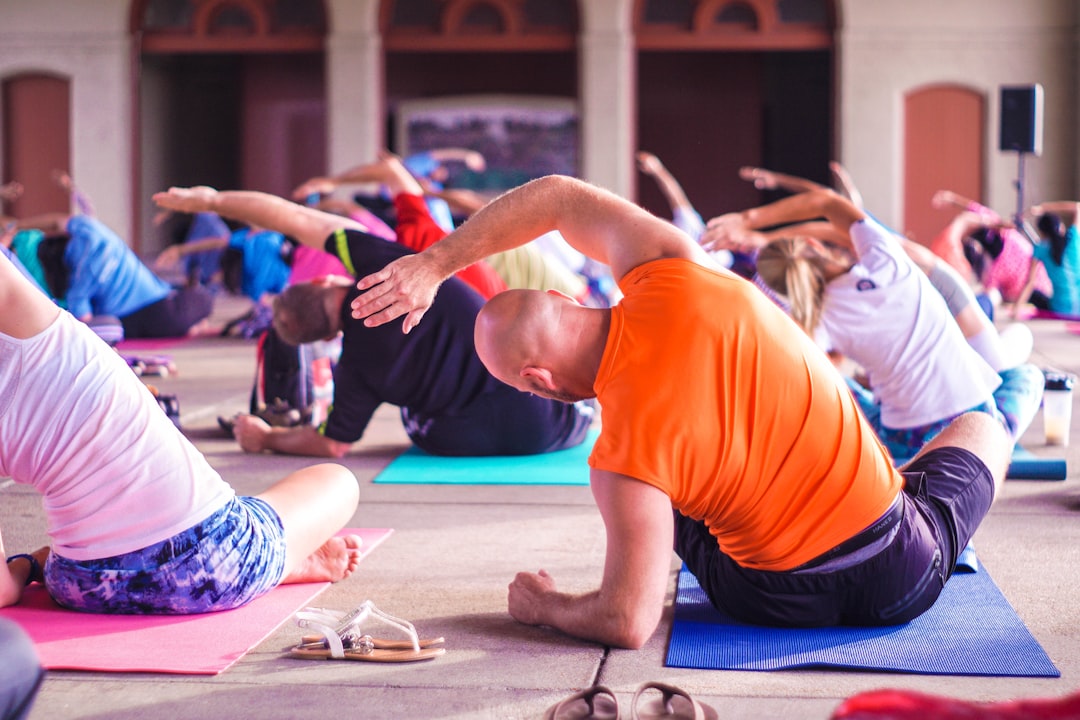
Yoga for runners is one of the most practical cross-training tools available because it targets the exact muscle groups that running tightens and weakens over time. A consistent yoga practice may support hip mobility, hamstring length, and lower-back resilience – three areas that runners tend to neglect until something hurts. Most people find that even two short sessions a week produce noticeable changes within a month.
Table of contents
- Why yoga works for runners
- What running does to your body
- The best yoga poses for runners
- How to build a yoga routine for runners
- Yoga before or after running
- Styles of yoga that suit runners
- Common mistakes runners make in yoga
- Tracking progress
- Frequently asked questions
Why yoga works for runners
Running is a repetitive, linear movement. You move forward, your foot strikes the ground, and the same muscles fire in the same sequence hundreds of times per mile. Yoga for runners interrupts that pattern by introducing rotation, lateral movement, and sustained lengthening that running simply does not provide.
Research published by the National Institutes of Health suggests that regular yoga practice is associated with improved flexibility, balance, and muscular endurance – all qualities that translate directly into better running economy and reduced injury risk.
I have found that the mental side matters just as much as the physical. Yoga teaches breath awareness, and once you carry that into a race or a hard training block, pacing becomes more intuitive. You stop fighting your body and start listening to it.
What running does to your body
Before diving into specific poses, it helps to understand exactly what running does to your body. This context makes every yoga session feel purposeful rather than like a generic stretching routine.
The tightening effect
Repeated hip flexion shortens the hip flexors, particularly the iliopsoas. The hamstrings and calves work hard to absorb impact and propel you forward, which leaves them chronically contracted. Over time, this tightness pulls on the pelvis and lower back, which is why so many runners develop lumbar discomfort that seems unrelated to the legs.
The IT band – a thick strip of connective tissue running along the outer thigh – also becomes irritated when the glutes are underactive and the hips lack lateral stability. Yoga for runners addresses this by strengthening the hip abductors and teaching the body to distribute load more evenly.
The weakness pattern
Running does not build balanced strength. The glutes, particularly gluteus medius, are often weaker than they should be in runners. The deep spinal stabilizers and the muscles of the upper back are rarely challenged. Yoga poses that require balance, hip hinging, and spinal extension fill in these gaps without adding significant training stress.
The breathing habit
Many runners breathe shallowly and use accessory neck muscles rather than the diaphragm. Yoga re-patterns breathing from the ground up, which may support oxygen efficiency and reduce tension that accumulates in the shoulders and jaw during hard efforts.
The best yoga poses for runners
Not every yoga pose is equally useful for a runner. The poses below target the areas most affected by running and give you the most return for your time. I have grouped them by the primary benefit each one provides.
Hip flexor and quad release
Low lunge (Anjaneyasana). Step one foot forward into a lunge, lower the back knee to the mat, and sink the hips forward and down. Hold for 60 to 90 seconds per side. This is the single most effective hip flexor stretch I have ever used, and after a long run it feels like releasing a vice grip around the pelvis.
Reclined hero (Supta Virasana). Sit between your heels and slowly recline backward. This pose is intense – use a bolster under the back if needed. It targets the rectus femoris, the quad muscle that crosses the hip joint and is often overlooked in standard stretching.
Hamstring and calf lengthening
Pyramid pose (Parsvottanasana). Stand with one foot forward, hips squared, and fold over the front leg. Keep a micro-bend in the knee to avoid overstretching the insertion points. This is more effective than a standing hamstring stretch because the hip square forces both sides to work.
Downward-facing dog (Adho Mukha Svanasana). Press the heels toward the floor and pedal the feet slowly. Downward dog is a full-posterior-chain stretch that also decompresses the lumbar spine – two benefits in one pose.
IT band and outer hip
Pigeon pose (Eka Pada Rajakapotasana). Bring one shin forward parallel to the top of the mat and extend the back leg straight. Pigeon accesses the piriformis and external hip rotators that running rarely challenges. Hold passively for two minutes per side rather than pushing aggressively.
Figure-four stretch (Sucirandhrasana). Lying on your back, cross one ankle over the opposite thigh and flex the foot. This is a gentler alternative to pigeon that works well on days when the hips feel particularly stiff.
Glute and core activation
Warrior III (Virabhadrasana III). Balance on one leg with the torso and back leg parallel to the floor. This pose challenges the standing glute, the deep hip stabilizers, and the spinal extensors simultaneously. It mimics the single-leg loading pattern of running, which makes it particularly relevant yoga for runners.
Bridge pose (Setu Bandhasana). Lie on your back, feet hip-width apart, and press the hips up. Bridge activates the glutes and hamstrings in a lengthened position, which is exactly the pattern needed for a strong push-off phase in running.
Spinal mobility
Supine twist (Supta Matsyendrasana). Lying on your back, draw one knee across the body while extending the same-side arm wide. This gentle rotation releases the thoracic spine and the quadratus lumborum – a deep back muscle that tightens significantly during high-mileage weeks.
Cat-cow (Marjaryasana-Bitilasana). On hands and knees, alternate between rounding and extending the spine in sync with the breath. Simple as it looks, this movement restores spinal mobility that gets compressed during long runs on hard surfaces.
How to build a yoga routine for runners
The most effective yoga for runners is the yoga you will actually do consistently. That means designing a routine that fits your schedule rather than treating it as an aspirational add-on.
Frequency recommendations
- 2 sessions per week – the minimum effective dose for most runners; suitable for those in high-mileage training blocks where recovery is the priority
- 3 sessions per week – the sweet spot for runners who want both mobility and strength benefits from their yoga practice
- 4 or more sessions per week – appropriate during low-mileage phases or when yoga partially replaces a run day
Session length
A 20-minute focused session targeting the hips and hamstrings will do more for a runner than a 60-minute general class that spends 20 minutes on arm balances. Shorter, targeted sessions are easier to sustain and remove the time barrier that causes most runners to skip yoga altogether.
I personally use a 25-minute routine on easy run days and a longer 45-minute practice on rest days. That combination has kept me consistent for over two years without feeling like a burden.
Sample weekly structure
- Monday – easy run + 20-minute hip-focused yoga
- Tuesday – hard workout run
- Wednesday – rest or cross-training + 45-minute full-body yoga
- Thursday – moderate run + 20-minute lower-back and IT band yoga
- Friday – easy run
- Saturday – long run
- Sunday – rest + 30-minute restorative yoga
Yoga before or after running
This is one of the most common questions about yoga for runners, and the answer depends on the type of yoga you are doing.
Before running
Dynamic yoga – flowing sequences, sun salutations, and active balance poses – is appropriate before a run because it raises body temperature and activates the neuromuscular system. Avoid deep static stretching before running, as some research suggests it may temporarily reduce muscle force production.
A 10 to 15 minute dynamic yoga warm-up before a long run or race is something many experienced runners swear by. It wakes up the glutes, opens the hips, and settles the pre-race mind.
After running
Static and restorative yoga belongs after running, when the muscles are warm and receptive. This is the time for pigeon, pyramid, low lunge, and supine twists. Holding poses for 90 seconds to two minutes after a run may support tissue recovery and reduce the cumulative tightness that builds over a training week.
The key distinction is simple – dynamic yoga before, static yoga after. Most dedicated yoga for runners programs follow this principle, and it is backed by the general evidence on stretching timing.
Styles of yoga that suit runners
Yoga is not a single practice. Different styles offer different benefits, and choosing the right one makes a real difference in how useful yoga for runners turns out to be.
- Yin yoga – long holds of 2 to 5 minutes targeting connective tissue; ideal for recovery days and high-mileage weeks when the body needs passive release rather than more effort
- Hatha yoga – slower-paced, alignment-focused practice; good for runners who are new to yoga and need time to learn how poses should feel
- Vinyasa yoga – flowing sequences linked to breath; provides both mobility and a light cardiovascular stimulus; works well as a cross-training session
- Restorative yoga – fully supported poses held for 5 to 10 minutes; activates the parasympathetic nervous system and may support recovery after heavy training loads
- Power yoga / Ashtanga – vigorous and strength-demanding; can be useful in off-season but may add too much fatigue during peak training
For most runners, a rotation of yin on recovery days and vinyasa or hatha on moderate days covers all the bases without adding training stress.
Common mistakes runners make in yoga
Runners bring specific habits into the yoga studio – some helpful, some counterproductive. Being aware of these patterns helps you get more from every session.
Treating yoga like a workout to be conquered
Runners are often competitive and effort-driven. In yoga, forcing a deeper stretch or pushing through discomfort tends to create micro-trauma rather than release. The goal is to find the edge of sensation and breathe there, not to push past it as quickly as possible.
Skipping the poses that feel hardest
If pigeon is uncomfortable, that is information – it means the hips need that work. Runners often gravitate toward the poses they are already good at and avoid the ones that expose imbalances. The poses you resist most are usually the ones most worth doing.
Holding the breath
Tight hamstrings and hip flexors cause many runners to brace and hold the breath during stretches. This triggers the stretch reflex and makes the muscle contract rather than lengthen. Slow, continuous breathing is what allows the nervous system to signal safety and permit release.
Inconsistency
One long yoga session after a race does not undo months of accumulated tightness. Yoga for runners works through consistent, repeated exposure over weeks and months. Even 15 minutes three times a week compounds into meaningful change over a training cycle.
Tracking progress
Progress in yoga is less obvious than progress in running because you cannot measure it with a stopwatch. But it is absolutely trackable if you know what to look for.
Mobility benchmarks for runners
A few simple tests give you a clear baseline. The seated forward fold – sitting with legs straight and reaching toward the feet – is a reliable hamstring mobility marker. The hip flexor lunge test – how close your back knee gets to the floor without the lower back arching – tracks iliopsoas length. Check these monthly rather than weekly to see genuine trends.
Running feel is another useful signal. When yoga for runners is working, you will notice that your stride feels looser in the first mile, your lower back does not tighten on long runs, and your hips feel level rather than tilted. These are practical, real-world indicators that the practice is paying off.
Injury frequency
One of the most compelling arguments for yoga for runners is the potential reduction in overuse injuries. If you track your injury history and notice fewer IT band flare-ups, less plantar fascia irritation, or fewer episodes of lower-back tightness after introducing yoga, that is meaningful progress – even if your splits have not changed.
My own experience
When I started adding yoga to my running routine about two years ago, I was skeptical. I was a decent runner with persistent hip flexor tightness that had caused me to drop out of a half marathon training cycle. Within six weeks of three yoga sessions per week, I noticed I could hold pigeon without gripping the mat in agony. By three months, the hip flexor issue had largely resolved. That experience convinced me more than any study that yoga for runners is worth the investment.
Frequently asked questions
How often should runners do yoga?
Most runners benefit from two to three yoga sessions per week. Two sessions is a realistic minimum that maintains mobility without adding significant time to a training week. Three sessions tends to produce more noticeable improvements in flexibility and running economy over a 6 to 8 week period.
Can yoga replace stretching for runners?
Yoga can replace a standard post-run stretching routine and typically provides more value because it combines breath work, balance, and strength alongside flexibility. Many runners find that replacing isolated static stretches with a short yoga sequence feels more engaging and delivers better results over time.
Is yoga good for marathon runners specifically?
Yes – yoga for runners is particularly well-suited to marathon training because the high mileage involved creates significant cumulative tightness and fatigue. Restorative and yin yoga sessions during heavy training weeks may support recovery, while more active yoga practices in the base-building phase can address muscular imbalances before they become injuries.
What is the best yoga pose for tight hamstrings in runners?
Pyramid pose and downward-facing dog are both highly effective for hamstring length in runners. Pyramid is particularly useful because squaring the hips prevents the body from compensating, which means the hamstring gets a more honest stretch. Hold each side for 60 to 90 seconds and focus on slow exhalations to encourage release.
Will yoga make me a slower runner by making my muscles too flexible?
This is a common concern but not supported by evidence at the levels of flexibility most runners will realistically achieve. Excessive passive flexibility in the ankle can reduce running economy, but the targeted hip, hamstring, and thoracic work that yoga for runners focuses on does not create that kind of laxity. Strength-based yoga poses actually improve the stiffness-to-flexibility balance that efficient running requires.
When should I avoid yoga as a runner?
Avoid deep static yoga stretching immediately before a hard run or race. Also, if you are managing an acute injury – a fresh muscle strain, stress fracture, or inflamed tendon – yoga should be modified or paused in the affected area and cleared with a healthcare provider. Gentle restorative yoga that does not load the injured area is usually fine, but the specific guidance depends on the injury.
Do I need to be flexible to start yoga for runners?
No – and this misconception stops many runners from ever starting. Yoga is the practice that builds flexibility; you do not need to arrive with it. Most yoga for runners programs are designed with tight hips and hamstrings in mind, and props like blocks and straps make poses accessible regardless of starting mobility.
For more practical wellness ideas, browse the Health Living Today guide library.