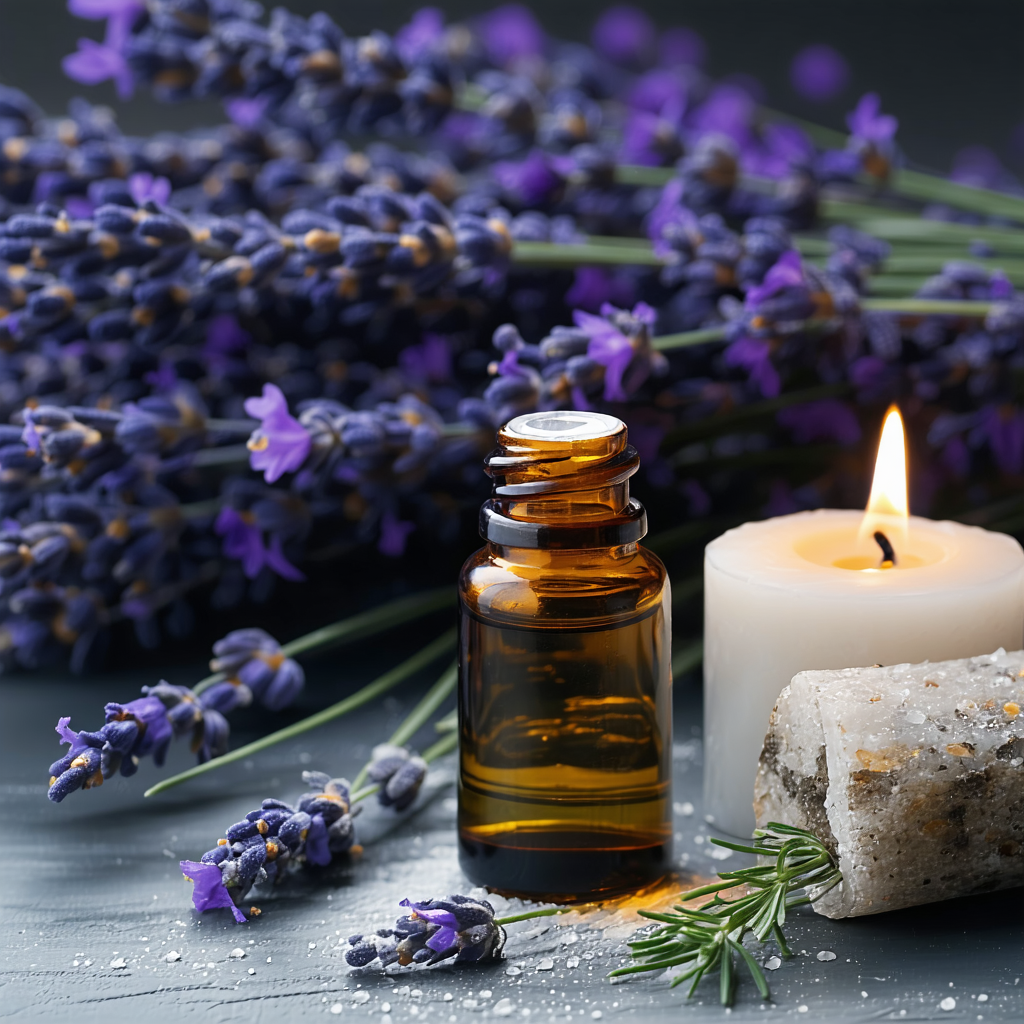
Lavender vs bergamot relaxation – which oil actually helps you unwind?
When it comes to lavender vs bergamot relaxation, both essential oils have real merit, but they work in noticeably different ways and suit different people and situations. Lavender tends to be the slower, heavier calming option, while bergamot leans more toward mood-lifting and gentle stress relief. Understanding the difference lets you pick the right tool – or combine them – rather than guessing.
- What lavender does for relaxation
- What bergamot does for relaxation
- Lavender vs bergamot relaxation – head-to-head comparison
- What the research actually says
- Scent profiles and personal preference
- How to use each oil in a daily routine
- Combining lavender and bergamot
- Safety and practical considerations
- Who should use which
- My own routine with both oils
- Frequently asked questions
What lavender does for relaxation
Lavender (Lavandula angustifolia) is probably the most studied essential oil in wellness research. Its primary active compounds are linalool and linalyl acetate, and both have been linked to calming effects on the nervous system in laboratory and human studies.
In practical terms, most people describe lavender as producing a heavy, warm kind of calm. It does not sharpen focus – it softens the edges of the day. I have found that diffusing it in the evening genuinely shortens the time it takes me to stop replaying my to-do list.
Lavender may support sleep onset, reduce perceived stress, and help lower feelings of anxiety before stressful events. These are the situations where lavender tends to shine brightest in the lavender vs bergamot relaxation conversation.
Key relaxation benefits of lavender
- May support faster sleep onset and improved sleep quality
- Some people find it reduces pre-event anxiety – before a presentation, a difficult conversation, or a medical appointment
- May help lower heart rate and blood pressure responses to stress in some studies
- Works well for deep, still relaxation rather than active, engaged calm
- Widely available and relatively inexpensive
What bergamot does for relaxation
Bergamot (Citrus bergamia) is a citrus fruit grown mainly in southern Italy. Its essential oil is cold-pressed from the peel and has a distinctive floral-citrus scent – bright, slightly sweet, and a little green. You probably already know it as the flavor behind Earl Grey tea.
Where lavender sedates, bergamot tends to uplift. Its main compounds – linalool (shared with lavender), limonene, and bergapten – appear to interact with the nervous system in a way that reduces stress hormones while simultaneously lifting mood. That dual action is what makes bergamot interesting in the lavender vs bergamot relaxation debate.
Bergamot relaxation is less about winding down for sleep and more about releasing tension during the day without losing energy or focus. Some people find it particularly useful during work hours or when stress is causing irritability rather than fatigue.
Key relaxation benefits of bergamot
- May support mood elevation alongside stress reduction
- Some people find it helps with anxious, restless energy rather than tired, heavy fatigue
- May help lower cortisol levels, according to some preliminary research
- Works well for daytime use when you still need to function
- Pairs naturally with focus-oriented routines like journaling or light stretching
Lavender vs bergamot relaxation – head-to-head comparison
Putting these two oils side by side helps clarify when each one makes more sense. The comparison below covers the dimensions that matter most for everyday relaxation use.
- Scent character: Lavender is herbal, floral, slightly medicinal – bergamot is citrusy, floral, and bright
- Type of calm: Lavender produces deep, sedative-leaning calm – bergamot produces lighter, mood-lifting calm
- Best time of day: Lavender suits evenings and bedtime routines – bergamot suits mornings, afternoons, and work sessions
- Effect on energy: Lavender tends to lower energy – bergamot tends to maintain or gently lift energy
- Sleep support: Lavender has stronger evidence for sleep – bergamot has weaker but present evidence
- Mood support: Bergamot has stronger evidence for mood – lavender has moderate evidence
- Anxiety type: Lavender suits anticipatory, high-tension anxiety – bergamot suits low-grade, persistent stress
- Skin safety: Lavender is generally well tolerated diluted – bergamot requires a furocoumarin-free version for skin use in daylight
- Cost and availability: Both are widely available – lavender is typically slightly cheaper
What the research actually says
The research base for both oils is real but imperfect. Most studies are small, use different delivery methods (inhalation, topical, oral capsules), and measure different outcomes. That said, the patterns are consistent enough to be useful when thinking about lavender vs bergamot for relaxation.
Lavender research highlights
A widely cited review published in journals covering phytomedicine and integrative medicine has found that lavender inhalation is associated with reduced anxiety scores, lower heart rate, and improved subjective sleep quality in multiple small trials. Silexan, an oral lavender oil preparation, has been studied in randomized controlled trials and shown meaningful reductions in generalized anxiety measures compared to placebo.
The National Center for Complementary and Integrative Health notes that lavender aromatherapy is generally considered safe and that some studies suggest it may help with anxiety and sleep, while acknowledging more rigorous research is still needed.
In my own reading of these studies, the consistent thread is that lavender seems to work best when the goal is lowering physiological arousal – slowing the body down rather than shifting the emotional tone.
Bergamot research highlights
Bergamot research is less extensive but growing. Studies on healthcare workers and students exposed to bergamot aromatherapy have reported reduced salivary cortisol, lower self-reported fatigue, and improved positive affect scores. One controlled study found that bergamot inhalation before a stressful task reduced both subjective anxiety and physiological markers of stress.
The mechanism researchers point to most often is bergamot’s apparent influence on the autonomic nervous system – specifically a shift toward parasympathetic (rest-and-digest) dominance without the pronounced sedation that lavender can produce. That is a meaningful distinction in the lavender vs bergamot relaxation comparison.
Both oils share linalool as a key compound, which may explain some of the overlap in their calming effects. The differences in their broader chemical profiles are likely what creates their distinct experiential qualities.
Scent profiles and personal preference
Aromatherapy research consistently shows that personal scent preference matters. If a smell makes you tense or reminds you of something unpleasant, its theoretical relaxation benefits are largely cancelled out. So the lavender vs bergamot relaxation question is partly a chemistry question and partly a personal preference question.
Lavender divides people more than bergamot does. Some people find it deeply comforting – the kind of scent that immediately signals safety and rest. Others find it cloying, overly medicinal, or associated with cleaning products. If you are in the second group, bergamot is almost certainly a better starting point.
Bergamot is generally considered more universally appealing. Its bright, slightly complex character tends to feel fresh rather than heavy. That said, if you strongly dislike citrus scents or floral-citrus combinations, it may not work for you either.
A simple preference test
Put one drop of each oil on separate pieces of paper or cotton wool. Smell each one after a few minutes – not right from the bottle, which can be overwhelming. Notice which one makes your shoulders drop first. That is usually the better starting oil for your relaxation practice, regardless of what the research says about either one in isolation.
How to use each oil in a daily routine
The delivery method matters almost as much as the oil itself. Inhalation reaches the brain fastest via the olfactory system and is the method with the most research support for relaxation. Topical use adds a tactile element that some people find enhances the effect. Internal use requires specific formulations and is not something to experiment with casually.
Using lavender for relaxation
- Evening diffusion: Add 4-6 drops to a water-based ultrasonic diffuser about 30 minutes before you want to wind down. Run it for 30-60 minutes rather than continuously.
- Pillow spray: Dilute 10-15 drops in 100ml of water with a small amount of alcohol (like vodka) to help it disperse. Mist your pillow lightly before bed.
- Topical application: Dilute to 1-2% in a carrier oil (roughly 6-12 drops per 30ml) and apply to pulse points, the back of the neck, or the soles of the feet.
- Bath soak: Mix 5-8 drops into a tablespoon of carrier oil or unscented bath gel before adding to warm water. Never add undiluted essential oil directly to bathwater.
Using bergamot for relaxation
- Morning or midday diffusion: Add 4-6 drops to a diffuser during work or a morning routine. Bergamot pairs well with focus rather than working against it.
- Desk inhalation: Put 1-2 drops on a cotton ball near your workspace for a low-level, sustained scent presence during stressful work sessions.
- Topical use – furocoumarin-free only: Standard bergamot contains bergapten, a furocoumarin that causes photosensitivity. For skin application, use bergapten-free (FCF) bergamot oil, diluted to 1% or less, and avoid sun exposure on treated skin for at least 12 hours.
- Blended body oil: FCF bergamot blends well with lavender, ylang ylang, and cedarwood for a daytime stress-relief massage blend.
Combining lavender and bergamot
One of the most practical answers to the lavender vs bergamot relaxation question is: use both, at different times or blended together. They complement each other well because bergamot’s brightness softens lavender’s heaviness, and lavender’s depth anchors bergamot’s lightness.
A common starting blend is 3 drops lavender to 2 drops bergamot in a diffuser. This ratio gives you the calming depth of lavender with enough bergamot brightness to prevent the scent from feeling oppressive. It works well in early evening – after work but before bedtime.
For a more sleep-oriented blend, increase the lavender ratio. For a daytime stress blend, flip it toward bergamot. The flexibility is one of the genuine advantages of working with both oils rather than committing to just one.
Simple blend ratios to try
- Daytime calm blend: 4 drops bergamot, 2 drops lavender – bright and relaxing without sedating
- Transition blend (afternoon to evening): 3 drops each – balanced, versatile
- Pre-sleep blend: 4 drops lavender, 2 drops bergamot – grounding and sleep-supportive
- Stress at work blend: 3 drops bergamot, 1 drop lavender – mood-lifting with a calming undertone
Safety and practical considerations
Neither oil is completely without risk, and being specific about safety makes the lavender vs bergamot relaxation comparison more useful rather than just aspirational.
Lavender safety notes
Lavender is one of the safer essential oils for most adults when used as directed. The main concerns are skin sensitization from repeated undiluted use, and rare allergic reactions in people sensitive to plants in the Lamiaceae family. There is also some preliminary research suggesting that lavender may have mild hormonal activity – specifically estrogenic effects – though this is based on in-vitro studies and the clinical significance for occasional aromatherapy use is unclear.
Lavender is generally considered safe for diffusion around adults and older children, though caution is recommended around infants, people with asthma, and pets – particularly cats.
Bergamot safety notes
The primary concern with bergamot is phototoxicity from bergapten. If you apply standard bergamot oil to skin and then expose that skin to UV light, you can develop significant burns or long-lasting pigmentation changes. This is not a minor risk – it is a real and documented one.
The solution is straightforward: use bergapten-free (FCF) bergamot for any topical application, and even then, avoid sun exposure on treated skin for at least 12 hours. For diffusion only, standard bergamot is fine. Always check the label and buy from reputable suppliers who test their products.
General essential oil guidelines
- Always dilute before skin contact – 1-2% for adults, lower for sensitive skin
- Do not use internally without specific professional guidance
- Keep away from eyes and mucous membranes
- Store in dark glass bottles away from heat and light
- Check with a healthcare provider if you are pregnant, breastfeeding, or managing a health condition
Who should use which
The practical answer to lavender vs bergamot relaxation often comes down to the specific situation you are trying to address. Here is a straightforward guide based on common scenarios.
Choose lavender if you: struggle to fall asleep, experience high-tension anxiety before specific events, want deep physical relaxation in the evening, or prefer herbal and floral scents.
Choose bergamot if you: feel stressed and irritable during the day, want to calm down without losing focus, experience persistent low-grade stress rather than acute anxiety spikes, or prefer citrus and bright floral scents.
Use both if you: want a complete toolkit for different times of day, enjoy blending, or find that neither oil alone fully meets your needs.
There is no universally correct answer in the lavender vs bergamot relaxation comparison – the best oil is the one you will actually use consistently and that your nervous system responds to positively.
My own routine with both oils
I started using essential oils skeptically, mostly because I had read enough research to be curious but not enough to be convinced. My turning point with bergamot came during a particularly stressful project deadline period. I had a diffuser running with bergamot at my desk mostly out of curiosity, and I noticed after about a week that my afternoon cortisol crashes – that tense, irritable slump around 3pm – felt genuinely less sharp.
I cannot say for certain it was the bergamot. I was also drinking more water and taking short walks. But I have repeated the experiment several times since, and the pattern holds well enough for me to keep bergamot as a regular part of my workday routine.
Lavender I use almost exclusively in the evening. A few drops in my bedroom diffuser starting about 45 minutes before I want to sleep has become a reliable wind-down signal – the kind of consistent environmental cue that sleep hygiene research suggests actually helps train your nervous system over time. The scent has become associated with rest in a way that feels almost automatic now.
My current approach to lavender vs bergamot relaxation is not either-or. Bergamot handles the day, lavender handles the night, and occasionally I blend them in the early evening when I need to decompress without falling asleep on the sofa at 8pm.
Frequently asked questions
Is lavender or bergamot better for anxiety?
It depends on the type of anxiety. Lavender tends to work better for acute, high-tension anxiety – the kind you feel before a stressful event or during a difficult moment. Bergamot may work better for persistent, low-grade anxiety that runs alongside daily stress. For the lavender vs bergamot relaxation decision in an anxiety context, consider when and how the anxiety shows up for you.
Can I use lavender and bergamot together?
Yes – they blend well and complement each other. A 1:1 ratio in a diffuser is a good starting point. You can adjust toward more lavender for sleep-focused use or more bergamot for daytime calm. For topical blends, use bergapten-free bergamot and keep total essential oil concentration at 1-2% in carrier oil.
Which is better for sleep – lavender or bergamot?
Lavender has significantly more research support for sleep specifically. It may support faster sleep onset and improved sleep quality in several small studies. Bergamot may have some sleep benefits but the evidence is less developed. For sleep, lavender is the stronger choice in the lavender vs bergamot relaxation comparison.
Is bergamot safe to apply to skin?
Standard bergamot essential oil is phototoxic due to its bergapten content and should not be applied to skin that will be exposed to sunlight. Bergapten-free (FCF) bergamot is safe for topical use when properly diluted in a carrier oil, typically at 1% or less. Always check that any bergamot you buy for skin use is labeled FCF or furocoumarin-free.
How long does it take for lavender or bergamot aromatherapy to work?
Many people notice a shift in mood or tension within 5-15 minutes of inhalation. The olfactory system has a fast pathway to the limbic brain, which is why scent can produce rapid emotional responses. For longer-term effects on stress patterns or sleep quality, consistent use over several days to weeks tends to produce more noticeable results than single-session use.
Can I use these oils if I have a medical condition?
Essential oils are not treatments for medical conditions, and if you are managing anxiety, a sleep disorder, or any other health condition, aromatherapy should be considered a complementary addition to – not a replacement for – guidance from a qualified healthcare provider. Some oils interact with medications or may not be appropriate during pregnancy. Always check with your doctor if you are unsure.
What is the best way to use lavender or bergamot for relaxation if I do not have a diffuser?
You do not need a diffuser to benefit from either oil. Putting 1-2 drops on a cotton ball and placing it near you works well. Inhaling directly from cupped hands (with diluted oil, not neat) is another option. A warm bath with properly diluted oil is one of the most effective methods for combining scent with physical relaxation. A simple pillow spray is easy to make and works well for lavender specifically.
Does the quality of the essential oil matter?
Yes, meaningfully so. Low-quality or adulterated oils may not contain the compounds responsible for the relaxation effects, and some may contain synthetic additives that cause irritation. Look for oils that list the Latin botanical name, country of origin, and extraction method. Third-party GC-MS testing reports are a good sign of quality. Both lavender and bergamot are commonly adulterated, so buying from reputable suppliers is worth the extra cost.
For more practical wellness ideas, browse the Health Living Today guide library.