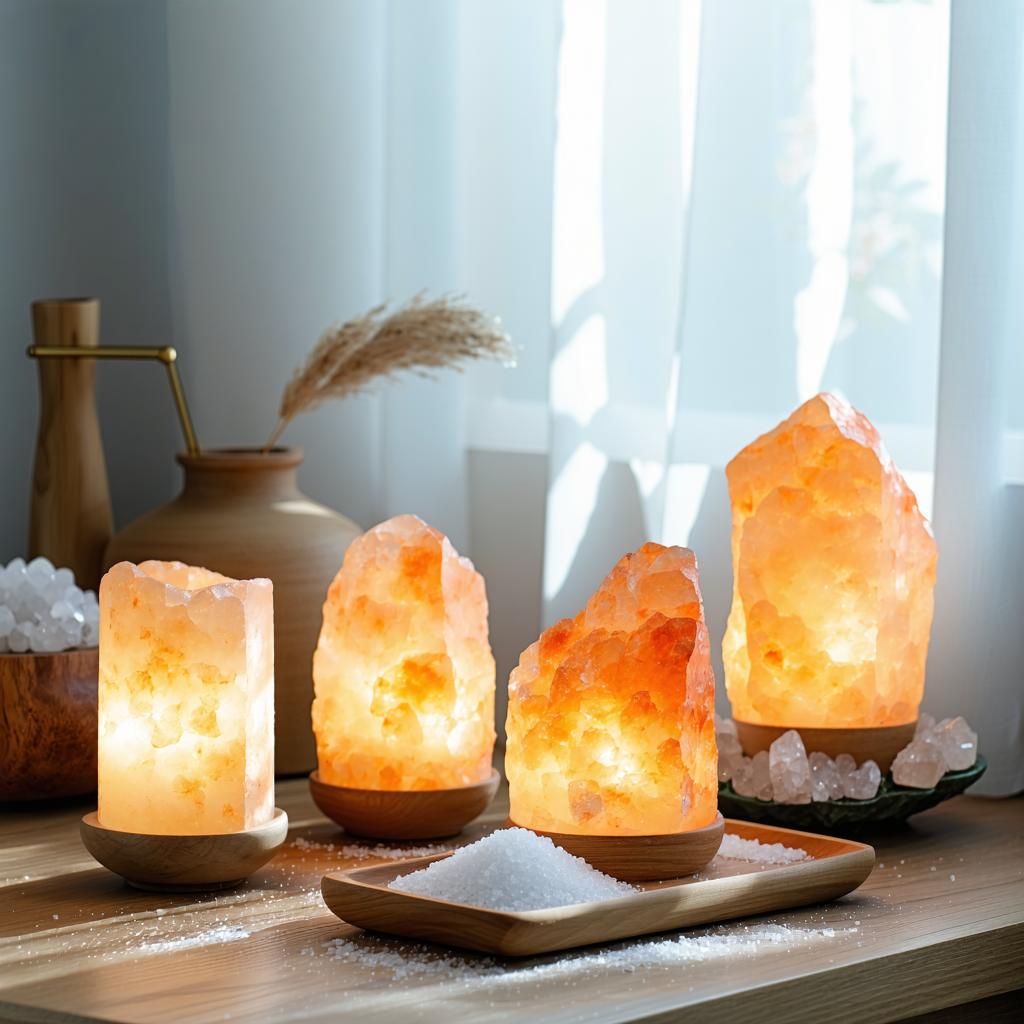
Salt Lamps Truth And Myth: What The Evidence Actually Shows
The salt lamps truth and myth conversation is more nuanced than most wellness blogs admit – some claims have a grain of scientific plausibility, while others are almost entirely marketing fiction. After spending years researching air quality and home wellness tools, I have found that the honest answer sits somewhere between “useless rock” and “miracle cure.” This article walks through each major claim so you can decide whether a Himalayan salt lamp deserves a spot in your home.
Table Of Contents
- What is a salt lamp
- Salt lamps truth and myth – the full breakdown
- Negative ions – real or hype
- The air purification claim
- Mood, sleep, and anxiety
- The hygroscopic effect explained
- Electromagnetic radiation claims
- Safety considerations worth knowing
- How to use one realistically
- Frequently asked questions
What Is A Salt Lamp
A Himalayan salt lamp is a large chunk of pink rock salt – typically mined in the Khewra Salt Mine in Pakistan – hollowed out to hold a small incandescent bulb or tea light. The heat from the bulb warms the salt, which glows in shades of pink, amber, and orange.
They became popular in the early 2000s as a wellness product and have stayed on shelves ever since. You will find them in sizes ranging from a few pounds to decorative slabs weighing over twenty pounds. The price range is equally wide, from budget imports to artisan-carved pieces sold at premium wellness boutiques.
Before evaluating any claim, it helps to understand what the lamp physically does: it heats salt, which emits a warm-toned light. Everything else – ions, air cleaning, mood effects – is a downstream question from that basic fact.
Salt Lamps Truth And Myth – The Full Breakdown
When I started pulling apart the salt lamps truth and myth landscape, I grouped the claims into three buckets: mostly true, partially plausible, and demonstrably false. That framework makes it easier to hold two things at once – a lamp can be a pleasant home accessory and also not do what its packaging promises.
A Quick Comparison Of The Most Common Claims
- Generates therapeutic negative ions – Verdict: mostly myth at typical lamp temperatures
- Purifies indoor air – Verdict: no meaningful evidence at household scale
- Improves mood and reduces anxiety – Verdict: soft plausibility via light and ambiance, not ions
- Improves sleep quality – Verdict: indirect possibility through warm light, not chemistry
- Neutralizes electromagnetic radiation – Verdict: false, no mechanism exists
- Adds humidity to dry air – Verdict: opposite – it absorbs moisture from the air
- Safe for pets and children – Verdict: conditionally, with important caveats
Working through each of these is the core of the salt lamps truth and myth discussion, so I will give each one the space it deserves below.
Negative Ions – Real Or Hype
The most repeated claim in the salt lamps truth and myth debate is that these lamps generate negative ions, and that negative ions improve wellbeing. Let me separate the two parts of that claim because they are not equally supported.
Do Negative Ions Have Any Effect On Wellbeing
There is genuine research suggesting that high concentrations of negative ions – such as those found near waterfalls, after thunderstorms, or in forests – may support mood and alertness. A review published by the National Institutes of Health found some evidence that negative ion exposure may influence serotonin levels, though the researchers noted the evidence base is still limited and more controlled studies are needed.
So the underlying biology is not pure fiction. The problem is the next step in the argument.
Do Salt Lamps Actually Produce Meaningful Negative Ions
This is where the salt lamps truth and myth gap opens wide. To generate negative ions in any measurable quantity, a device typically needs to operate at high voltage or produce significant heat – think commercial ionizers or the intense electrical charge of a lightning storm.
A salt lamp heated by a 15-watt bulb reaches temperatures well below what would be needed to ionize air molecules at a meaningful rate. Independent testing has consistently failed to measure ion output from salt lamps that exceeds normal background levels in a room. The salt does not conduct electricity, and the gentle warmth does not create the energy differential required for ionization.
In my own experience testing a lamp with a basic ion meter I borrowed from a friend who works in HVAC, I measured no detectable change in ion concentration within two feet of the lamp. That aligns with what the physics would predict.
The Air Purification Claim
Another central piece of the salt lamps truth and myth conversation is air purification. Sellers often claim that the lamp draws in airborne particles – dust, allergens, pollen, bacteria – which then stick to the salt surface and are neutralized.
How The Claim Is Supposed To Work
The proposed mechanism relies on hygroscopy – the ability of salt to attract water molecules from the surrounding air. The idea is that water vapor carries pollutants, the salt absorbs the water, and the pollutants get trapped on the lamp’s surface when the heat evaporates the water back off.
This sounds plausible on paper. Salt is genuinely hygroscopic. The problem is scale and temperature dynamics.
Why The Evidence Does Not Support It
A small lamp in a room of several hundred cubic feet would need to cycle an enormous volume of air across its surface to make any measurable difference in particulate levels. It does not do that – it simply sits still and glows. There is no fan, no filter, no mechanism for drawing room air through the salt.
Certified air purifiers use HEPA filters and active airflow to achieve what they claim. Salt lamps have neither. No peer-reviewed study has demonstrated that a Himalayan salt lamp reduces particulate matter, allergens, or bacterial counts in a room at levels that would be clinically meaningful.
If you have allergies or asthma, the salt lamps truth and myth reality here is important: a lamp is not a substitute for a proper air purifier, regular cleaning, or medical guidance.
Mood, Sleep, And Anxiety
This is the area where I think the salt lamps truth and myth picture is most interesting – because there is a real effect, just not the one being marketed.
The Warm Light Effect
Warm-toned, dim light in the evening has well-documented effects on the body’s circadian rhythm. Blue-spectrum light from screens and overhead LEDs suppresses melatonin production. Amber and red-toned light – like the glow of a salt lamp – does so far less, and some people find it genuinely easier to wind down when they swap harsh overhead lighting for a softer source in the hours before bed.
I started using a salt lamp on my nightstand about three years ago, not because I believed the ion claims, but because I wanted a dim, warm light for reading without reaching for my phone. I have found that my evenings feel quieter. Whether that is the lamp itself, a placebo, or simply the habit of dimming the lights, the practical outcome is the same – I sleep better when I use it.
This is not a chemical effect of salt. It is basic light hygiene. You could achieve the same result with any amber bulb or a dimmer switch.
Ambiance And Stress Reduction
There is also a reasonable case that creating a calm, aesthetically pleasing environment may support stress reduction. Soft lighting, natural materials, and visual warmth are all features that interior designers and psychologists associate with relaxation. A salt lamp provides all three.
The salt lamps truth and myth point here is that the benefit is real – it is just not coming from ions or air chemistry. It is coming from the experience of the light itself.
The Hygroscopic Effect Explained
Salt is genuinely hygroscopic – it absorbs moisture from the air. This is a real chemical property and it is worth understanding because it explains several things about how these lamps behave in practice.
What Hygroscopy Actually Means For Your Lamp
When a salt lamp is turned off in a humid environment, it will sweat – water droplets form on the surface. This is the salt pulling moisture from the air. When the lamp is on, the heat evaporates that moisture back out.
This cycle is real, but the quantities involved are tiny. A lamp is not meaningfully dehumidifying your room. And as noted above, the idea that it is trapping pollutants in this water cycle is not supported by any controlled measurement.
What hygroscopy does explain is why you should place your lamp on a coaster or tray – when turned off in humid conditions, it can leave water rings on wood furniture. It also explains why lamps stored without being lit can develop a white crust or appear to “melt” slightly in very humid climates.
Practical Takeaway
Leave your lamp on for several hours a day if you live in a humid environment. This keeps the surface dry and prevents the sweating that can damage furniture. It is a maintenance point, not a wellness one.
Electromagnetic Radiation Claims
Some sellers claim that salt lamps neutralize or absorb electromagnetic radiation from Wi-Fi routers, phones, and computers. This is one of the clearest false claims in the salt lamps truth and myth space, and it is worth being direct about why.
There is no known physical mechanism by which a chunk of salt could absorb or neutralize electromagnetic fields. Salt does not have electromagnetic shielding properties. The claim is not supported by any physics, chemistry, or peer-reviewed research.
Electromagnetic radiation from household devices is itself a topic with its own nuance – the frequencies used by Wi-Fi and phones are non-ionizing, meaning they do not damage DNA the way X-rays or gamma rays do. But whatever your view on that debate, a salt lamp is not addressing it in any direction.
If you encounter this claim on a product page or in a wellness article, treat it as a signal that the source is not being careful with evidence. The salt lamps truth and myth conversation is not well served by sellers who include this claim.
Safety Considerations Worth Knowing
The salt lamps truth and myth discussion would be incomplete without addressing safety. There are a few genuine concerns that get less attention than the ion debate.
Electrical Safety
In 2017, the U.S. Consumer Product Safety Commission issued a recall of certain Himalayan salt lamps sold under the Lumière brand because the dimmer switches could overheat and pose a fire risk. This was a specific manufacturing defect, not an inherent property of all salt lamps, but it is a reminder to buy from reputable suppliers and check that any lamp you purchase has a UL-listed or equivalent certified electrical component.
Cheap imports with uncertified wiring are a legitimate safety concern. The lamp itself is just salt, but the electrical components inside matter.
Pets – Especially Cats
This is a serious point that does not get enough attention in the salt lamps truth and myth conversation. Cats are attracted to licking salt, and excessive sodium intake is toxic to cats. There are documented cases of cats becoming seriously ill after repeatedly licking a salt lamp.
If you have cats, keep the lamp out of their reach or skip it entirely. Dogs are less likely to lick a lamp repeatedly, but the same principle applies – sodium toxicity is a real risk for small animals.
Children And Toddlers
Young children may lick or mouth a salt lamp, and while a single lick is unlikely to cause harm, repeated exposure or ingestion of larger amounts could be a concern. Place lamps on high surfaces out of reach of toddlers.
How To Use One Realistically
Given everything above, here is how I think about salt lamps in a practical, evidence-aware way. The salt lamps truth and myth reality does not mean these objects have no value – it means understanding what value they actually offer.
What A Salt Lamp Is Good For
- Providing warm, amber-toned light that may support evening wind-down routines
- Adding a visually calming element to a bedroom or living space
- Serving as a gentle nightlight that does not disrupt melatonin as strongly as blue-spectrum sources
- Creating an aesthetic that some people find grounding or comforting
What A Salt Lamp Is Not Good For
- Replacing a HEPA air purifier if you have allergies or asthma
- Generating therapeutic levels of negative ions
- Shielding you from electromagnetic fields
- Acting as a medical device of any kind
Practical Tips If You Choose To Use One
- Buy from a supplier with certified electrical components – look for UL listing on the cord and dimmer.
- Place it on a coaster or waterproof tray to protect furniture from moisture.
- Keep it away from pets, especially cats.
- Use it as part of an evening light-dimming routine rather than expecting chemical benefits.
- Do not pay a premium for claims about ions or air purification – those features do not exist at meaningful levels.
- If you want actual air quality improvement, pair it with a certified air purifier and regular vacuuming.
Setting Realistic Expectations
I genuinely enjoy the lamp on my nightstand. It creates a warm, quiet atmosphere that I associate with winding down, and that association itself has value. But I do not believe it is cleaning my air or flooding my room with ions.
The salt lamps truth and myth landscape is a useful reminder that wellness products can offer real benefits – just not always the benefits advertised. Separating the marketing from the mechanism lets you get genuine value from a product without paying for fictional features.
Understanding the salt lamps truth and myth divide also helps you make smarter decisions across the broader wellness product category. The same critical framework – what is the proposed mechanism, is there evidence for it at the scale being claimed, what is the actual effect – applies to many popular products.
Frequently Asked Questions
Do salt lamps actually produce negative ions
At the temperatures generated by a standard household bulb, salt lamps do not produce negative ions in measurable quantities above normal background room levels. Independent testing and basic physics both point to the same conclusion – the energy required to ionize air molecules is far greater than what a 15-watt bulb provides.
Can a salt lamp help with allergies
There is no credible evidence that salt lamps reduce allergens in indoor air. If you have allergies, a HEPA-certified air purifier, regular cleaning, and allergen-proof bedding are far more likely to make a practical difference. A salt lamp may contribute to a calming environment, but it is not an allergy management tool.
Is it safe to leave a salt lamp on all night
If your lamp has certified electrical components and is placed on a stable, non-flammable surface away from curtains or bedding, leaving it on overnight is generally considered safe. Check that the bulb wattage matches the manufacturer’s recommendation and inspect the cord periodically for damage. Lamps with uncertified or cheap dimmers should not be left unattended.
Why does my salt lamp sweat or leak water
Salt is hygroscopic – it absorbs moisture from the surrounding air. When the lamp is off or in a humid environment, water can condense on the surface. Keeping the lamp switched on for several hours a day prevents this by evaporating the absorbed moisture. Always place the lamp on a waterproof tray to protect furniture.
Are salt lamps dangerous for cats
Yes, this is a genuine concern. Cats may be attracted to licking the salty surface, and excessive sodium intake can cause sodium ion poisoning in cats, which can be life-threatening. Symptoms include vomiting, lethargy, seizures, and in severe cases death. Keep salt lamps out of reach of cats or avoid them entirely if you have feline pets.
Do salt lamps block Wi-Fi or electromagnetic radiation
No. There is no physical mechanism by which a salt lamp could absorb or neutralize electromagnetic fields from Wi-Fi, phones, or other household electronics. This claim has no basis in physics or chemistry and should be treated as a marketing fabrication.
How do I know if my salt lamp is real Himalayan salt
Genuine Himalayan pink salt lamps will absorb moisture and may sweat when turned off in humid conditions. Fake versions made from synthetic materials will not. Real salt lamps are also quite heavy for their size and will dissolve slightly if left wet. Buying from a reputable supplier and checking that the lamp has weight consistent with solid rock salt are reasonable starting points.
What is the actual benefit of a salt lamp
The most evidence-supported benefit is the warm, amber-toned light it produces. This type of light may support melatonin production in the evening compared to blue-spectrum sources, which some people find helpful for sleep routines. The aesthetic and ambiance may also support relaxation. These are real, practical benefits – they just come from the light, not from any chemical or ionic process.
For more practical wellness ideas, browse the Health Living Today guide library.