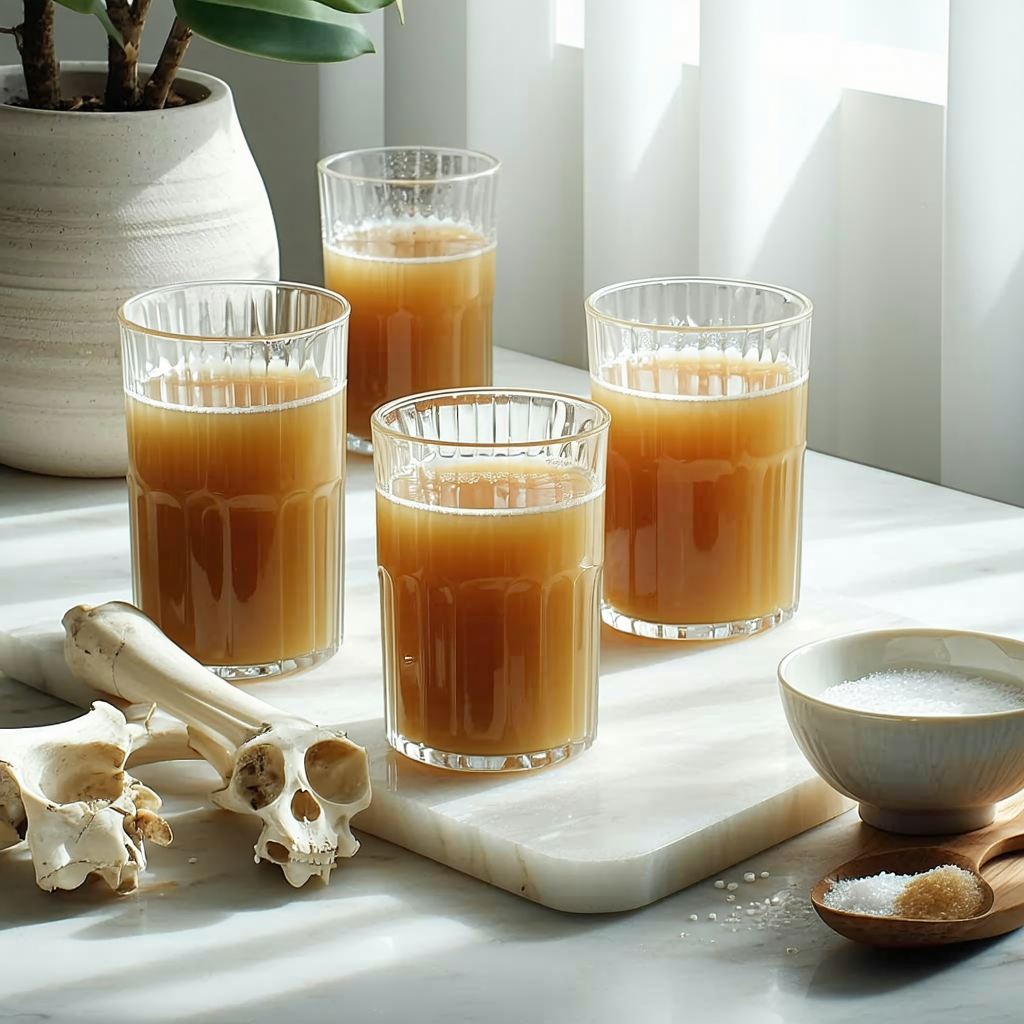
Bone Broth And Collagen
Bone broth and collagen work together as one of the most practical pairings in everyday wellness – simmering bones releases collagen proteins directly into the liquid, giving you a whole-food source of the same building block sold in powder form. Most people find that adding either one, or both, to a consistent routine may support joint comfort, skin hydration, and gut lining health over time. I have found that understanding how they overlap – and where they differ – makes it much easier to choose the right approach for your lifestyle.
Table of contents
- What collagen actually is and why it matters
- What bone broth is and how it is made
- The bone broth and collagen connection explained
- Types of collagen found in bone broth
- Potential benefits of bone broth and collagen
- Bone broth vs collagen supplements – a practical comparison
- How to make collagen-rich bone broth at home
- How to use bone broth and collagen in your daily routine
- What to look for when buying bone broth or collagen
- Common mistakes that reduce collagen content
- Frequently asked questions
What collagen actually is and why it matters
Collagen is the most abundant protein in the human body, making up roughly 30 percent of total protein mass. It forms the structural framework for skin, tendons, ligaments, cartilage, and bone – essentially the connective tissue that holds everything together.
Your body produces collagen on its own, but natural production begins to slow in your mid-to-late twenties. By the time most people reach their forties, the decline is noticeable in skin elasticity, joint recovery time, and overall tissue resilience. Dietary sources and targeted supplementation are two ways people try to offset this gradual reduction.
Collagen is made of amino acids – primarily glycine, proline, and hydroxyproline. These are not considered essential amino acids because the body can synthesize them, but some research suggests that getting them from food or supplements may still be useful, especially when the body’s own synthesis is under demand from exercise, aging, or injury recovery.
What bone broth is and how it is made
Bone broth is a long-simmered stock made from animal bones – typically beef, chicken, pork, or fish – along with connective tissue such as joints, feet, and knuckles. The extended cooking time, usually anywhere from 8 to 24 hours, breaks down the collagen in those tissues into gelatin and smaller peptides that dissolve into the liquid.
Traditional stocks and modern bone broth differ mainly in cooking time and the emphasis on bone-to-water ratio. A well-made bone broth will gel when refrigerated, which is a reliable visual indicator that it contains a meaningful amount of gelatin – the cooked form of collagen.
Acid is often added, usually a splash of apple cider vinegar, to help draw minerals out of the bones. This is a small but practical step that many home cooks include. Vegetables and herbs are common additions for flavor, though they do not significantly change the collagen content.
The bone broth and collagen connection explained
The relationship between bone broth and collagen is direct and chemical. When you simmer collagen-rich bones and connective tissue in water, heat breaks the triple-helix structure of collagen molecules apart. The result is gelatin, which is essentially denatured collagen. Continued simmering breaks gelatin down further into smaller collagen peptides.
This is the same process used industrially to create hydrolyzed collagen supplements, just done at home with a stockpot instead of commercial equipment. The difference is that bone broth and collagen supplements are not identical products – hydrolyzed collagen powders are processed further to produce very small, standardized peptides that dissolve easily in cold liquid, while bone broth contains a broader mix of gelatin and peptides alongside minerals and other nutrients.
I remember the first time I refrigerated a batch of homemade chicken foot broth overnight and found a firm, jiggly gel in the pot the next morning. That visual confirmed something I had only read about – the collagen content was high enough to set the liquid solid. It made the connection between bone broth and collagen feel very real and practical rather than abstract.
Both forms – the whole-food version from broth and the supplemental version from powder – provide the body with amino acids that it can use to support its own collagen synthesis. The research published in Nutrients suggests that collagen peptide supplementation may support skin elasticity and joint health, though individual results vary and more long-term studies are still needed.
Types of collagen found in bone broth
There are at least 28 identified types of collagen, but three are most relevant to bone broth and collagen discussions in a wellness context.
- Type I collagen – the most abundant type, found in skin, tendons, bones, and ligaments. Beef bone broth is particularly rich in Type I.
- Type II collagen – found primarily in cartilage. Chicken bone broth, especially when made with chicken feet and cartilage-rich joints, contains notable amounts of Type II.
- Type III collagen – found alongside Type I in skin and blood vessels. Beef and pork broth tend to contain Type III as well.
When you make bone broth from a mix of bones and joints, you naturally get a blend of these types. This is one reason some wellness practitioners prefer whole-food broth over a single-type collagen supplement – you get variety without having to think about it.
Fish bone broth is another option worth mentioning. Marine collagen is predominantly Type I and has a smaller peptide size, which some studies suggest may mean faster absorption, though the evidence is still developing.
Potential benefits of bone broth and collagen
Joint comfort and mobility
Cartilage is largely made of Type II collagen. As cartilage thins with age or heavy use, joint discomfort can increase. Some people find that regular consumption of bone broth and collagen may support joint comfort over time, particularly with consistent, long-term use rather than short-term loading.
Glycine and proline, the amino acids released from collagen during simmering, are key components of cartilage tissue. Providing these building blocks through diet may help the body maintain or repair cartilage, though this is not a guaranteed outcome and depends on many individual factors.
Skin hydration and elasticity
Collagen makes up a large portion of the dermis – the deeper layer of skin responsible for firmness and elasticity. Several small studies have found that daily collagen peptide supplementation over 8 to 12 weeks was associated with improvements in skin hydration and elasticity in participants. Bone broth provides similar collagen peptides in a less standardized but still meaningful form.
In my own routine, I noticed that my skin felt more hydrated in winter – typically my driest season – after I started drinking a mug of bone broth most mornings. I cannot attribute this entirely to the broth, but the timing was consistent.
Gut lining support
Glycine, found in high amounts in collagen-rich bone broth, has been studied for its role in supporting the integrity of the gut lining. Some people find that bone broth and collagen are easier on the digestive system than other protein sources, and that regular consumption may support overall gut comfort.
This is an area where individual experience varies considerably. People with sensitive digestion sometimes report that bone broth feels soothing, while others find that high-histamine foods – which bone broth can be, especially when simmered for very long periods – are not well tolerated.
Protein and mineral content
Beyond collagen specifically, bone broth provides a meaningful amount of protein per serving – typically 6 to 12 grams per cup depending on how it is made. It also contains minerals leached from the bones, including calcium, magnesium, and phosphorus, though the amounts vary widely and should not be relied upon as a primary mineral source.
Bone broth vs collagen supplements – a practical comparison
Choosing between bone broth and collagen supplements comes down to your priorities, lifestyle, and budget. Here is a plain comparison to help you think it through.
- Collagen content per serving: Hydrolyzed collagen supplements are standardized – usually 10 to 20 grams per serving. Bone broth varies widely, from roughly 2 to 10 grams per cup depending on preparation.
- Convenience: Collagen powder dissolves in any liquid and takes seconds. Bone broth requires preparation time or purchasing pre-made versions.
- Additional nutrients: Bone broth provides minerals, gelatin, and other amino acids alongside collagen. Supplements are more targeted and often contain only collagen peptides.
- Cost: Homemade bone broth is very inexpensive if you save bones from cooking. Quality collagen supplements range from moderate to expensive. Store-bought bone broth sits in the middle.
- Flavor and satiety: Bone broth is a warm, savory drink that many people find satisfying and grounding. Collagen powder is flavorless and can be added to coffee, smoothies, or water without changing the taste.
- Absorption: Hydrolyzed collagen peptides are smaller and may absorb more readily. Bone broth collagen requires additional digestion before absorption.
Many people use both – adding collagen powder to morning coffee and drinking bone broth as a mid-afternoon snack or base for soups. This is a reasonable approach if you want both convenience and the broader nutrient profile of broth.
How to make collagen-rich bone broth at home
Making your own bone broth and collagen-rich liquid at home is genuinely straightforward. The key variables are bone selection, acid addition, cooking time, and temperature.
Choose the right bones
Not all bones contribute equally to collagen content. Knuckle bones, feet, necks, and oxtail are the richest sources because they contain the most connective tissue. Marrow bones add richness and fat but less gelatin. A mix of knuckle bones and marrow bones gives you both flavor depth and collagen content.
For chicken broth, feet are the single most effective addition for collagen. A small handful of chicken feet will gel a large pot of broth more reliably than any other part of the bird.
Roast first for flavor
Roasting bones at around 400 degrees Fahrenheit for 30 to 45 minutes before simmering develops a richer, more complex flavor through the Maillard reaction. This step is optional but worthwhile if you plan to drink the broth straight rather than use it only as a cooking liquid.
Simmer low and slow
Add the roasted bones to a large pot with cold water, a splash of apple cider vinegar, and any aromatics you like. Bring to a gentle simmer – not a rolling boil – and maintain that low heat for at least 8 hours for chicken and 12 to 24 hours for beef. A slow cooker or Instant Pot makes this hands-off.
Skimming the foam that rises in the first hour produces a cleaner-tasting broth, though it does not affect collagen content meaningfully.
Strain and store
Strain through a fine mesh strainer, let cool, and refrigerate. A well-made batch will gel within a few hours. The fat cap that forms on top can be removed or stirred back in depending on your preference. Bone broth keeps well in the refrigerator for up to five days and freezes for three to six months.
How to use bone broth and collagen in your daily routine
Consistency matters more than quantity when it comes to bone broth and collagen. A modest daily intake over weeks and months is likely to be more useful than large occasional doses.
Morning options
Adding collagen powder to your morning coffee or tea is one of the most frictionless habits you can build. Because hydrolyzed collagen is flavorless and dissolves fully in hot liquid, it integrates into an existing habit without requiring any extra time.
Some people prefer to start the day with a warm mug of salted bone broth instead of or alongside coffee. This provides protein and minerals early in the day and can be particularly useful on mornings when breakfast feels unappealing.
Cooking with bone broth
Using bone broth as the liquid base for rice, quinoa, oatmeal, soups, stews, and sauces is one of the easiest ways to increase your intake without thinking about it as a supplement. Every cup of liquid you replace with bone broth adds collagen peptides, minerals, and flavor to the meal.
Post-exercise timing
Some research suggests that consuming collagen peptides alongside vitamin C around 30 to 60 minutes before exercise may support collagen synthesis in tendons and ligaments. Squeezing a little lemon juice into warm bone broth before a workout is a practical, whole-food way to apply this idea.
Evening wind-down
Glycine has been studied for its potential role in supporting sleep quality. A warm mug of bone broth in the evening – which is naturally high in glycine from its collagen content – is something many people find genuinely relaxing as part of a wind-down routine.
What to look for when buying bone broth or collagen
The quality of commercial bone broth and collagen products varies considerably. Here are the most practical things to check before buying.
For bone broth
- Gels when cold: If a liquid bone broth gels in the refrigerator, it contains meaningful collagen. Many shelf-stable broths labeled as bone broth do not gel and are closer to a flavored stock.
- Short ingredient list: Bones, water, vegetables, salt, and possibly vinegar are all you need. Avoid products with added flavor enhancers, maltodextrin, or yeast extract.
- Sourcing transparency: Grass-fed beef bones and pasture-raised chicken bones are generally considered higher quality. Brands that disclose sourcing are more trustworthy.
- Protein content per serving: A genuinely collagen-rich bone broth should have at least 8 to 10 grams of protein per cup.
For collagen supplements
- Hydrolyzed collagen peptides: This form is broken down into smaller peptides that are easier for the body to absorb than gelatin or intact collagen.
- Type specification: Look for products that specify Type I and III for skin and general use, or Type II for joint-focused goals.
- Third-party testing: Supplements are not regulated as strictly as pharmaceuticals. A third-party certification – such as NSF, USP, or Informed Sport – adds a meaningful layer of quality assurance.
- Minimal additives: Collagen powder does not need much beyond the collagen itself. Be cautious of products with heavy sweetener loads or proprietary blends that obscure actual collagen content.
Common mistakes that reduce collagen content
If you are making bone broth at home and not getting a gel, a few common errors are usually responsible.
- Using the wrong bones: Lean muscle meat and plain marrow bones without connective tissue will not produce a collagen-rich broth. Prioritize knuckles, feet, necks, and joints.
- Boiling instead of simmering: A hard boil can break down gelatin into smaller fragments that do not set, and it also makes the broth cloudy and can produce off flavors. Low and slow is the rule.
- Not cooking long enough: Chicken broth needs at least 8 hours. Beef bone broth benefits from 16 to 24 hours. Shorter cooking times leave collagen extraction incomplete.
- Too much water: Diluting the bones with excessive water reduces the concentration of collagen in the final broth. A rough guideline is about one pound of bones per quart of water.
- Skipping the acid: A tablespoon or two of apple cider vinegar helps draw minerals and collagen out of the bones. The vinegar flavor cooks off completely.
Frequently asked questions
Is bone broth a good source of collagen?
Bone broth is a whole-food source of collagen in the form of gelatin and collagen peptides released during long simmering. The exact amount varies depending on the bones used and cooking time, but a well-made broth that gels when refrigerated contains a meaningful amount – typically 2 to 10 grams of collagen protein per cup. It is not as concentrated or standardized as a hydrolyzed collagen supplement, but it provides additional nutrients alongside the collagen.
What is the difference between gelatin and collagen?
Collagen is the raw structural protein found in animal connective tissue. When collagen is cooked in water, heat breaks it down into gelatin – a partially denatured form that dissolves in hot liquid and gels when cooled. Hydrolyzed collagen, used in most supplements, is processed further into very small peptides that dissolve in both hot and cold liquid without gelling. All three forms provide the same core amino acids once digested.
How much bone broth should I drink daily for collagen benefits?
Most people who use bone broth for wellness purposes drink one to two cups per day. There is no established clinical dose for bone broth specifically, since collagen content varies by preparation. If you are also using a collagen supplement, one cup of broth alongside 10 grams of collagen powder is a reasonable starting point. Consistency over weeks and months matters more than the exact daily amount.
Can bone broth replace a collagen supplement?
Bone broth and collagen supplements are not identical, but they overlap significantly in function. Bone broth provides collagen peptides alongside minerals and other amino acids, while supplements offer a more concentrated and standardized dose. For general wellness, bone broth alone may be sufficient. For people with specific goals – such as higher daily collagen intake for joint recovery – combining both is a practical option.
Does cooking destroy the collagen in bone broth?
Cooking does not destroy collagen – it transforms it. Heat breaks collagen’s triple-helix structure into gelatin and smaller peptides, which is exactly what makes it bioavailable. Without cooking, the collagen in raw bones would be too structurally intact to digest easily. The concern is overcooking at very high temperatures, which can further fragment peptides and affect the texture of the broth, but does not eliminate the nutritional value.
Is bone broth and collagen safe for everyone?
For most people, bone broth and collagen are well tolerated. People with histamine intolerance may find that long-simmered bone broth triggers symptoms, since histamine accumulates during extended cooking. Those with fish or shellfish allergies should avoid marine collagen supplements. Anyone managing a specific health condition should check with their healthcare provider before adding high-protein supplements to their routine. Bone broth is generally considered a low-risk, nutrient-dense food for healthy adults.
How long does it take to see results from bone broth and collagen?
Most studies on collagen supplementation use intervention periods of 8 to 12 weeks, which gives a reasonable benchmark for when people might notice changes in skin or joint comfort. Some people report noticing differences sooner, while others take longer. The timeline depends on factors including age, baseline collagen levels, overall diet, and consistency of intake. Bone broth and collagen are long-game habits rather than quick fixes.
For more practical wellness ideas, browse the Health Living Today guide library.