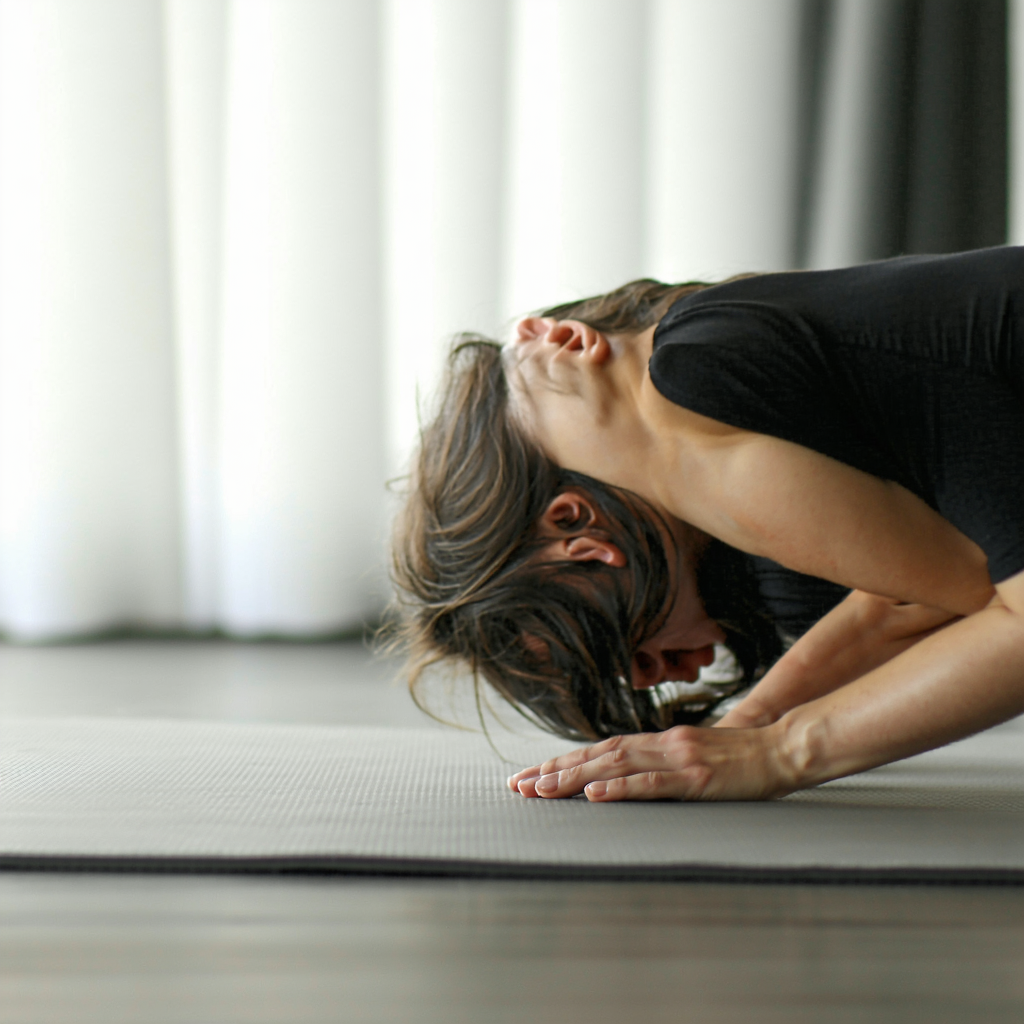
Yoga Nidra For Anxiety
Yoga nidra for anxiety is one of the most accessible, evidence-aware tools I have come across for calming an overactive nervous system – no prior yoga experience required, no special equipment, and you do it lying down. Research suggests that a regular yoga nidra practice may support lower stress hormones, improved sleep, and a steadier mood. If anxiety has been grinding you down, this guided meditation technique is worth a serious look.
Table of contents
- What is yoga nidra
- How yoga nidra helps anxiety
- The science behind yoga nidra for anxiety
- Yoga nidra vs other relaxation methods
- How to practice yoga nidra for anxiety
- The eight stages of yoga nidra
- Building a consistent routine
- Common mistakes and how to avoid them
- Who benefits most from yoga nidra for anxiety
- Frequently asked questions
What is yoga nidra
Yoga nidra – sometimes called “yogic sleep” – is a systematic guided relaxation practice that leads your awareness through layers of consciousness while your body remains completely still. The term comes from Sanskrit: yoga meaning union and nidra meaning sleep. You are not fully asleep and not fully awake – you hover in the hypnagogic state between the two.
The practice was codified in its modern form by Swami Satyananda Saraswati in the mid-twentieth century, drawing on ancient tantric traditions. Today it is taught in hospitals, veterans’ programs, and mainstream wellness studios around the world.
Unlike a typical yoga class, yoga nidra asks nothing physical of you. You lie in savasana – flat on your back – and follow a teacher’s voice through a structured sequence. Sessions usually run between 20 and 45 minutes, though even a 10-minute version can shift how you feel.
How yoga nidra helps anxiety
Yoga nidra for anxiety works primarily by shifting the nervous system out of sympathetic dominance – the “fight or flight” mode – and into parasympathetic activity, often called “rest and digest.” When anxiety is chronic, the sympathetic nervous system can feel stuck in the on position. Yoga nidra gives it a reliable off ramp.
Here is what tends to happen during a session:
- Heart rate and breathing slow down
- Muscle tension releases progressively through the body scan
- Brain wave activity shifts from beta waves – associated with active thinking and worry – toward alpha and theta waves, which are linked to calm alertness and creativity
- The mind becomes less reactive to anxious thoughts without needing to suppress them
- Cortisol – a primary stress hormone – may decrease over repeated sessions
I have found that the body scan portion of yoga nidra is particularly useful for anxiety. Anxiety tends to live in the body as tightness in the chest, a clenched jaw, or shallow breathing. Moving systematic attention through each body part interrupts that physical holding pattern in a way that thinking your way out of anxiety simply cannot.
The science behind yoga nidra for anxiety
The research base is still growing, but several well-designed studies point in a consistent direction. A 2022 randomized controlled trial published in Medical Science Monitor found that participants who practiced yoga nidra for eight weeks showed significant reductions in perceived stress and trait anxiety compared to a control group. Similar findings have appeared in studies focused on healthcare workers, college students, and people with chronic pain.
The National Institute of Mental Health notes that anxiety disorders are among the most common mental health conditions in the United States, affecting roughly 19 percent of adults each year. Mind-body practices that activate the parasympathetic nervous system are increasingly recognized as valuable complementary approaches alongside conventional care.
Neuroimaging research suggests that yoga nidra may reduce activity in the default mode network – the brain circuitry most associated with rumination and self-referential worry. That is a meaningful finding for anyone whose anxiety tends to show up as an unstoppable loop of “what if” thinking.
EEG studies have recorded the theta brainwave state during yoga nidra. Theta activity is linked to emotional processing, memory consolidation, and reduced anxiety. Some researchers describe yoga nidra as a way to access the benefits of deep sleep while remaining conscious enough to receive positive suggestions or intentions – a concept the tradition calls sankalpa.
Yoga nidra vs other relaxation methods
People often ask me how yoga nidra for anxiety compares to other popular calming practices. Here is a straightforward comparison:
- Yoga nidra vs mindfulness meditation – Mindfulness typically asks you to observe thoughts and sensations with open awareness. Yoga nidra uses a more structured script that guides attention step by step, which many anxious people find easier because there is less open-ended time for the mind to wander into worry.
- Yoga nidra vs progressive muscle relaxation (PMR) – PMR involves deliberately tensing and releasing muscle groups. Yoga nidra uses passive awareness of body parts rather than active contraction, making it gentler for people who hold significant physical tension.
- Yoga nidra vs breath-focused techniques – Breathing exercises like box breathing or 4-7-8 breathing are faster to deploy in an acute anxious moment. Yoga nidra is better suited to a scheduled daily practice that builds resilience over time.
- Yoga nidra vs body scan meditation – A body scan is actually one component within a full yoga nidra session. Yoga nidra is more comprehensive, adding visualization, pairs of opposites, and the sankalpa intention.
- Yoga nidra vs sleep – Practitioners often report that 30 minutes of yoga nidra feels as restorative as several hours of sleep. While that claim is difficult to quantify precisely, the deep rest it provides is genuinely distinctive.
How to practice yoga nidra for anxiety
Starting a yoga nidra for anxiety practice is simpler than most people expect. You do not need a studio membership, a teacher in the room, or any equipment beyond a comfortable place to lie down.
What you need
- A yoga mat, a firm bed, or a carpeted floor
- A thin pillow under your head if needed
- A blanket – body temperature drops during deep relaxation
- An eye pillow or sleep mask to block light
- Headphones and a recorded yoga nidra session
Setting up your environment
Dim the lights or close the curtains. Turn off notifications on your phone – or use airplane mode – before you press play. Lying down in a cool, quiet room helps your body drop into relaxation faster.
Tell anyone in your household that you are not to be disturbed for the next 20 to 45 minutes. This boundary matters more than any physical setup detail. Interruption mid-session is jarring and counterproductive.
Choosing a recording
For yoga nidra for anxiety specifically, look for recordings that include a body scan, pairs of opposites – such as “heavy and light” or “warm and cool” – and a visualization sequence. Teacher voices that are calm and unhurried work better than those with dramatic music layered underneath. Many people find that a female voice feels soothing; others prefer a male voice. Experiment until you find one that works for you.
Free options are available on YouTube. Paid apps such as Insight Timer, Calm, and Yoga Nidra Network offer curated libraries. I personally started with a free 30-minute recording by a certified iRest teacher and found it dramatically easier to stay engaged than with a generic guided meditation.
During the session
Your only job is to stay awake enough to follow the instructions. Do not try to relax – that paradoxically increases tension. Simply move your attention where the guide directs it. If you fall asleep, that is fine for the first few sessions, though with practice you will learn to hover in that in-between state.
If anxious thoughts arise, treat them the same way you treat any other sensation – notice them, then return your attention to the guide’s voice. You are not fighting your thoughts; you are just not feeding them.
The eight stages of yoga nidra
A traditional yoga nidra session – particularly those based on Swami Satyananda’s Bihar School method – moves through eight distinct stages. Understanding these stages helps you follow along more consciously and get more from each session.
- Internalization (pratyahara) – You settle into savasana, become aware of external sounds, and gradually withdraw attention inward. This transition from outer to inner awareness is the foundation of the whole practice.
- Sankalpa (intention) – You plant a short, positive intention in the fertile ground of a relaxing mind. For anxiety, a sankalpa like “I am at peace” or “I respond to challenges with calm” may support a gradual mental shift over weeks of practice.
- Body rotation (rotation of consciousness) – Your awareness moves rapidly from one body part to the next – right thumb, index finger, middle finger, and so on – without physically moving. This breaks habitual tension patterns and begins the shift toward theta brainwaves.
- Breath awareness – You observe the natural breath without altering it. Counting breaths or watching the rise and fall of the belly anchors attention and deepens relaxation.
- Pairs of opposites (dwandwa) – The guide evokes contrasting sensations – heaviness and lightness, heat and cold, pain and pleasure. This trains the mind to hold opposites without reactivity, which is directly relevant to anxiety management.
- Visualization (rapid images) – A series of vivid images is offered in quick succession – a golden sunrise, a flickering candle, a still lake. This stimulates the unconscious mind and supports emotional processing.
- Sankalpa (repeated) – Your intention is planted again, now in an even deeper state of receptivity.
- Externalization – Awareness is gradually guided back to the body, the breath, sounds in the room, and finally full waking consciousness.
Building a consistent routine
Consistency is where yoga nidra for anxiety delivers its real benefits. A single session can feel wonderful, but the cumulative effect of daily or near-daily practice is what creates lasting change in how the nervous system responds to stress.
Best time of day
Many people find early morning or early afternoon most effective. Practicing immediately before sleep works for some but can make it harder to stay in that conscious in-between state rather than simply falling asleep. I have found that practicing around 4 p.m. – when afternoon energy dips naturally – fits easily into my day and leaves me refreshed for the evening without disrupting my sleep onset.
Frequency
Daily practice is ideal when you are actively working with anxiety. Even four to five sessions per week will produce noticeable results within two to four weeks for most people. The key is treating it like any other health habit – non-negotiable, scheduled, and brief enough to be sustainable.
Tracking progress
Keep a simple one-line journal entry after each session. Note your anxiety level before and after on a scale of one to ten, and jot down any images or thoughts that surfaced. Over a month, patterns emerge that are genuinely useful for understanding your own anxiety triggers and responses.
Combining yoga nidra with other practices
Yoga nidra for anxiety works well alongside physical movement, cognitive behavioral techniques, and professional mental health support. It is not a replacement for therapy or medication when those are indicated – it is a complementary daily habit that keeps the nervous system in better baseline shape.
Common mistakes and how to avoid them
In my own routine and in conversations with others, a handful of mistakes come up repeatedly. Avoiding them makes the practice significantly more effective.
- Trying too hard to relax – Relaxation is a side effect of following the instructions, not a goal to strain toward. Effort and relaxation are incompatible. Let the process do the work.
- Practicing when severely sleep-deprived – If you are running on four hours of sleep, you will fall asleep within minutes and miss the conscious theta state entirely. A brief nap first, then yoga nidra, is a better sequence on exhausted days.
- Skipping the sankalpa – Some people feel self-conscious about setting an intention. But for anxiety specifically, the sankalpa is one of the most powerful parts of the practice. Keep it simple and personal.
- Switching recordings constantly – Variety feels appealing, but sticking with one or two recordings for at least a month allows your nervous system to recognize the structure and drop into relaxation faster.
- Checking the time mid-session – Set a soft alarm for five minutes after the expected session length and then forget about time entirely. Clock-watching activates exactly the vigilance you are trying to calm.
- Giving up after one uncomfortable session – The first few sessions can feel restless or even bring up difficult emotions as the nervous system begins to release stored tension. This is normal and typically passes within a week of consistent practice.
Who benefits most from yoga nidra for anxiety
Yoga nidra for anxiety is broadly accessible, but certain groups seem to find it especially useful based on both research and anecdotal evidence.
- People with generalized anxiety disorder (GAD) – The chronic, free-floating worry of GAD responds well to practices that interrupt the default mode network’s rumination loop. Yoga nidra may support symptom management as part of a broader treatment plan.
- Those with anxiety-related insomnia – Because yoga nidra bridges waking and sleep, it is particularly well-suited to people whose anxiety spikes at bedtime. Practiced in the early evening, it can reduce sleep onset anxiety significantly.
- People who struggle with traditional seated meditation – Anxious individuals often find that sitting still in silence makes their thoughts louder. The guided, structured nature of yoga nidra provides enough external scaffolding to prevent the mind from spiraling.
- Trauma survivors – The iRest protocol – a trauma-sensitive adaptation of yoga nidra developed by Richard Miller – is used in VA hospitals and trauma centers. It allows participants to modify the practice in real time if any content feels activating.
- Healthcare workers and caregivers – Multiple studies have specifically examined yoga nidra in high-burnout professions and found meaningful reductions in emotional exhaustion and anxiety symptoms after consistent practice.
A personal anecdote feels relevant here. I started using yoga nidra for anxiety during a period when work stress had turned into a persistent low hum of dread that followed me everywhere. I tried seated meditation for months with limited success – my mind treated the silence as an invitation to rehearse everything that could go wrong. Within two weeks of daily yoga nidra practice, the quality of that background noise had changed. It was not gone, but it had become quieter and less sticky. That shift was enough to make it a permanent part of my routine.
Frequently asked questions
How long does it take for yoga nidra to help with anxiety
Most people notice some shift in how they feel after even a single session – a temporary reduction in muscle tension and mental noise. Meaningful, lasting changes in baseline anxiety levels typically emerge after two to four weeks of daily or near-daily practice. Some studies have used eight-week protocols to measure significant outcomes.
Can I do yoga nidra for anxiety every day
Yes – daily practice is generally encouraged and considered safe for most people. Unlike vigorous exercise, yoga nidra does not require recovery time. The main caution is for people with certain psychiatric conditions, who should consult a mental health professional before starting any new contemplative practice.
Is yoga nidra the same as hypnosis
They share some surface similarities – both involve a relaxed, receptive state and the use of a guiding voice. But they are distinct practices with different frameworks and intentions. Yoga nidra is a self-directed awareness practice rooted in yogic philosophy. Hypnosis typically involves a therapist-guided process aimed at specific behavioral or psychological change. You remain in full control throughout yoga nidra.
What if I fall asleep during yoga nidra
Falling asleep – especially in early sessions – is common and not harmful. Your body may simply need the rest. Over time, with consistent practice, most people develop the ability to stay in the conscious theta state without crossing into full sleep. If sleep is a persistent issue, try practicing at a time of day when you are less fatigued.
Do I need a teacher to practice yoga nidra for anxiety
No. High-quality recorded sessions by experienced teachers are widely available and work well for self-directed practice. Working with a live teacher – either in a class or one-on-one – can deepen your understanding and help you refine your sankalpa, but it is not a prerequisite for getting genuine benefit from yoga nidra for anxiety.
Can yoga nidra replace therapy or medication for anxiety
No – and it is important to be clear about this. Yoga nidra is a complementary practice that may support overall wellbeing and help manage day-to-day anxiety symptoms. It is not a substitute for professional mental health treatment when that treatment is needed. Many people find it works best as one layer in a broader self-care and treatment strategy.
How is yoga nidra different from a body scan meditation
A body scan is one component of a full yoga nidra session – typically the rotation of consciousness stage. A complete yoga nidra practice also includes sankalpa, breath awareness, pairs of opposites, visualization, and a structured return to waking consciousness. The full sequence creates a more comprehensive shift in nervous system state than a body scan alone.
Is yoga nidra for anxiety suitable for beginners
It is one of the most beginner-friendly contemplative practices available. Because it is fully guided and requires no physical effort, there is very little that can go wrong. The main skill to develop – staying conscious while deeply relaxed – improves naturally with repetition. Most beginners find their first session noticeably calming even before they have mastered that skill.
For more practical wellness ideas, browse the Health Living Today guide library.