What the ice baths recovery evidence actually shows
Cold water immersion after exercise may reduce muscle soreness and speed up the feeling of recovery, and the ice baths recovery evidence behind this is stronger than many people expect – though it comes with important nuances. The research suggests benefits are real but context-dependent, meaning the same protocol that helps an endurance athlete may not be the right call for someone focused on building muscle. I have found that understanding those nuances is what separates a useful cold-water habit from one that works against your goals.
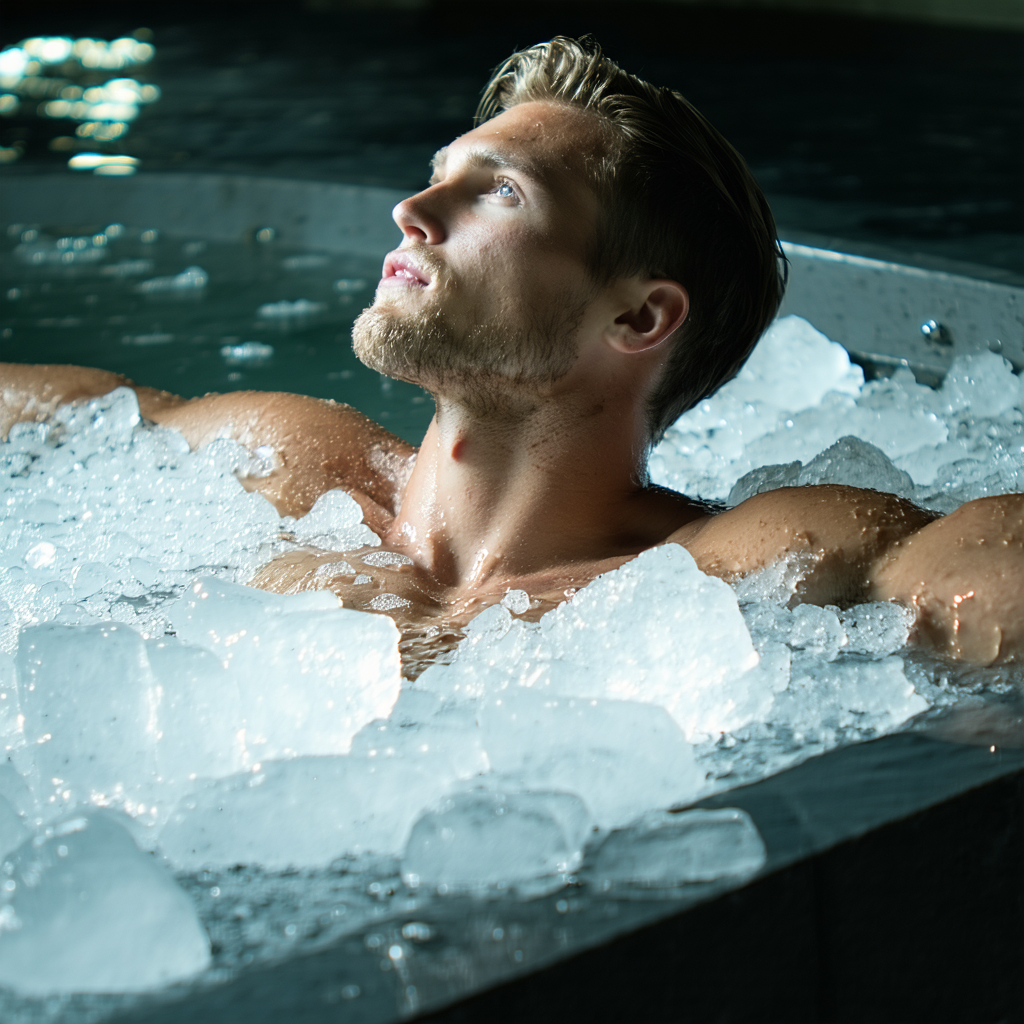
Table of contents
- What is cold water immersion
- Ice baths recovery evidence – an overview of the science
- How cold water immersion works in the body
- Benefits supported by research
- When ice baths may work against you
- Practical protocol – temperature, timing, and duration
- Who benefits most from cold water immersion
- Safety considerations
- Alternatives and comparisons
- Building a sustainable cold-water routine
- Frequently asked questions
What is cold water immersion
Cold water immersion – often called an ice bath – means submerging part or all of the body in water cooled to roughly 10-15 degrees Celsius (50-59 degrees Fahrenheit) for a set period after exercise. Athletes have used this practice for decades, and sports medicine researchers have been studying it formally since at least the early 2000s.
The term “ice bath” is slightly misleading. Most protocols do not require literal blocks of ice. A cold tap combined with a bag or two of ice is usually enough to hit the target temperature range. I keep a basic thermometer near my bathtub for exactly this reason – guessing the temperature is less reliable than it sounds.
Ice baths recovery evidence – an overview of the science
The ice baths recovery evidence base has grown considerably over the past two decades. A 2012 Cochrane systematic review – one of the most cited benchmarks in this space – analyzed 17 small trials and concluded that cold water immersion reduced muscle soreness compared with passive rest in the days following intense exercise. That finding has since been replicated and refined.
A 2016 meta-analysis published in the Journal of Physiology examined data from hundreds of participants and found that cold water immersion was more effective than passive recovery for reducing delayed onset muscle soreness (DOMS) and perceived fatigue. The effect sizes were modest but consistent across different sports and exercise types.
More recent work has complicated the picture. Researchers now distinguish between functional recovery – how quickly someone can perform again – and structural adaptation – how much the muscle actually grows and strengthens over time. The ice baths recovery evidence suggests cold immersion may accelerate the former while potentially blunting the latter.
For a reliable summary of how inflammation and tissue repair interact with temperature, the National Library of Medicine’s overview of inflammation provides useful background reading.
How cold water immersion works in the body
Vasoconstriction and the flushing effect
When you step into cold water, blood vessels near the skin surface constrict rapidly. This reduces local blood flow and slows the delivery of inflammatory mediators to stressed muscle tissue. When you exit the cold water and rewarm, blood rushes back into the area – a process sometimes called the “flushing effect” – which some researchers believe helps clear metabolic waste products.
This mechanism is plausible and supported by basic physiology. However, the magnitude of the effect in real-world conditions is still debated among exercise scientists.
Nerve conduction and pain perception
Cold temperatures slow nerve conduction velocity. This is one reason a bag of ice on a sprained ankle reduces the sensation of pain. In the context of post-exercise recovery, reduced nerve conduction may lower the perceived intensity of DOMS, which is why the ice baths recovery evidence consistently shows improvements in subjective soreness ratings even when objective markers of muscle damage are less clearly affected.
Core temperature and the autonomic nervous system
Immersion in cold water triggers a strong autonomic response – heart rate rises initially, breathing quickens, and stress hormones spike briefly. Many people who practice cold immersion regularly report that this response becomes easier to manage over time, and some researchers are investigating whether this repeated stress-adaptation has benefits for mood regulation and stress resilience beyond muscle recovery alone.
Benefits supported by research
The ice baths recovery evidence points to several areas where cold water immersion shows consistent, if sometimes modest, positive effects.
Reduced delayed onset muscle soreness
This is the most robustly supported benefit. Multiple meta-analyses confirm that athletes who use cold water immersion after intense exercise report lower soreness scores at 24, 48, and 72 hours post-exercise compared with those who rest passively. Some people find the difference meaningful enough to allow an extra training session in a weekly block.
Faster return to perceived readiness
Team sport athletes – rugby players, footballers, basketball players – have been among the most studied groups. Across these populations, the ice baths recovery evidence shows that players who use cold water immersion between matches report feeling more ready to perform again within 24-48 hours. This matters enormously in professional settings where fixture schedules are compressed.
Reduced perception of fatigue
Beyond soreness, cold immersion appears to reduce the subjective sense of heaviness and fatigue that follows hard training. This is partly a neurological effect and partly psychological. Knowing you have done something deliberate for your recovery seems to influence how recovered you feel – a placebo-adjacent effect that is not necessarily a bad thing if it helps you train consistently.
Potential mood and mental recovery benefits
Emerging research – still early, still small in scale – suggests cold water immersion may support mood by influencing norepinephrine release and potentially interacting with pathways relevant to stress. This is an area where the ice baths recovery evidence is promising but not yet definitive. I notice a reliable lift in mood and alertness after a cold immersion session, though I am careful not to overstate what that means scientifically.
When ice baths may work against you
This is where the ice baths recovery evidence becomes genuinely important to understand rather than just accept at face value.
Hypertrophy and strength adaptation
A landmark 2015 study published in the Journal of Physiology (Roberts et al.) found that cold water immersion after resistance training blunted muscle hypertrophy and strength gains over a 12-week training block compared with active recovery. The researchers measured both performance outcomes and muscle biopsies, finding that key anabolic signaling pathways – specifically mTOR and satellite cell activity – were suppressed in the cold immersion group.
This is a significant finding. If your primary goal is building muscle or increasing maximal strength, the ice baths recovery evidence suggests that regular post-lifting cold immersion may work against you. The inflammatory response that feels uncomfortable is also part of the signal that drives adaptation.
Long-term aerobic adaptation
Some researchers have raised similar concerns for endurance athletes, though the evidence here is less clear-cut. Mitochondrial adaptations – the cellular changes that make you a more efficient aerobic athlete over time – may also be partially dependent on the inflammatory signaling that cold immersion suppresses.
Timing errors
Using cold immersion immediately before a strength or power session may temporarily reduce muscle force output. This is a practical consideration that the ice baths recovery evidence supports – cold immersion is a post-exercise tool, not a pre-exercise one, with very limited exceptions.
Practical protocol – temperature, timing, and duration
Based on the available ice baths recovery evidence, here is what the research broadly supports for a practical protocol.
Temperature
Most well-designed studies use water temperatures between 10 and 15 degrees Celsius (50-59 degrees Fahrenheit). Colder is not necessarily better – water below 10 degrees Celsius increases the risk of cold shock and does not appear to produce meaningfully superior outcomes in the recovery evidence. I aim for around 12-13 degrees Celsius, which I find manageable without being dangerous.
Duration
Sessions of 10-15 minutes appear to be the sweet spot in most protocols. Some studies use as little as 5 minutes and still show benefits. Staying in longer than 20 minutes does not appear to add benefit and increases the risk of hypothermia, particularly if the water is very cold.
Timing after exercise
The ice baths recovery evidence suggests immersing within 30-60 minutes post-exercise is optimal for reducing DOMS. Waiting several hours appears to reduce the effect, though it does not eliminate it entirely.
Frequency
For most people, 2-4 sessions per week – aligned with the hardest training days – appears to be practical and sufficient. Daily cold immersion is used by some athletes but is not clearly superior for recovery outcomes and may increase the adaptation-blunting concern if done after every resistance session.
- Temperature: 10-15 degrees Celsius (50-59 degrees Fahrenheit)
- Duration: 10-15 minutes per session
- Timing: within 30-60 minutes after exercise
- Frequency: 2-4 times per week on hard training days
- Depth: waist-to-chest immersion is most common; full immersion studied less frequently
Who benefits most from cold water immersion
The ice baths recovery evidence is not equally strong for all populations and goals. Here is a practical breakdown.
Endurance athletes with high training volumes
Runners, cyclists, swimmers, and triathletes training multiple times per week may benefit the most from cold water immersion. Their primary goal is performance consistency, and the adaptation-blunting concern is less critical when the training stimulus is primarily aerobic rather than hypertrophic.
Team sport athletes with congested schedules
As mentioned above, the evidence for this group is particularly strong. When you need to perform again in 48-72 hours, reducing soreness and restoring perceived readiness matters more than optimizing long-term muscle growth.
Recreational exercisers focused on consistency
If DOMS is a barrier to staying consistent – and for many people it genuinely is – then cold water immersion may support adherence by making the days after hard sessions more manageable. In this context, some reduction in optimal adaptation may be a worthwhile trade-off for actually showing up to train.
People focused primarily on hypertrophy
This group should be cautious. If your main goal is muscle growth, the ice baths recovery evidence suggests reserving cold immersion for the rare high-soreness situation rather than using it as a routine post-lifting protocol.
Safety considerations
Cold water immersion carries real risks that deserve straightforward discussion.
Cold shock response
Sudden immersion in very cold water triggers an involuntary gasp reflex and rapid breathing. In a bathtub this is manageable, but it is a genuine drowning risk in open water. Always use cold immersion in a controlled setting where you cannot fall face-forward into the water if you lose composure.
Hypothermia
Staying in water below 15 degrees Celsius for extended periods – particularly if you are lean, small, or fatigued – can lower core body temperature to dangerous levels. Stick to the 10-15 minute window and exit if you feel uncontrolled shivering, confusion, or numbness beyond the skin surface.
Cardiovascular considerations
The autonomic response to cold immersion includes a brief spike in heart rate and blood pressure. People with known cardiac conditions, uncontrolled hypertension, or Raynaud’s phenomenon should speak with a healthcare provider before beginning a cold immersion practice. This is not a minor caveat – the cardiovascular response is significant.
Never use cold immersion alone in open water
This seems obvious but is worth stating clearly. Cold water immersion should always be done with someone nearby, particularly when you are new to the practice and unsure of your individual response.
Alternatives and comparisons
Cold water immersion is one of several post-exercise recovery strategies with a meaningful evidence base. Here is how it compares.
- Contrast water therapy (alternating hot and cold): Some evidence suggests comparable or slightly superior outcomes for DOMS versus cold alone. The ice baths recovery evidence and contrast therapy evidence are both reasonably strong for team sports contexts.
- Compression garments: Evidence supports modest reductions in DOMS and perceived fatigue. Easier to use consistently and carries essentially no safety concerns.
- Active recovery (light movement): Consistently supported by research. Gentle cycling or walking increases blood flow without the adaptation-blunting concern of cold immersion.
- Sleep: The most underrated recovery tool with the strongest overall evidence base. No protocol replaces adequate sleep.
- Massage and foam rolling: Evidence for DOMS reduction is moderate. Foam rolling in particular has a good evidence base for improving range of motion acutely.
- Whole body cryotherapy (WBC): Shorter exposure to much colder air temperatures. The ice baths recovery evidence is stronger than the WBC evidence at this point – WBC studies are fewer, smaller, and less consistent.
Building a sustainable cold-water routine
I started using cold water immersion about three years ago after a particularly brutal block of half-marathon training left me unable to walk properly on rest days. My initial attempts were chaotic – I would fill the tub with cold tap water, find it not cold enough, dump in ice, overshoot the temperature, and sit there teeth-chattering for an indeterminate amount of time. The process became much more useful once I treated it like any other training variable: measurable, consistent, and deliberate.
Here is what has worked for me and what the ice baths recovery evidence broadly supports as a starting framework.
Start with shorter, warmer sessions
If you are new to cold immersion, begin with 5 minutes at 15 degrees Celsius. This is genuinely cold enough to produce a physiological response but manageable enough to build the habit without dreading it. Reduce the temperature and extend the duration gradually over several weeks.
Be deliberate about when you use it
Align cold immersion sessions with your hardest training days – long runs, high-intensity interval sessions, or heavy lower-body lifting days if you are willing to accept the adaptation trade-off. Avoid using it routinely after every resistance session if hypertrophy is a goal.
Control the environment
Use a thermometer. Keep a timer. Have warm clothes and a hot drink ready for immediately after. The rewarming period is important – your body will shiver to generate heat, which is normal, but you want to support that process rather than stay cold and wet.
Track your subjective response
Keep a simple note of your soreness scores and perceived readiness before and after implementing cold immersion. The ice baths recovery evidence from large studies is useful context, but your individual response is what matters for your own practice. Some people are clear responders; others notice minimal difference.
Combine with other recovery practices
Cold water immersion works best as part of a broader recovery approach. Prioritizing sleep, eating enough protein, managing training load intelligently, and using active recovery on easier days will all amplify whatever benefit you get from cold immersion. No single tool does everything.
Frequently asked questions
How long should I stay in an ice bath for recovery?
Most of the ice baths recovery evidence supports sessions of 10-15 minutes at 10-15 degrees Celsius. Shorter sessions of 5-10 minutes still show benefits in some studies. Staying longer than 20 minutes does not appear to improve outcomes and increases the risk of hypothermia.
Does cold water immersion actually build muscle?
No – and it may slow muscle growth if used regularly after resistance training. The ice baths recovery evidence, particularly the 2015 Roberts et al. study, suggests that cold immersion after lifting can blunt the anabolic signaling that drives hypertrophy. If muscle building is your primary goal, use cold immersion sparingly and not immediately after strength sessions.
Is an ice bath better than a cold shower for recovery?
The ice baths recovery evidence is based almost entirely on full or partial immersion, not showers. Immersion cools the body more efficiently and more uniformly than a shower. A cold shower may still produce some benefit – particularly the autonomic and mood-related responses – but it is not equivalent to immersion for reducing DOMS based on current research.
How cold does the water actually need to be?
Studies consistently use 10-15 degrees Celsius (50-59 degrees Fahrenheit). Going colder does not appear to produce better recovery outcomes and increases risk. Going warmer – above 15 degrees Celsius – may reduce the physiological response, though some benefit may persist up to around 18 degrees Celsius.
Can I use an ice bath every day?
Daily cold immersion is practiced by some athletes, but the ice baths recovery evidence does not show it to be superior to 2-4 sessions per week. Daily use after resistance training is particularly worth reconsidering given the potential for blunting strength and hypertrophy adaptations. For endurance athletes with daily training, daily use may be more justifiable but is still not clearly necessary.
Is cold water immersion safe for everyone?
No. People with cardiovascular conditions, uncontrolled high blood pressure, Raynaud’s phenomenon, or certain other health conditions should consult a healthcare provider before starting cold immersion. The cardiovascular response to sudden cold immersion is significant and not trivial to manage for people with underlying conditions.
Does the timing of the ice bath after exercise matter?
Yes – the ice baths recovery evidence suggests immersing within 30-60 minutes post-exercise produces the strongest effect on DOMS. Waiting several hours reduces but does not eliminate the benefit. Immersing before exercise is generally not recommended as it may temporarily reduce muscle force output.
Are there mental health benefits to ice baths?
Early research suggests cold water immersion may support mood and reduce perceived stress, potentially through effects on norepinephrine and other neurochemicals. This area of the ice baths recovery evidence is promising but not yet well-established. Many regular practitioners report consistent mood benefits, and while the science is still developing, the subjective reports are widespread enough to take seriously.
For more practical wellness ideas, browse the Health Living Today guide library.