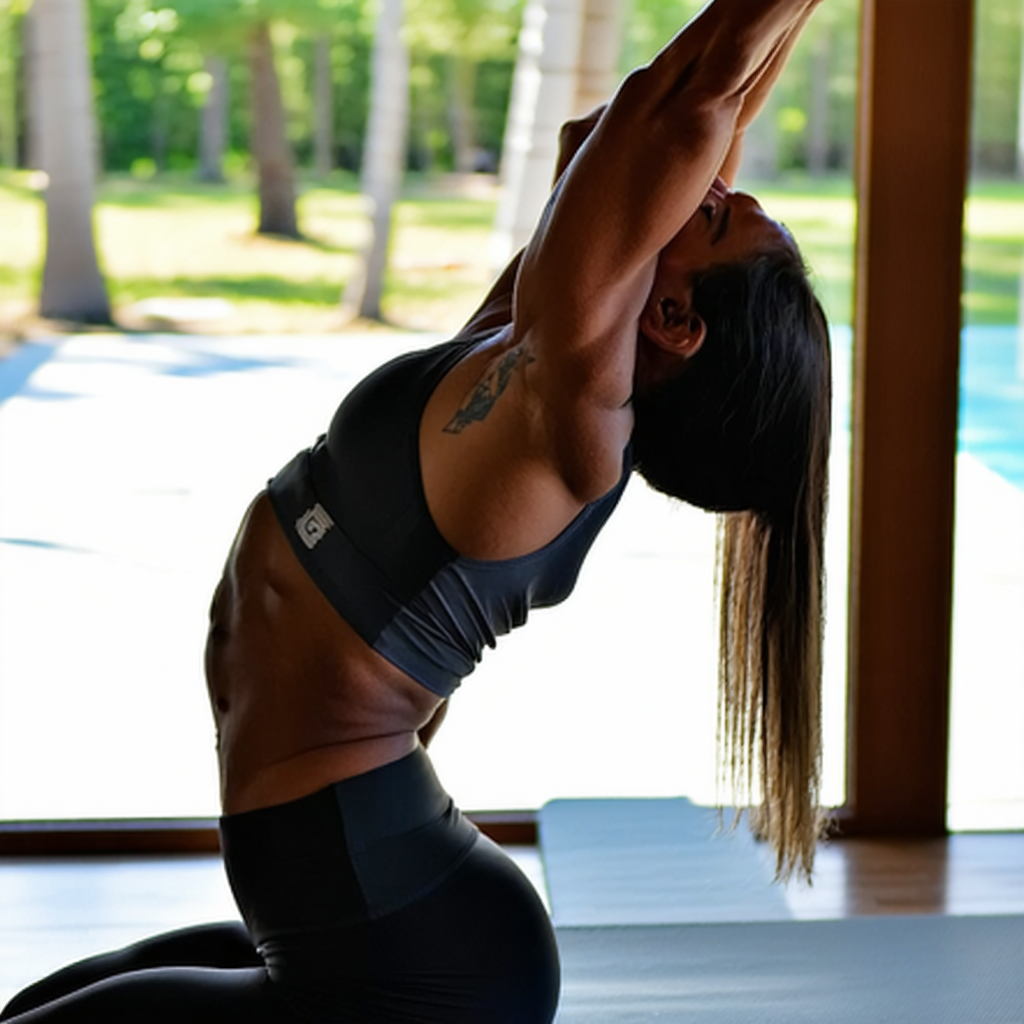
Stretching vs mobility – what is the real difference?
Stretching and mobility are related but distinct practices, and knowing the difference helps you train smarter. Stretching primarily lengthens a muscle passively, while mobility work builds active control through a full range of motion. When you understand the stretching vs mobility distinction, you can fill the actual gaps in your movement rather than just doing whatever feels familiar after a workout.
Table of contents
- Defining stretching and mobility
- Key differences between stretching vs mobility
- What stretching does for your body
- What mobility work does for your body
- Which one should you prioritize?
- How to combine stretching and mobility effectively
- Practical routines for stretching vs mobility
- Common mistakes people make
- Useful tools and props
- Frequently asked questions
Defining stretching and mobility
What is stretching?
Stretching is the deliberate lengthening of a muscle or group of muscles, usually by holding a position or moving through it repeatedly. The goal is to reduce tension and increase the muscle’s tolerance to being placed under length. There are several types, including static, dynamic, ballistic, and proprioceptive neuromuscular facilitation (PNF) stretching.
Static stretching – the kind most people picture – involves holding a position for 20 to 60 seconds. Research published by the Centers for Disease Control and Prevention and leading exercise science bodies consistently includes flexibility work as part of a balanced physical activity plan. Stretching is passive in the sense that you are not required to actively generate force to maintain the end range position.
What is mobility?
Mobility refers to your ability to move a joint actively through its available range of motion with control. It combines flexibility – the range available – with the strength and neuromuscular coordination to actually use that range. A gymnast may have extreme flexibility, but if they cannot control that range under load, their mobility at that joint is limited.
Mobility work typically involves controlled articular rotations, active stretching, joint circles, and movement flows that require your muscles to work throughout the range. The nervous system is heavily involved, which is why mobility training can feel harder than passive stretching even when the positions look similar.
Key differences between stretching vs mobility
The stretching vs mobility conversation often gets muddled because the two overlap. Here is a side-by-side look at how they differ in practice.
- Active vs passive: Stretching is mostly passive – gravity, a strap, or a partner provides the force. Mobility is active – your own muscles create and control the movement.
- Goal: Stretching targets tissue length and tension reduction. Mobility targets usable range of motion under muscular control.
- Transfer to daily life: Flexibility gained through stretching alone does not always transfer to movement. Mobility work trains the nervous system to access that range when you need it.
- Injury risk context: Passive static stretching before high-intensity activity may temporarily reduce force production. Mobility warm-ups generally prepare the body better for dynamic effort.
- Feedback loop: Mobility training gives immediate feedback – if you cannot control a position, you feel it. Passive stretching can mask weakness by allowing you to sink into a range you cannot actively use.
- Time investment: A basic mobility session can deliver meaningful results in 10 to 15 minutes. Effective static stretching often requires longer holds and multiple sets per muscle group.
Understanding these distinctions is the foundation of any honest stretching vs mobility comparison. Neither is superior in all situations – they serve different purposes and work best together.
What stretching does for your body
Reducing muscle tension and perceived tightness
One of the most immediate benefits of stretching is the reduction in perceived tightness. After a long day at a desk, I have found that even a five-minute static stretching routine for the hip flexors and chest makes the rest of the evening feel physically lighter. The mechanism is partly neural – you are increasing your nervous system’s tolerance to length – and partly mechanical, as the muscle tissue adapts over time.
Regular stretching may support better posture by reducing the chronic shortening of muscles that pull joints out of neutral alignment. Tight hip flexors, for example, can contribute to anterior pelvic tilt, which loads the lower back unevenly.
Improving flexibility over time
Consistent static stretching, performed at least four to five days per week, has been shown to produce measurable increases in range of motion over six to eight weeks. The gains come from a combination of increased muscle length, changes in connective tissue extensibility, and neural adaptation.
It is worth noting that flexibility gains from stretching alone do not automatically improve how you move. That is where the stretching vs mobility distinction becomes practically important – you may become more flexible without becoming more mobile if you never train the active control side of the equation.
Supporting recovery
Many people use stretching as a cooldown tool after training. Light static stretching after exercise may support the transition from high arousal to rest, and some people find it reduces delayed onset muscle soreness, though the evidence on the soreness side is mixed. What is clearer is that a stretching cooldown can help lower heart rate and shift the nervous system toward a parasympathetic state.
What mobility work does for your body
Building usable range of motion
Mobility work trains your body to own the range it has. When you perform a controlled articular rotation at the hip, you are not just moving the joint – you are teaching the muscles around it to generate force at the end of that range. Over time, this makes everyday movements like squatting, lunging, and rotating feel more natural and less effortful.
This is the central argument in the stretching vs mobility debate for athletes and active people: stretching may give you the range, but mobility training makes that range functional. A person who can passively touch their toes but cannot perform a controlled single-leg Romanian deadlift has flexibility without mobility.
Reducing injury risk
Joints that are well-controlled through their full range are generally more resilient than joints that are either stiff or hypermobile without control. Mobility work strengthens the supporting structures – muscles, tendons, and the neural pathways that coordinate them – which may reduce the likelihood of strain or sprain during sudden or unexpected movements.
This does not mean mobility training eliminates injury risk, but building active control around key joints like the hip, shoulder, and ankle is a sound investment for anyone who moves regularly.
Improving athletic performance
Coaches in strength, gymnastics, martial arts, and yoga increasingly use mobility work as a performance tool, not just a prehab or rehab strategy. Better hip mobility supports a deeper, more efficient squat. Better thoracic mobility allows overhead pressing without compensating at the lower back. The stretching vs mobility framework matters here because passive flexibility work alone rarely produces these performance gains.
Enhancing body awareness
Mobility training requires you to pay attention. You are moving slowly, feeling for end ranges, and noticing asymmetries. In my own routine, I started adding five minutes of hip 90-90 transitions each morning, and within two weeks I noticed a significant difference in how my left hip moved compared to my right – something I had never detected through passive stretching alone. That awareness led me to address a real imbalance I had been ignoring for years.
Which one should you prioritize?
The honest answer is that most people need both, but the starting emphasis depends on your current situation. Here is a practical framework.
Prioritize stretching if:
- You have significant muscle tightness that limits your ability to get into basic positions
- You are recovering from a period of inactivity and need to restore baseline flexibility
- You carry high levels of physical or mental tension and need a calming, accessible practice
- You are new to structured movement work and want a low-barrier entry point
Prioritize mobility if:
- You already have reasonable flexibility but feel unstable or uncoordinated at end ranges
- You are preparing for or returning to athletic training
- You have chronic joint stiffness that does not respond well to passive stretching alone
- You want to improve the quality of functional movements like squats, hinges, or overhead work
For most people
The stretching vs mobility question is not really an either-or choice. A well-designed routine includes some passive stretching for tissue that genuinely needs length, and active mobility work to build control in the ranges you are opening up. Treating them as complementary tools rather than competitors is the most practical approach.
How to combine stretching and mobility effectively
Structure your session intelligently
A common and evidence-supported approach is to use dynamic mobility work at the beginning of a session and static stretching at the end. Dynamic movement – joint circles, leg swings, hip openers – prepares the body for effort without reducing force production. Static stretching after training, when muscles are warm and the nervous system is less primed for power output, is a lower-risk time to work on length.
This structure reflects the practical reality of the stretching vs mobility relationship: they each have a time and place within a single training session, not just across different sessions.
Use PNF techniques to bridge the gap
PNF stretching – where you contract a muscle isometrically before relaxing into a deeper stretch – sits at the intersection of stretching and mobility. It requires active muscular engagement, which means it builds some of the neural control that pure passive stretching lacks. If you want a single technique that addresses both flexibility and active control, PNF is worth learning.
Apply the principle of irradiation
Bracing adjacent joints while working on a target joint can improve the quality of both stretching and mobility work. For example, squeezing your glute on the straight leg during a hip flexor stretch creates tension that allows the hip flexor to release more fully. This principle, sometimes called irradiation, is used widely in strength and mobility coaching.
Practical routines for stretching vs mobility
A 10-minute morning mobility routine
- Cat-cow: 10 slow repetitions, focusing on full spinal flexion and extension
- Hip 90-90 transitions: 5 per side, moving slowly with control
- Thoracic rotations in quadruped: 8 per side, keeping the lower back still
- Deep squat hold with active reaches: 60 seconds total, shifting weight and exploring range
- Shoulder CARs (controlled articular rotations): 5 per arm, full slow circles
This routine addresses the hips, spine, and shoulders – the three areas where most people accumulate restriction. It takes under 10 minutes and can be done before coffee.
A 10-minute evening stretching routine
- Kneeling hip flexor stretch: 60 seconds per side, held passively
- Supine figure-four (piriformis stretch): 60 seconds per side
- Doorway chest stretch: 45 seconds per side
- Seated forward fold: 90 seconds, allowing the hamstrings to relax gradually
- Supine spinal twist: 60 seconds per side
This is a calming sequence designed for end-of-day use. The positions are passive and accessible, making them easy to stick with even on tired evenings.
Common mistakes people make
Confusing flexibility with mobility
This is the most common error in the stretching vs mobility conversation. People assume that because they can sit in a deep stretch, they have good mobility. Flexibility is a component of mobility, not the whole picture. If you cannot control a range under load, you do not truly own it.
Only stretching muscles that feel tight
Perceived tightness is not always caused by a short muscle. Sometimes a muscle feels tight because it is neurologically guarded – it is working hard to protect a joint that lacks stability. Stretching that muscle repeatedly without addressing the underlying stability issue may provide temporary relief but will not resolve the pattern. Mobility work that builds control is often more effective in these cases.
Skipping warm-up before aggressive stretching
Attempting deep passive stretches on cold tissue increases the risk of strain. A brief five-minute warm-up – even a brisk walk or light joint circles – raises tissue temperature and makes connective tissue more pliable. This applies equally in the stretching vs mobility context: both practices are safer and more effective on a warm body.
Inconsistency
Both stretching and mobility require consistent practice to produce lasting change. A single 30-minute session once a week is less effective than three to five shorter sessions spread across the week. Frequency matters more than duration for building and maintaining range of motion and motor control.
Ignoring pain signals
A mild sensation of stretch is expected. Sharp, pinching, or joint pain is not. Both stretching and mobility work should be performed within a tolerable range. If a position consistently produces joint pain rather than muscle sensation, it is worth consulting a physical therapist or movement specialist before continuing.
Useful tools and props
For stretching
- Yoga strap or resistance band: Extends your reach in supine hamstring and shoulder stretches
- Foam roller: Used for myofascial release before stretching to reduce tissue density
- Yoga blocks: Support positions when flexibility is limited, allowing you to relax rather than strain
- Bolster or rolled blanket: Useful for supported passive stretches held for longer durations
For mobility
- Lacrosse ball: Targeted tissue work before joint mobility drills
- Resistance bands: Joint distractions for hips and shoulders, which can increase the available range during mobility work
- Sliders: Useful for leg and hip mobility flows that require controlled sliding movements
- A mirror or camera: Provides feedback on alignment and range during controlled articular rotations
Frequently asked questions
Is stretching the same as mobility work?
No. Stretching focuses on lengthening muscles passively, while mobility work builds active control through a joint’s range of motion. They overlap and complement each other, but they are not interchangeable. The stretching vs mobility distinction matters because you can become more flexible through stretching without improving your functional movement quality.
Can I do stretching and mobility work every day?
Yes, for most people daily practice is safe and beneficial. Light mobility work and gentle stretching are low-intensity activities that do not require the same recovery time as strength training. Daily short sessions – even 10 minutes – tend to produce better results than infrequent longer sessions.
Which is better for lower back pain?
Both may support relief, but mobility work that builds hip and core control is often more effective for persistent lower back issues than passive stretching alone. Tight hip flexors and limited thoracic rotation frequently contribute to lower back load, and addressing these with active mobility work may produce more lasting improvement. Always consult a healthcare professional for persistent or severe back pain.
Should I stretch before or after exercise?
Dynamic mobility work is generally better suited to before exercise, as it prepares the joints and muscles without temporarily reducing force production. Static stretching is better placed after exercise, when the body is warm and you are not about to ask muscles to generate maximal force. This is a practical application of the stretching vs mobility framework in a training context.
How long does it take to see results from mobility training?
Many people notice improved ease of movement within two to four weeks of consistent daily practice. Measurable increases in range of motion and motor control typically develop over six to twelve weeks. Consistency and frequency matter more than session length – short daily practice outperforms sporadic long sessions.
Do I need equipment to start a mobility routine?
No equipment is required to begin. Controlled articular rotations, 90-90 hip transitions, thoracic rotations, and deep squat work can all be done on a mat or carpeted floor. Props like resistance bands and foam rollers can enhance the practice, but they are additions rather than requirements.
Is yoga stretching or mobility work?
Yoga includes elements of both. Yin yoga and restorative yoga emphasize passive stretching. Vinyasa, ashtanga, and power yoga incorporate active movement through range, which overlaps significantly with mobility training. Whether a yoga practice leans more toward stretching vs mobility depends on the style and how the teacher cues engagement versus release in each position.
Can stretching help with stress?
Many people find that gentle stretching supports stress reduction by activating the parasympathetic nervous system – the rest-and-digest state. Slow, deliberate breathing combined with passive stretching may support a calmer mental state. While this is not a substitute for addressing stress at its source, it is a practical and accessible tool that some people find genuinely helpful as part of a broader wellness routine.
For more practical wellness ideas, browse the Health Living Today guide library.