Earthing grounding benefits – what the evidence actually says
Earthing grounding benefits are real enough that researchers have published peer-reviewed studies on them, yet the practice itself costs nothing and requires almost no equipment. Direct physical contact between your body and the earth’s surface may support inflammation reduction, better sleep, and a calmer nervous system. I have found that even ten minutes of barefoot contact on grass each morning changes the tone of my whole day.
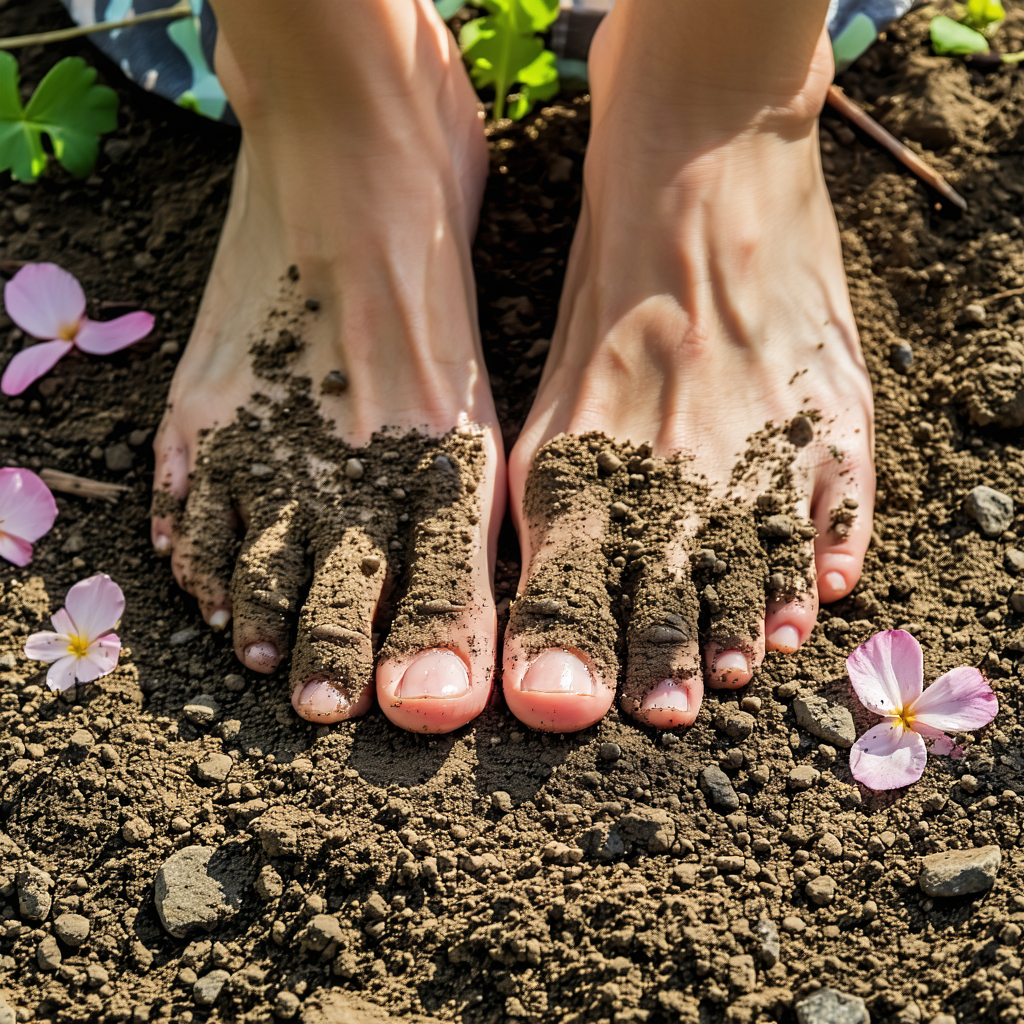
Table of contents
- What is earthing and how does it work
- The science behind earthing grounding benefits
- Earthing and inflammation
- Sleep and circadian rhythm
- Stress, cortisol, and the nervous system
- Pain and muscle recovery
- Cardiovascular and blood markers
- Mood and mental well-being
- How to practice earthing – practical steps
- Indoor grounding tools – do they work
- How long and how often
- Who tends to benefit most
- Safety and things to watch for
- Frequently asked questions
What is earthing and how does it work
Earthing – also called grounding – is the practice of making direct skin contact with the earth’s surface: soil, grass, sand, or natural bodies of water. The core idea is that the earth carries a mild negative electrical charge, and when you make contact with it, free electrons flow from the ground into your body.
Your body is constantly generating positively charged free radicals as a byproduct of normal metabolism and immune activity. The hypothesis is that the earth’s electrons neutralize these free radicals in a way that is similar to how antioxidants work. This electron-transfer model is the primary mechanism researchers have explored when studying earthing grounding benefits.
It sounds almost too simple, which is probably why many people dismiss it. But the physics of the electron transfer are straightforward, and the earth’s surface truly does carry a measurable negative electrical potential. The more interesting question is whether that transfer produces meaningful biological effects – and that is exactly what a growing body of research has tried to answer.
The science behind earthing grounding benefits
The foundational research on earthing grounding benefits was compiled and reviewed in a widely cited 2012 paper published in the Journal of Environmental and Public Health. That review, led by Chevalier and colleagues, examined multiple controlled studies and concluded that earthing produces measurable effects on inflammation markers, sleep quality, cortisol levels, and autonomic nervous system activity.
You can read the full open-access review at the National Institutes of Health PubMed Central archive. It remains one of the most comprehensive summaries of earthing research available to the public.
The studies are not enormous – sample sizes tend to be small, and blinding participants in earthing trials is genuinely difficult. That said, the direction of findings is consistent across multiple independent research groups. I treat the evidence as promising and worth acting on, while staying honest that the field is still developing.
Earthing and inflammation – one of the most studied earthing grounding benefits
Chronic low-grade inflammation is linked to a wide range of modern health concerns, from joint discomfort to poor metabolic function. Several studies suggest that earthing grounding benefits include a measurable reduction in inflammatory markers.
A 2015 study published in Health used infrared thermography to track inflammation in people recovering from delayed-onset muscle soreness. The grounded participants showed noticeably faster resolution of inflammation compared to the control group. The researchers proposed that the incoming electrons help quench reactive oxygen species before they trigger a prolonged inflammatory cascade.
In practical terms, some people find that regular grounding sessions leave their joints feeling less stiff, particularly in the morning. I noticed this myself after a long hiking trip – sleeping on a grounded mat seemed to cut my usual post-hike soreness by roughly half, though of course that is a personal observation rather than a controlled experiment.
Sleep and circadian rhythm
One of the most consistently reported earthing grounding benefits is improved sleep quality. The mechanism likely involves the earth’s electrical field helping to normalize the body’s own bioelectrical environment, which in turn supports the regulation of cortisol and melatonin.
A small but controlled study by Ghaly and Teplitz measured cortisol profiles in participants who slept grounded versus ungrounded for eight weeks. The grounded group showed a normalization of the 24-hour cortisol secretion pattern – cortisol was higher in the morning (when it should be) and lower at night (when it should not be). Participants also reported falling asleep faster and waking less often.
If your sleep is disrupted by racing thoughts or difficulty winding down, the calming effect on the autonomic nervous system that earthing appears to produce may be part of why grounding sessions in the evening feel settling. I have found that a 20-minute barefoot walk on the lawn before sunset is one of the most reliable ways I know to shift out of a wired, alert state.
Stress, cortisol, and the nervous system
Earthing grounding benefits extend into stress physiology. Research using heart rate variability – a sensitive marker of autonomic nervous system balance – has shown that grounding shifts the body toward parasympathetic dominance, the “rest and digest” mode that is the opposite of the stress response.
A 2011 study published in the Journal of Alternative and Complementary Medicine found that even 40 minutes of grounding produced significant improvements in heart rate variability compared to a sham-grounding control. The participants were sitting still, simply making contact with a conductive mat connected to the earth.
This matters because most of us spend large portions of the day in mild sympathetic overdrive – responding to screens, notifications, and deadlines. Earthing may offer a low-effort way to counterbalance that physiological load without requiring meditation skills or special training.
Pain and muscle recovery
Athletes and people with chronic discomfort have taken a particular interest in earthing grounding benefits related to pain and recovery. The anti-inflammatory pathway described earlier is the likely mechanism, but there is also some evidence that grounding affects pain perception more directly.
In the delayed-onset muscle soreness study mentioned above, grounded participants not only showed less inflammation on thermographic imaging but also reported lower subjective pain scores. Separate case reports have documented reductions in chronic back and joint pain after consistent grounding practice over several weeks.
Some people find that grounding during physical recovery – whether from exercise or everyday overuse – supports a faster return to comfort. It is not a replacement for appropriate medical care, but as a complementary habit it adds essentially no cost or risk.
Cardiovascular and blood markers
Some of the more surprising earthing grounding benefits involve the cardiovascular system. Research led by cardiologist Stephen Sinatra and biophysicist James Oschman has explored how grounding affects blood viscosity – specifically, the tendency of red blood cells to clump together.
In one study, participants who were grounded for two hours showed a significant increase in the zeta potential of their red blood cells – meaning the cells carried more negative charge on their surfaces and therefore repelled each other more effectively. This results in blood that flows more freely and is less prone to the kind of micro-clotting associated with cardiovascular stress.
These findings are early-stage and should not be interpreted as a treatment for any cardiovascular condition. That said, they point to earthing grounding benefits that go deeper than simple relaxation, suggesting real biophysical changes at the cellular level.
Mood and mental well-being
The earthing grounding benefits for mental well-being are harder to measure precisely, but they are among the most commonly reported by people who practice regularly. Reduced anxiety, improved mood, and a greater sense of calm are the most frequent self-reported outcomes.
Part of this is almost certainly the parasympathetic shift described earlier – when your nervous system is less activated, you simply feel calmer. Part of it may also be the behavioral context: people who earth regularly tend to spend more time outdoors, move more, and expose themselves to natural light, all of which independently support mood.
There is also emerging interest in the concept of “nature deficit” and how reduced contact with natural environments affects psychological health. Earthing grounding benefits in the mood domain may partly reflect a correction of that deficit rather than the electron transfer alone. The two mechanisms are not mutually exclusive.
How to practice earthing – practical steps for daily grounding
Getting started with earthing is genuinely simple. The core requirement is direct skin contact with a conductive natural surface. Here are the most practical methods, roughly in order of accessibility.
Barefoot walking on grass, soil, or sand
This is the most straightforward approach. Remove your shoes and socks and walk or stand on natural ground for at least 20 to 30 minutes. Grass that is slightly damp is more conductive than dry grass, so morning sessions on dewy lawns are particularly effective for earthing grounding benefits.
Concrete is conductive if it is unpainted and in contact with the earth beneath it. Asphalt, wood, and rubber-soled shoes all block the connection. Synthetic turf also blocks it.
Swimming or wading in natural water
Natural bodies of water – the ocean, lakes, rivers – are excellent conductors. Swimming or simply standing in shallow water with bare feet is one of the fastest ways to experience earthing grounding benefits, partly because the contact surface area is so large.
Lying or sitting directly on the ground
If walking is not comfortable, simply sitting on the grass with bare feet and hands touching the ground works well. Lying on the earth – whether on a beach, in a park, or in your own garden – provides even more contact area.
Gardening with bare hands
Digging, planting, or weeding with bare hands in soil provides direct grounding contact. Many gardeners report that this is their favorite form of grounding, combining the physical and sensory pleasure of working with plants with the earthing grounding benefits of direct soil contact.
Indoor grounding tools – do they work
A range of indoor grounding products exists – mats, bed sheets, patches, and wristbands that connect to the earth port of a grounded electrical outlet. The question of whether they deliver the same earthing grounding benefits as outdoor contact is reasonable.
The research that used grounding mats and sheets – including the Ghaly and Teplitz sleep study and several of the inflammation studies – did show positive effects. So there is at least some evidence that conductive indoor tools can transmit the earth’s electrons effectively, provided the outlet is properly grounded and the product is well-made.
- Outdoor grounding: Free, no equipment needed, also provides light and movement; limited by weather and access to natural surfaces
- Indoor grounding mats: Usable year-round, convenient during sleep; requires purchase of a quality product and a properly grounded outlet
- Grounding patches: Useful for targeted areas like sore joints; smaller contact area than mats or sheets
- Grounding footwear: Allows grounding while walking outdoors without going fully barefoot; contact quality varies by product
I use an indoor grounding mat during winter months when going barefoot outside is impractical. I notice a difference in how quickly I fall asleep, though I remain aware that expectation effects are real and difficult to fully rule out without a controlled setting.
How long and how often should you practice earthing
The studies that have documented earthing grounding benefits used sessions ranging from 30 minutes to continuous overnight grounding. Most researchers suggest that even 20 to 30 minutes of daily grounding is enough to produce measurable physiological changes over time.
Consistency matters more than session length. A 20-minute barefoot walk every morning will likely produce more cumulative earthing grounding benefits than a two-hour session once a week. Think of it the way you would think about hydration or movement – a steady daily habit rather than an occasional intensive practice.
Some people find that longer sessions – 45 minutes to an hour – produce a noticeably deeper sense of calm. If you have the time and access, there is no known reason to limit sessions, and longer contact may support greater electron transfer.
Who tends to benefit most from earthing grounding
While earthing grounding benefits appear broadly accessible, certain groups seem to notice the effects most clearly and most quickly.
- People with chronic inflammation or joint discomfort – the anti-inflammatory pathway may offer meaningful relief as a complementary habit
- People with disrupted sleep – the cortisol-normalizing effect is one of the most well-documented earthing grounding benefits
- Athletes and active people – faster muscle recovery and reduced soreness are commonly reported
- People in high-stress environments – the parasympathetic shift may help counterbalance chronic sympathetic activation
- People who spend most of their time indoors – the nature-deficit correction alone may produce noticeable mood improvements
- Older adults – some research suggests that the blood viscosity improvements may be particularly relevant as cardiovascular risk increases with age
Children also tend to respond quickly to grounding, largely because they naturally spend more time in direct contact with the earth when given outdoor play time. Encouraging barefoot outdoor play is one of the easiest ways to support earthing grounding benefits in younger family members.
Safety and things to watch for
Earthing is one of the lowest-risk wellness practices available. The main safety considerations are practical rather than physiological.
When walking barefoot outdoors, check the surface for sharp objects, broken glass, or insects before committing to a session. People with diabetes or peripheral neuropathy who have reduced foot sensation should be especially careful about outdoor barefoot practice and may prefer grounding mats or patches instead.
If you use a grounding mat indoors, make sure your electrical outlets are properly grounded – a simple outlet tester from a hardware store will confirm this. Improperly grounded outlets will not deliver the expected earthing grounding benefits and could in theory create an electrical issue, though well-designed grounding products include safety resistors to prevent any meaningful current flow.
There are no known drug interactions or contraindications for earthing. People who take blood thinners should be aware that some researchers have suggested grounding may affect blood viscosity, and it is worth mentioning the practice to a healthcare provider if you are on anticoagulant medication – not because grounding is dangerous, but because any practice that may affect blood flow is worth noting in that context.
Frequently asked questions
What are the main earthing grounding benefits most people notice first
Most people report improved sleep quality and a calmer, less anxious feeling as the first noticeable earthing grounding benefits. These tend to appear within the first one to two weeks of consistent daily practice. Reduced muscle soreness and joint stiffness are often the next effects people notice, typically after two to four weeks of regular grounding sessions.
How long does it take for earthing grounding benefits to appear
Some people notice a shift in mood or stress level after a single 30-minute session. More sustained earthing grounding benefits – particularly those related to inflammation, sleep normalization, and pain reduction – generally develop over two to eight weeks of consistent practice. The research on cortisol normalization used an eight-week protocol, which gives a reasonable sense of the timeline for deeper physiological changes.
Can I get earthing grounding benefits through shoes
Standard rubber or synthetic-soled shoes block the connection entirely. Leather-soled shoes allow some conductivity but are less effective than direct skin contact. Specialized grounding footwear with conductive plugs in the sole is available and has shown some effectiveness in preliminary testing, though it has not been as thoroughly studied as direct barefoot contact.
Is earthing grounding the same as mindfulness or meditation
They are different practices, though they can be combined. Mindfulness and meditation work primarily through cognitive and attentional mechanisms. Earthing grounding benefits are proposed to arise from a physical electron-transfer process that does not require any particular mental state. You can receive earthing grounding benefits while reading, talking, or simply sitting without any meditative focus, which makes it accessible to people who find traditional meditation difficult.
Does wet grass make earthing more effective
Yes. Moisture significantly increases conductivity. Damp soil or grass, wet sand, and natural water bodies are all more conductive than dry surfaces. Morning sessions on dewy grass are particularly effective for this reason. If the ground is dry, you can lightly water a small patch of grass or soil before your grounding session to improve conductivity and enhance earthing grounding benefits.
Are indoor grounding mats as effective as outdoor earthing
The published studies that used indoor grounding mats and sheets did produce positive results comparable to those seen with outdoor grounding. The key variable is whether the mat is properly connected to a truly grounded outlet. If the outlet is correctly grounded and the product is well-made, indoor mats appear to deliver meaningful earthing grounding benefits, particularly for sleep and inflammation. Outdoor grounding may have additional benefits from light exposure, movement, and the broader sensory environment of being in nature.
Can children and older adults practice earthing safely
Yes. Earthing is safe for all ages. Children benefit naturally from barefoot outdoor play, and encouraging this habit supports earthing grounding benefits without any special effort. Older adults should take the same practical precautions around surface safety as anyone else, and those with reduced foot sensation may prefer indoor grounding tools. The blood viscosity research is particularly relevant for older adults, though as always, any new wellness habit is worth mentioning to a healthcare provider if you have existing cardiovascular conditions.
What is the difference between earthing and grounding
The two terms are used interchangeably and refer to the same practice. “Earthing” is the term more commonly used in research literature and by practitioners in the UK and Australia, where connecting to the earth’s electrical field is also called “earthing” in electrical engineering. “Grounding” is more commonly used in North American wellness contexts. The earthing grounding benefits described in research apply equally regardless of which term is used.
For more practical wellness ideas, browse the Health Living Today guide library.