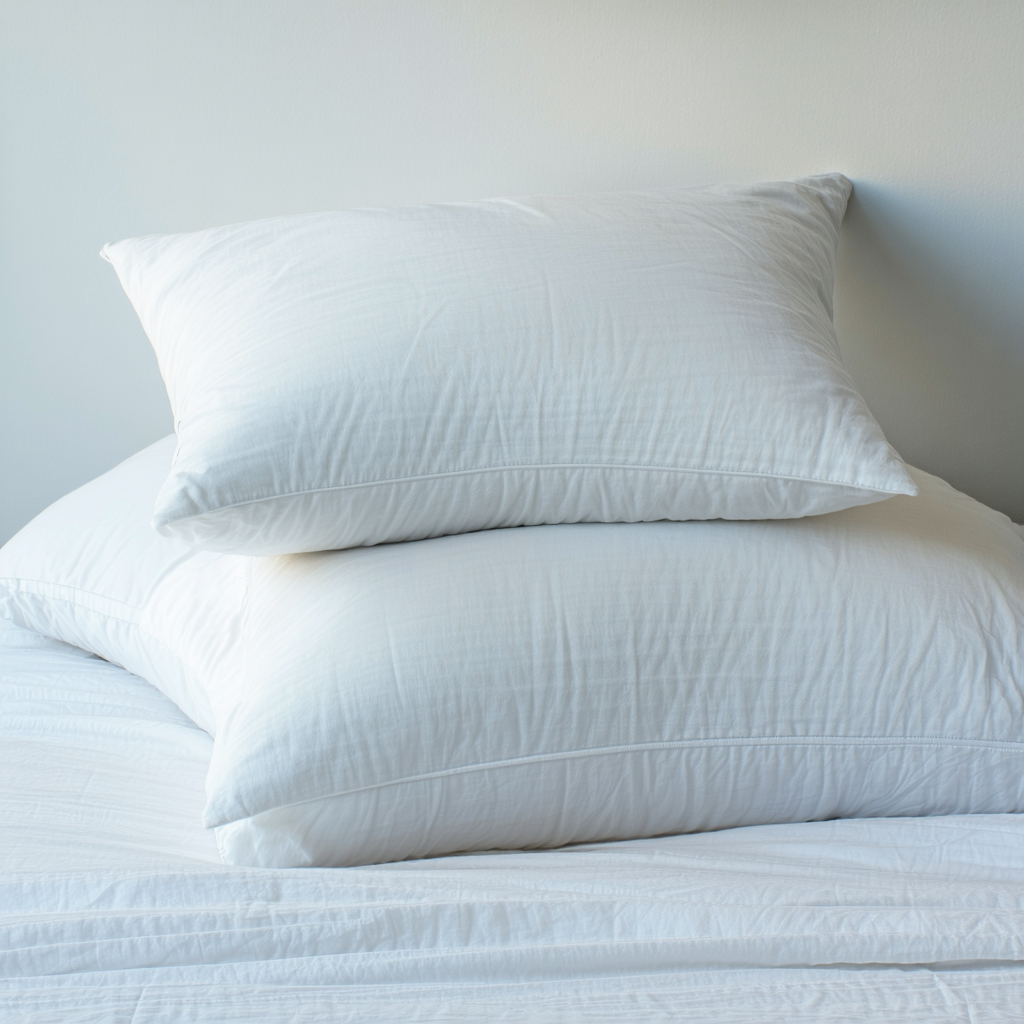
Best Pillows For Side Sleepers
The best pillows for side sleepers are those that keep your head, neck, and spine in a neutral, straight line while you sleep – typically a medium-firm to firm pillow with enough loft to fill the gap between your ear and the mattress. Most side sleepers do best with a pillow that is 4 to 6 inches tall, depending on shoulder width. Choosing the right fill material and firmness level can meaningfully reduce morning neck stiffness and improve overall sleep quality.
Table of contents
- Why pillow choice matters for side sleepers
- What to look for in the best pillows for side sleepers
- Fill types compared – memory foam, latex, down, and more
- Loft and firmness explained
- How shoulder width affects your choice
- The case for a pillow between the knees
- My top picks for the best pillows for side sleepers
- How to test whether a pillow is working for you
- When to replace your pillow
- Frequently asked questions
Why Pillow Choice Matters For Side Sleepers
Side sleeping is the most common sleep position – research compiled by the Sleep Foundation suggests roughly 60 percent of adults favor their side. That is good news for airway openness and may support reduced snoring, but it puts unique mechanical demands on your pillow.
When you lie on your side, your shoulder bears weight and pushes your torso upward, creating a gap between the mattress and your head. A pillow that is too thin lets your head drop, straining the muscles on the upper side of your neck. A pillow that is too thick pushes your head upward and strains the muscles on the lower side. Either situation can lead to stiffness, headaches, or disrupted sleep.
I learned this the hard way after spending about three months on a flat, worn-out pillow. I woke up every morning rotating my neck just to get it moving again. Switching to a properly lofted, medium-firm pillow was one of the simplest changes I have made with the biggest immediate payoff.
What To Look For In The Best Pillows For Side Sleepers
Finding the best pillows for side sleepers comes down to a handful of measurable features. Here is a quick comparison of the most important factors before we go deeper into each one.
- Loft (height): 4 to 6 inches is the general sweet spot for most side sleepers
- Firmness: medium-firm to firm supports the neck without collapsing under head weight
- Fill material: affects feel, temperature regulation, and how well the pillow holds its shape
- Adjustability: some pillows let you add or remove fill, which is useful if you are between sizes
- Pressure relief: the pillow should cushion the ear and temple without creating hot spots
- Durability: a quality pillow should maintain its loft for at least 18 to 24 months
- Washability: machine-washable options are more hygienic and practical for long-term use
When I evaluate the best pillows for side sleepers, I always start with loft and firmness before looking at brand or price. An expensive pillow with the wrong loft is still the wrong pillow.
Fill Types Compared – Memory Foam, Latex, Down, And More
The fill material is one of the biggest differentiators among pillows for side sleepers. Each material has a distinct feel, support profile, and set of trade-offs.
Memory Foam
Memory foam is one of the most popular fills for the best pillows for side sleepers because it conforms closely to the shape of your head and neck. It offers consistent support throughout the night and does not shift around the way loose fills can.
The main drawback is heat retention. Traditional memory foam traps warmth, which can be uncomfortable for hot sleepers. Gel-infused or open-cell memory foam versions run cooler and are worth the modest price premium if you tend to overheat.
Shredded memory foam is a variation that gives you the conforming feel of foam with more breathability and adjustability. Many side sleepers find shredded foam pillows easier to shape around the neck and shoulder.
Latex
Latex – both natural and synthetic – offers a responsive, bouncy feel that is different from the slow sink of memory foam. It springs back quickly when you move, which some side sleepers prefer because it does not feel like it is “swallowing” the head.
Natural latex is also naturally resistant to dust mites and mold, making it a good option for people with allergies. It tends to be heavier than foam and more expensive, but it is also among the most durable fill options available.
In my own experience, latex pillows run slightly firmer than their stated firmness, so if you are between medium and firm, I would suggest starting with medium when ordering latex.
Down And Down Alternative
Traditional down pillows are soft and luxurious but generally too low in loft and firmness for most side sleepers. They compress under head weight and rarely maintain the neutral spinal alignment that side sleeping requires.
Down alternative fills – typically polyester clusters – mimic the softness of down at a lower price point and without animal products, but they share the same collapsing problem. Some manufacturers address this by using a firmer, denser cluster that holds its shape better.
If you love the feel of down, look for a “firm” or “extra firm” down pillow with a higher fill power rating – at least 600 – which indicates better loft retention. Even so, most side sleepers will need to fluff these pillows frequently.
Buckwheat
Buckwheat pillows are filled with the hulls of buckwheat seeds. They are firm, moldable, and do not trap heat because air circulates freely between the hulls. Many side sleepers find them excellent for neck support because you can shape the pillow precisely and it holds that shape all night.
The trade-offs are weight and noise. Buckwheat pillows are heavy and make a rustling sound when you move. They are also not machine washable in the traditional sense – you empty the hulls, wash the cover, and refill.
Hybrid And Specialty Fills
Some of the best pillows for side sleepers use layered or hybrid constructions – for example, a solid foam core surrounded by a layer of shredded foam or down alternative. These designs aim to combine the support of foam with the softness of a traditional pillow.
Water-filled pillows are another specialty option. You adjust the firmness by adding or removing water. They are heavy but offer precise customization, which some side sleepers with chronic neck issues find valuable.
Loft And Firmness Explained
Loft refers to the height of the pillow when it is lying flat and uncompressed. For side sleepers, loft is arguably the single most important specification to get right.
A general guideline used by many sleep specialists is to match pillow loft to the distance between the side of your head and the outer edge of your shoulder. For most adults, this is somewhere between 4 and 6 inches. People with broader shoulders typically need more loft; those with narrower shoulders or smaller frames may do better with less.
Firmness determines how much the pillow compresses under the weight of your head – typically 10 to 12 pounds for an adult. A pillow that is too soft will compress down to almost nothing. A pillow that is too firm will not contour at all and may create pressure points at the ear and temple.
Medium-firm is the most commonly recommended firmness for the best pillows for side sleepers, because it provides enough resistance to support the neck while still allowing some contouring around the head.
How Shoulder Width Affects Your Choice
Shoulder width is an underappreciated variable when choosing among the best pillows for side sleepers. Broader shoulders create a larger gap between the mattress and your head, requiring a higher-loft pillow to bridge that distance.
A practical way to estimate your ideal loft at home – lie on your side on your usual mattress and have someone look at your spine from the foot of the bed. Your head should be level with your spine, not tipped upward or downward. Stack folded towels under your current pillow until you find the right height, then measure that stack. That measurement is your target loft.
Mattress firmness also plays a role here. A soft mattress will absorb some of your shoulder, reducing the gap and meaning you may need slightly less pillow loft than you would on a firm mattress.
The Case For A Pillow Between The Knees
The best pillows for side sleepers are not just about the head. Many physical therapists recommend placing a pillow between the knees when sleeping on your side to keep the hips and pelvis aligned.
When you sleep on your side without knee support, the top leg tends to fall forward and downward, rotating the pelvis and adding stress to the lower back. A firm, relatively thin pillow or a dedicated knee pillow placed between the knees can counteract this rotation.
Some people find that a body pillow – a long pillow you can hug and tuck between the knees simultaneously – addresses both the arm and leg alignment issues at once. This is particularly useful during pregnancy, which is one reason body pillows are commonly recommended for pregnant sleepers who are encouraged to sleep on their left side.
In my own routine, I use a small, firm foam wedge between my knees and have noticed a reduction in the lower back tension I used to feel in the morning. It is a simple addition that does not require a new head pillow.
My Top Picks For The Best Pillows For Side Sleepers
Below are categories of pillows I think represent the best pillows for side sleepers across different needs and budgets. I have not included specific brand names as the market changes frequently, but these categories will help you evaluate any pillow you are considering.
Best Overall – Adjustable Shredded Memory Foam
An adjustable shredded memory foam pillow is the most versatile choice for the widest range of side sleepers. You can remove fill to dial in the exact loft you need, and the shredded construction offers better airflow than a solid foam block.
Look for a pillow in this category that uses CertiPUR-US certified foam and has a machine-washable cover. The ability to customize loft makes these among the best pillows for side sleepers who are not yet sure of their ideal height.
Best For Hot Sleepers – Ventilated Latex
A ventilated or perforated latex pillow sleeps cooler than memory foam while still providing the firm, consistent support that side sleeping demands. Natural latex is the premium option; synthetic latex performs similarly at a lower price.
These pillows tend to be heavier, so factor that in if you move around a lot at night and like to reposition your pillow frequently.
Best Budget Option – Firm Polyester Cluster
A high-density, firm polyester cluster pillow is the most accessible entry point for side sleepers on a budget. Look for one labeled “firm” or “extra firm” and check that the loft is at least 4.5 inches when uncompressed.
The trade-off is longevity – polyester fills compress faster than foam or latex and may need replacing within 12 to 18 months. Buying two at once and rotating them can extend their useful life.
Best For Neck Pain – Contoured Memory Foam
A contoured or cervical memory foam pillow has a lower center section and raised edges designed specifically to cradle the neck while supporting the head. Some people with chronic neck tension find these among the best pillows for side sleepers because the shape does a lot of the alignment work for you.
The adjustment period for contoured pillows can be a week or two, as the shape feels unusual at first. Give it at least 7 to 10 nights before deciding whether it is working for you.
Best Eco-Friendly Option – Natural Latex Or Buckwheat
If sustainability matters to you, natural latex certified by the Global Organic Latex Standard (GOLS) or a buckwheat pillow with an organic cotton cover are both solid choices. Both materials are durable, naturally resistant to allergens, and produced without synthetic chemicals.
How To Test Whether A Pillow Is Working For You
Choosing among the best pillows for side sleepers is only half the process. Knowing whether a pillow is actually working for you is the other half.
Give any new pillow at least 7 nights before making a judgment. Your body needs time to adjust, and the first night or two on a new pillow often feels unfamiliar regardless of how well-suited it is.
After the adjustment period, ask yourself these questions each morning:
- Do I wake up with neck stiffness or pain? If yes, the loft may be off – too high or too low.
- Do I wake up with shoulder pain or numbness? This may indicate the pillow is too firm and creating pressure at the shoulder joint.
- Do I wake up with upper back tension? The pillow may be too low, causing the head to drop and the upper back to compensate.
- Am I waking up on my back or stomach? This may suggest the pillow is uncomfortable enough that you are unconsciously changing position.
- Do I feel rested? This is the simplest and most important question.
If you are answering yes to the first four questions after two weeks, it is worth trying a different loft or firmness rather than pushing through.
When To Replace Your Pillow
Even the best pillows for side sleepers have a finite lifespan. Using a pillow past its useful life is one of the most common reasons people wake up with neck or shoulder discomfort despite thinking they have a good pillow.
General replacement guidelines by fill type:
- Memory foam (solid): every 2 to 3 years
- Memory foam (shredded): every 18 to 24 months
- Latex: every 3 to 4 years
- Down or down alternative: every 12 to 18 months
- Buckwheat: every 3 years (hulls can be refreshed or replaced)
- Polyester cluster: every 12 to 18 months
A simple test – fold your pillow in half and release it. If it does not spring back to its original shape within a few seconds, it has lost its structural integrity and is no longer providing adequate support.
Also consider hygiene. Pillows accumulate dust mites, skin cells, and moisture over time. Using a quality pillow protector and washing it regularly extends pillow life and keeps your sleep environment cleaner.
Frequently Asked Questions
What is the best pillow height for side sleepers?
Most side sleepers do best with a pillow between 4 and 6 inches tall. The ideal height depends on your shoulder width and mattress firmness – broader shoulders and firmer mattresses generally call for more loft. A practical way to find your number is to measure the distance between the side of your head and the outer edge of your shoulder while sitting upright.
Is memory foam or latex better for side sleepers?
Both can work well. Memory foam conforms more closely to the shape of your head and neck, which some side sleepers find more comfortable. Latex is more responsive and bouncy, sleeps cooler, and tends to last longer. Hot sleepers often prefer latex; those who want a more cradling feel may prefer memory foam.
Can a pillow that is too high cause neck pain?
Yes. A pillow that is too high pushes the head upward, creating lateral flexion in the neck toward the opposite shoulder. Over time this strains the muscles and joints on the lower side of the neck and may contribute to stiffness, headaches, or radiating discomfort into the shoulder. Getting loft right is as important as getting firmness right.
Should side sleepers use a firm or soft pillow?
Side sleepers generally do better with a medium-firm to firm pillow. A soft pillow compresses too much under the weight of the head, effectively reducing loft and allowing the neck to drop out of neutral alignment. Medium-firm provides enough resistance to maintain support throughout the night without creating uncomfortable pressure points.
Do side sleepers need a special pillow for their knees?
Not necessarily a special pillow, but some form of knee support is beneficial for most side sleepers. Placing a firm pillow between the knees helps keep the hips and pelvis aligned, which may reduce lower back tension. A dedicated knee pillow, a small firm cushion, or even a rolled-up blanket can all serve this purpose effectively.
How often should side sleepers replace their pillow?
It depends on the fill material. Memory foam pillows typically last 2 to 3 years, latex up to 4 years, and down or polyester alternatives around 12 to 18 months. A simple fold test – fold the pillow in half and see if it springs back – can tell you whether your current pillow still has structural life left in it.
Are cooling pillows worth it for side sleepers?
For side sleepers who run warm or live in warmer climates, a cooling pillow can make a meaningful difference in sleep comfort. Options include gel-infused memory foam, ventilated latex, and covers made from materials like Tencel or copper-infused fabric. The cooling effect is real but varies by product – gel infusions tend to help most in the first few hours of the night before equalizing with body temperature.
Can the best pillows for side sleepers help with snoring?
Pillow choice alone is unlikely to eliminate snoring, but proper head and neck positioning may support a more open airway. Some side sleepers find that a firmer, correctly lofted pillow keeps the chin from dropping toward the chest, which can partially obstruct the airway. If snoring is a significant concern, it is worth discussing with a healthcare provider, as it may be related to sleep apnea or other conditions.
For more practical wellness ideas, browse the Health Living Today guide library.