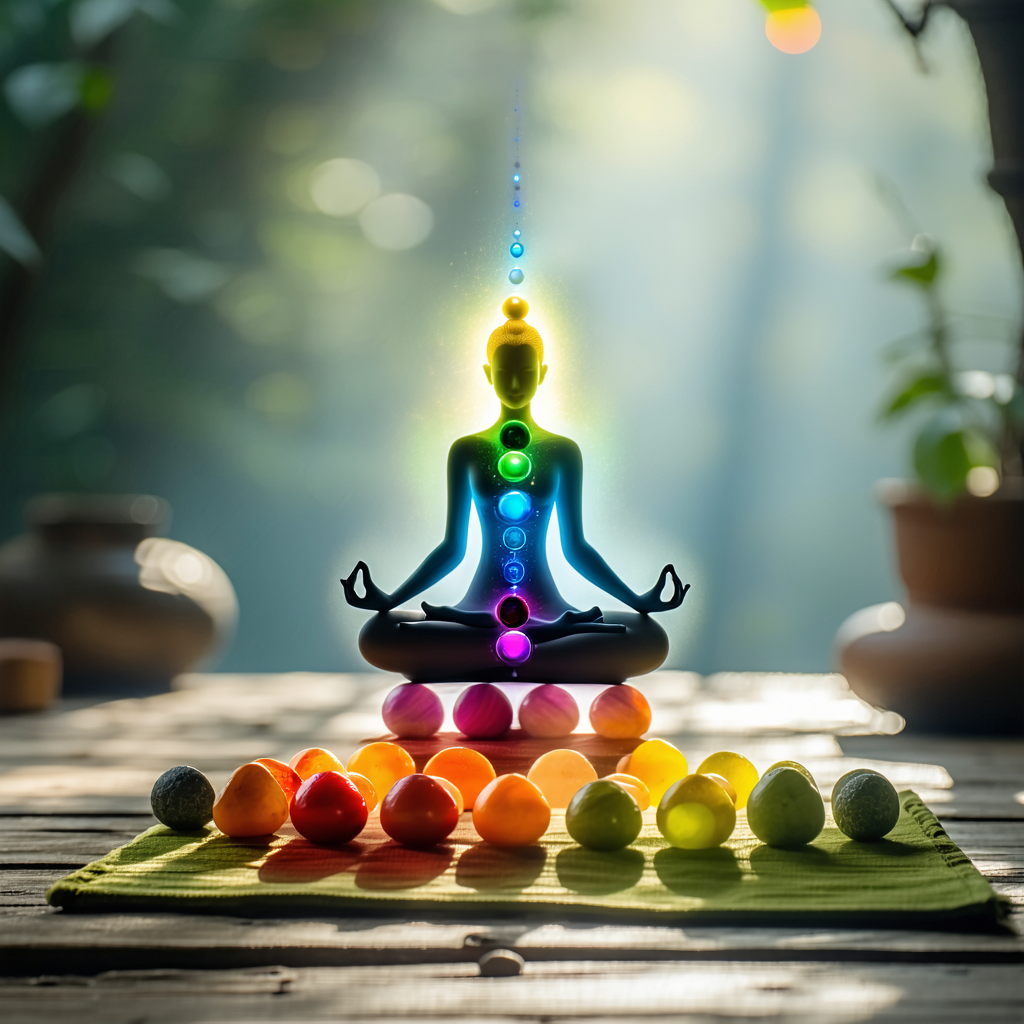
Chakra meditation for beginners is more accessible than most people expect
Chakra meditation for beginners comes down to one simple idea: you direct calm, focused attention to specific areas of the body while breathing slowly, and over time many people notice a greater sense of balance and ease. You do not need special equipment, a guru, or years of yoga experience to start. I picked up my first chakra practice on a Tuesday evening with nothing but a folded blanket and a free guided audio track, and it stuck.
- What are chakras – a plain-language overview
- Why try chakra meditation as a beginner
- The seven main chakras explained simply
- What to set up before your first session
- Step-by-step chakra meditation for beginners
- Common styles and which one to try first
- How long and how often should you practice
- Common beginner mistakes and how to sidestep them
- What the research actually says
- Building a lasting chakra meditation habit
- Frequently asked questions
What are chakras – a plain-language overview
The word chakra comes from Sanskrit and means “wheel” or “circle.” In traditional Indian systems such as Ayurveda and various yoga lineages, chakras are described as spinning centers of subtle energy located along the central axis of the body.
Western anatomy does not map chakras onto specific organs or nerves in a one-to-one way, but many practitioners find the model useful as a mental framework for body-awareness practice. Think of each chakra as a shorthand label for a cluster of physical sensations, emotions, and mental states associated with a region of the body.
When you practice chakra meditation for beginners, you are essentially training your attention to visit each of those regions in a structured, gentle sequence. The energy language is optional – the attentional practice is real regardless of the framework you use.
Why try chakra meditation as a beginner
Structured body-scan practices, which share a lot of DNA with chakra meditation, have a solid base of research supporting their role in stress reduction. A summary from the National Center for Complementary and Integrative Health notes that meditation practices may support reduced anxiety, better sleep quality, and lower perceived stress.
Chakra meditation specifically adds a layer of intentional focus that some beginners find easier to follow than open-awareness practices. Instead of watching “the mind in general,” you have seven clear stopping points – a roadmap that keeps wandering attention on track.
I have found that the structured sequence also makes it easier to notice which areas of the body feel tight, numb, or charged on a given day. That kind of self-awareness alone is worth the ten minutes it takes.
The seven main chakras explained simply
You do not need to memorize Sanskrit terms before your first session, but a quick map helps you follow guided meditations without confusion.
Root chakra – Muladhara
Location: base of the spine, perineum area. Associated themes: safety, stability, groundedness. Color often used in visualization: red.
Sacral chakra – Svadhisthana
Location: about two inches below the navel. Associated themes: creativity, pleasure, emotional flow. Color: orange.
Solar plexus chakra – Manipura
Location: upper abdomen, around the stomach area. Associated themes: confidence, personal power, digestion of experience. Color: yellow.
Heart chakra – Anahata
Location: center of the chest. Associated themes: compassion, connection, self-acceptance. Color: green.
Throat chakra – Vishuddha
Location: throat. Associated themes: communication, honest expression, listening. Color: blue.
Third eye chakra – Ajna
Location: forehead, between and slightly above the eyebrows. Associated themes: intuition, clarity, inner vision. Color: indigo.
Crown chakra – Sahasrara
Location: top of the head. Associated themes: awareness, connection to something larger than the individual self. Color: violet or white.
During chakra meditation for beginners, you typically move attention upward from root to crown, spending a few breaths at each location. Some teachers reverse the order or focus on a single chakra for an entire session – both approaches are valid.
What to set up before your first session
Preparation does not need to be elaborate. A few small choices make the practice noticeably smoother.
- Choose a quiet spot. Even a corner of a bedroom with the door closed works. Background noise is manageable; sudden interruptions break concentration more than ambient sound does.
- Decide on posture early. Sitting cross-legged on the floor, sitting upright in a chair, or lying flat on your back all work. Lying down is fine if you can stay awake. The key is a relatively straight spine so breath moves freely.
- Set a gentle timer. Use a soft chime or a low-volume alarm rather than a jarring ringtone. Ten to fifteen minutes is plenty for a first session.
- Dim the lights or close the blinds. Reducing visual input helps many people turn attention inward more easily.
- Have a light blanket nearby. Body temperature often drops a few minutes into stillness, especially if you are lying down.
- Skip the heavy meal. Practicing on a full stomach often leads to drowsiness and digestive discomfort. A light snack an hour before is fine.
You do not need candles, crystals, singing bowls, or incense for chakra meditation for beginners to be effective. Those tools can add atmosphere if you enjoy them, but they are entirely optional.
Step-by-step chakra meditation for beginners
This is the core sequence I recommend to anyone just starting out. Read through it once before you sit down so the steps feel familiar.
Step 1 – Settle and breathe
Close your eyes and take three slow, full breaths. Breathe in through the nose for a count of four, hold gently for one count, and breathe out through the nose or mouth for a count of six. Let your shoulders drop on the exhale. Do not try to stop thoughts yet – just let the breath slow down.
Step 2 – Ground your awareness at the root
Bring your attention to the base of your spine and the points where your body makes contact with the floor or chair. Notice any sensations – pressure, warmth, tingling, or nothing at all. Breathe into this area for three to five breaths. Some people visualize a warm red glow; others simply feel the physical contact. Either approach works.
Step 3 – Move to the sacral area
Shift attention to the lower abdomen, about two inches below the navel. Breathe here for three to five breaths. Notice any tightness, softness, or movement with the breath. You might picture a gentle orange light if visualization helps you focus.
Step 4 – Solar plexus
Move attention to the upper abdomen. This area often holds tension – many people notice a “knotted” feeling here during stressful periods. Breathe slowly and let the belly expand fully on each inhale. Spend three to five breaths here.
Step 5 – Heart center
Bring awareness to the center of the chest. Notice the rise and fall of the ribcage. Some practitioners silently repeat a phrase like “I am open” or “I am safe” at this point – that is optional. Three to five breaths.
Step 6 – Throat
Shift attention to the throat. Notice any tightness, dryness, or ease. If you like, you can hum softly on the exhale – the vibration in the throat is a simple way to anchor attention here. Three to five breaths.
Step 7 – Third eye
Move attention to the space between and slightly above your eyebrows. Many people notice a subtle pressure or warmth here during meditation. Rest your attention lightly – do not strain or squint. Three to five breaths.
Step 8 – Crown
Finally, bring attention to the top of the head. Imagine your awareness expanding slightly outward, like a gentle opening. Breathe here for three to five breaths.
Step 9 – Rest and return
After completing the sequence, let your attention rest wherever it wants for one to two minutes. Then take a deep breath, wiggle your fingers and toes, and open your eyes slowly. Give yourself thirty seconds before standing up.
That full sequence takes roughly ten to fifteen minutes, which makes it realistic for a daily practice even on busy days.
Common styles and which one to try first
Chakra meditation for beginners comes in several flavors. Here is a quick comparison so you can choose the one that fits your personality and schedule.
- Guided audio meditation. A teacher talks you through each chakra. Best for: people who find silence uncomfortable or whose minds race without a voice to follow. Apps like Insight Timer offer free options.
- Silent self-guided practice. You follow the sequence from memory, as described above. Best for: people who prefer control over pacing and do not want earbuds.
- Visualization-based practice. Each chakra is imagined as a colored light or spinning wheel. Best for: visual thinkers who find pure breath-focus dry.
- Mantra or seed-sound practice. Each chakra has a traditional seed sound (LAM, VAM, RAM, YAM, HAM, OM, silence). You repeat these aloud or silently. Best for: people who respond well to sound and want a more traditional approach.
- Single-chakra focus session. You spend the entire session on one chakra rather than moving through all seven. Best for: days when you have only five minutes, or when one area of the body feels like it needs extra attention.
My recommendation for a first session: try the silent self-guided sequence above. Once you know the map from memory, guided audio tracks become much easier to follow because you are not trying to learn and practice at the same time.
How long and how often should you practice
Consistency matters more than duration when you are building a new habit. Ten minutes every day will serve you better than a forty-five-minute session once a week.
For chakra meditation for beginners, I suggest starting with ten minutes per session, five days a week. After two to three weeks, you can extend to fifteen or twenty minutes if you want more depth. Many experienced practitioners keep their daily sessions at fifteen to twenty minutes and reserve longer sits for weekends or retreats.
Morning practice – before checking your phone – tends to be the most sustainable slot because the day has not yet filled up with competing demands. That said, a lunchtime or pre-sleep session works just as well if it actually happens.
Common beginner mistakes and how to sidestep them
Expecting dramatic sensations immediately
Some beginners expect to feel strong tingling, warmth, or emotional release in the first session. Some people do experience that; many do not. The absence of dramatic sensation does not mean the practice is not working. Subtle shifts in how you feel after the session – a little calmer, a little clearer – are the more common early signs.
Treating distraction as failure
Your mind will wander during chakra meditation for beginners. Every time you notice it has wandered and you gently bring it back, that moment of noticing is the practice. Returning your attention ten times in one session is not a bad session – it is ten reps of the skill you are building.
Rushing through the sequence
Beginners often spend only one breath per chakra because they feel impatient. Three to five slow breaths per location gives the nervous system time to actually respond to the shift in attention. Slow down more than feels necessary.
Skipping the grounding step
The root chakra step at the base of the sequence is easy to rush past because it feels less “interesting” than the upper chakras. In my own routine, skipping the root almost always makes the rest of the session feel scattered. Start there every time.
Practicing only when stressed
Using meditation only as a crisis tool means you never build a baseline. Regular practice on ordinary days creates the foundation that makes the practice useful when stress is high.
What the research actually says
The concept of chakras as literal energy centers has not been validated by biomedical research, and it is worth being honest about that. What has been studied is the broader category of meditation and mindfulness-based practices, which share many structural features with chakra meditation.
Research published in peer-reviewed journals suggests that regular meditation practice may support reduced cortisol levels, improved attention regulation, and better emotional resilience. Body-scan practices – which, as noted earlier, are structurally similar to chakra meditation – have been included in Mindfulness-Based Stress Reduction programs studied in clinical settings.
The National Center for Complementary and Integrative Health summarizes evidence suggesting meditation may be helpful for anxiety, depression, and pain management when used alongside conventional care.
The honest framing for chakra meditation for beginners is this: the attentional and breathing components are evidence-supported; the specific chakra framework is a culturally rich organizational tool that many practitioners find motivating and meaningful. You can hold both of those truths at the same time.
Building a lasting chakra meditation habit
The biggest obstacle for most beginners is not learning the technique – it is making the practice stick past the first two weeks.
Anchor it to an existing habit
Habit stacking works well here. After you pour your morning coffee, sit down for ten minutes before you drink it. After you brush your teeth at night, sit for ten minutes before getting into bed. The existing habit serves as a reliable trigger.
Keep a simple log
You do not need a detailed journal. A simple checkmark on a calendar or a one-line note in your phone (“10 min, felt tight in the throat area”) creates a feedback loop that keeps motivation alive. Seeing a streak of checkmarks makes you less likely to break it.
Adjust rather than quit
If a ten-minute session feels like too much on a given day, do five minutes. If the full seven-chakra sequence feels overwhelming, do just the root and heart. A shorter or simpler version of the practice counts – it keeps the habit alive and the neural pathway warm.
Find a community or accountability partner
Even a text to a friend saying “did my ten minutes” adds a small social layer that many people find surprisingly motivating. Online communities around meditation are active and generally welcoming to beginners.
Revisit your why
After two to three weeks, write down two or three specific ways the practice has affected how you feel – even small ones. Referring back to that note during low-motivation stretches is more effective than any external reward system.
Chakra meditation for beginners is genuinely one of the lower-barrier entry points into a sustainable meditation practice. The structure gives your mind something concrete to do, the sessions are short enough to fit into real life, and the framework scales – you can go as deep into the traditional teachings as you want, or keep it entirely secular and body-centered.
The only session that does not help you is the one you skip entirely. Start with ten minutes, follow the sequence above, and see how you feel on the other side.
Frequently asked questions
Do I need to believe in chakras for chakra meditation to work?
No. Many people practice chakra meditation as a structured body-awareness and breathwork exercise without holding any particular belief about subtle energy. The attentional and breathing components function independently of the metaphysical framework. Use the framework as a helpful map if it resonates, or treat it as a neutral organizational system if it does not.
How long does it take to feel the benefits of chakra meditation for beginners?
Many people notice a shift in how calm or grounded they feel immediately after their first session, even if it is subtle. More consistent benefits – better sleep, reduced background anxiety, improved focus – tend to become noticeable after two to four weeks of regular practice. Individual results vary considerably.
Can I practice chakra meditation lying down?
Yes, lying flat on your back with your arms slightly away from your body is a perfectly valid position. The main challenge is staying awake, especially if you practice in the evening. If you find yourself falling asleep consistently, try shifting to a seated position or practicing earlier in the day.
What is the best time of day for chakra meditation for beginners?
The best time is the one you will actually use consistently. Morning tends to work well because the mind is relatively quiet before the day’s demands accumulate. Evening practice before bed may support better sleep for some people. Experiment for one week with each timing and notice which produces a more grounded feeling afterward.
Is chakra meditation safe for everyone?
For most people, gentle chakra meditation is a low-risk practice. However, if you have a history of trauma, dissociation, or certain mental health conditions, intensive inward-focused practices can sometimes feel destabilizing. It is worth speaking with a qualified mental health professional before starting any new meditation practice if those concerns apply to you. Starting with shorter sessions and keeping your eyes slightly open are simple ways to stay grounded if you feel uncomfortable.
Can I combine chakra meditation with yoga or other practices?
Yes, and many people find the combination natural. A short yoga sequence before sitting can help release physical tension that would otherwise distract you during meditation. Breathwork practices like alternate-nostril breathing are also commonly paired with chakra meditation. Start with the meditation on its own until the sequence feels comfortable, then layer in complementary practices if you want to.
Do I need a teacher to learn chakra meditation for beginners?
A teacher can accelerate your learning and help you troubleshoot specific difficulties, but one is not required to start. The step-by-step sequence in this article is sufficient for a solid beginning practice. If you find yourself wanting more depth – especially around traditional Tantric or yogic teachings – working with an experienced teacher becomes more valuable.
Why do I feel emotional during or after chakra meditation?
Turning sustained attention toward the body can bring stored tension or unprocessed emotion to the surface. This is considered a normal part of the process by most meditation teachers. If the emotions feel manageable, staying with them gently for a few breaths is often more helpful than pulling your attention away. If they feel overwhelming, open your eyes, feel your feet on the floor, and take a few grounding breaths before continuing or stopping the session.
For more practical wellness ideas, browse the Health Living Today guide library.